
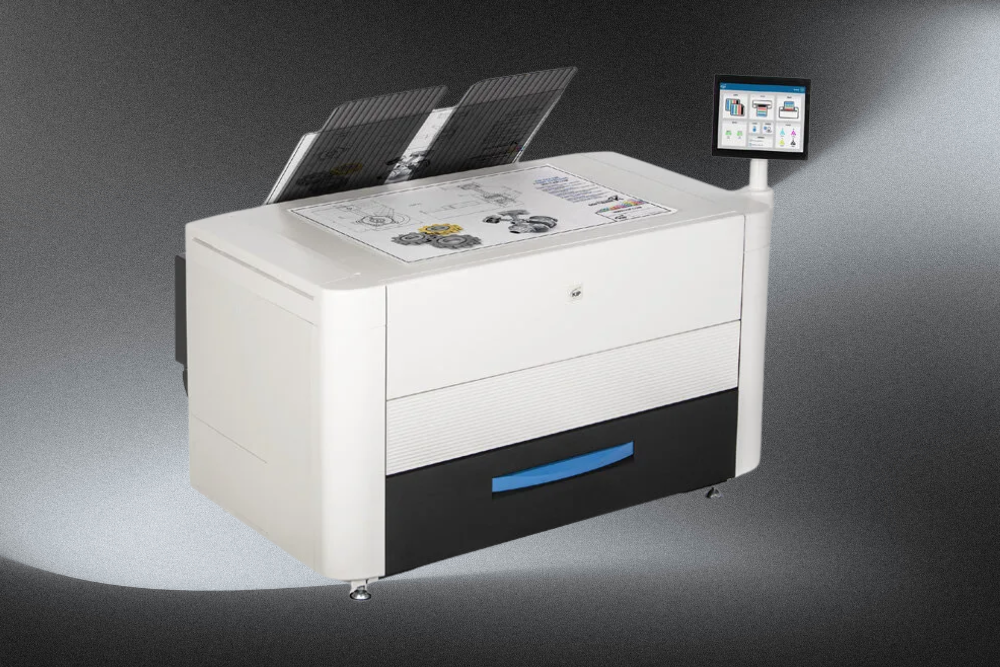
Businesses are more likely to underestimate rather than overestimate their printing capabilities, leading to them using inadequate machinery or overcompensating by renting devices that cost far too much for what they bring in. And with wide-format printing being so specialized, it’s understandable that you might have trouble determining when owning or renting one makes more sense.
Let’s break down how a wide format printer has some unique requirements and how to figure out which financing option to use.
Who Typically Needs a Wide Format Printer In-House?
Traditionally, wide format printers handle output wider than 24 inches, which includes banners, blueprints, posters, signage, schematics, vehicle graphics, or trade show displays. However, some industries also refer to anything over 13 inches in width as “large” or “wide” format, so you might be at a disadvantage already if you’re not fully cognizant of what the printer’s specifications are.
Architecture, engineering, and construction firms are probably the most obvious example of an in-house wide format printer being a necessity. When a job site needs updated blueprints, a revised site plan, or a set of engineering schematics, waiting a day or two for an outside print shop isn’t always an option. Changes happen constantly during active projects, and being able to print a revised set of drawings immediately can free up enough time in a year to get an entirely different project done.
Apart from these, marketing companies and corporations large enough to have a marketing department that itself is the size of a small company are likely similarly constrained by deadlines and the relatively slow pace of printing in a wider format. For these, the ability to produce a large-format mockup, campaign visual, or presentation backdrop in-house can mean the difference between looking responsive and looking slow. Outsourced printing doesn’t accommodate that kind of turnaround.
When Outsourcing Actually Makes Sense
To be fair, outsourcing a wide format printer job isn’t always wrong, and some businesses can see a tangible benefit from it.
If you only need wide format printing for a few jobs per quarter, you should obviously go for outsourcing. Professional print shops have high-end equipment and skilled operators, and they also absorb the cost of consumables, waste, and maintenance. When you want a single large item done (or to make it to the next trade show with adequate banners and branding) paying a shop’s per-square-foot rate will be much less costly than getting a printer, training employees, then having it sit unused for most of the time.
Outsourcing also makes sense for highly specialized applications or higher volumes that your current or prospective equipment can’t support. This can include special printing material like rigid boards, vehicle wrap vinyl, and unusual textiles that typically fall outside a standard roll-to-roll printer’s capabilities, but it can also apply to sudden high-volume printing requirements that a wide-format printer can accomplish by collating smaller pages on a large format. Instead of getting an entirely new printer for a single project, renting a specific one can allow you to finish the job, then see the cost-efficiency of it to decide whether it’s something you need to repeat later.
The keyword here is “occasionally.” The moment wide format printing becomes a regular, recurring part of your operations, the economics of outsourcing begin working against you.
When an In-House Wide Format Printer Makes Sense
For most businesses that rely on printing, you might see a point where the regular printers start lagging behind project requirements. Or, you might’ve suddenly realized you’ve been outsourcing a wide format printer to the point you might as well have owned it. These are just two of the signatures of a tipping point where wide format printers need to be brought in house.
Costs
The cost issue here is a bit difficult to quantify, but start by outlining how much you’re spending on printing in both time and money. More specifically, work out how much you’ve used your office printer and how often you’ve needed to outsource a wide-format printer for specific jobs.
Then, look up the specific printer you have in mind and the type of consumables it uses, then compare the cost of these consumables only to the price of the printing job when outsourced. If you’re paying more than double and also having to juggle multiple vendors to get things done, it might be time to start thinking about owning a printer and having dedicated employees trained for the task.
Control
Different shops run different equipment, calibrated differently, using different ink profiles. But when your brand colors need to look the same across every piece of output, that variability is a real problem. In-house printing means one machine, one color profile, and the same result every time.
Furthermore, you also get to control the project from start to finish. If you need to make test batches, they can be done easily with lower saturation or in black and white to test the layout, then modified as needed for the final print. If you’re outsourcing, you may need to wait for an external pipeline.
Turnaround Time
Outsourcing introduces an external timeline into your workflow. When a client requests a revision, when a campaign changes, or when a job site needs updated drawings, the ability to print immediately rather than submit and wait for a vendor order can mean landing more jobs and securing high-profile projects when others are in their downtime.
Similarly, the version of a document that gets submitted to a print shop on Monday morning is often not the version that needs to go to a client or job site by Wednesday. Every revision cycle through an outside vendor adds friction. In-house, a revised file prints in minutes.
How a Managed Print Provider Bridges the Gap
The most common reason businesses hesitate to bring wide format printing in-house is the high upfront cost and the unpredictability around managing the equipment. A high-quality wide format printer is a significant investment; maintenance requirements vary with usage, and most small- and mid-sized businesses don’t have a dedicated print staff to manage the machine. That’s exactly the gap a managed print provider fills.
Reputable managed print providers partner with top-of-the-line manufacturers and can often match specific machines to particular business needs. The large variety of wide format printing options means many providers specialize in offering several types of printers, which allows them to give you more lucrative options and detailed assistance and maintenance.
However, one of the clearest advantages of working with a managed print provider is the contract structure. Wide format printing environments have their own cost model, since ink and substrates are typically billed on a cost-per-square-foot basis, you pay for what you actually use rather than a fixed monthly volume estimate. Beyond the usage model, a well-structured managed print agreement includes maintenance coverage, technician support, and defined response times, which means keeping the machine operational is the provider’s responsibility, not a variable cost you absorb every time something needs attention.
The bottom line is that for businesses that need access to wide format print output regularly, the question is whether you have enough experience and staff to handle maintaining a device that might need to run for days at a time without issues. If there’s even a shred of a doubt, a managed service provider can help set you up with the right wide format printer.
Find the Right Wide Format Solution
Whether you’re based in St. Louis or Columbia, Missouri, or anywhere across southern Illinois, you need a reliable business partner who can anticipate your needs and deliver the best equipment for the job. Da-Com works with businesses to evaluate their wide format printing needs and build the right solution.
If you’re currently outsourcing wide format work and wondering whether there’s a better way, contact Da-Com and discuss getting one of your own.


Leave A Comment