
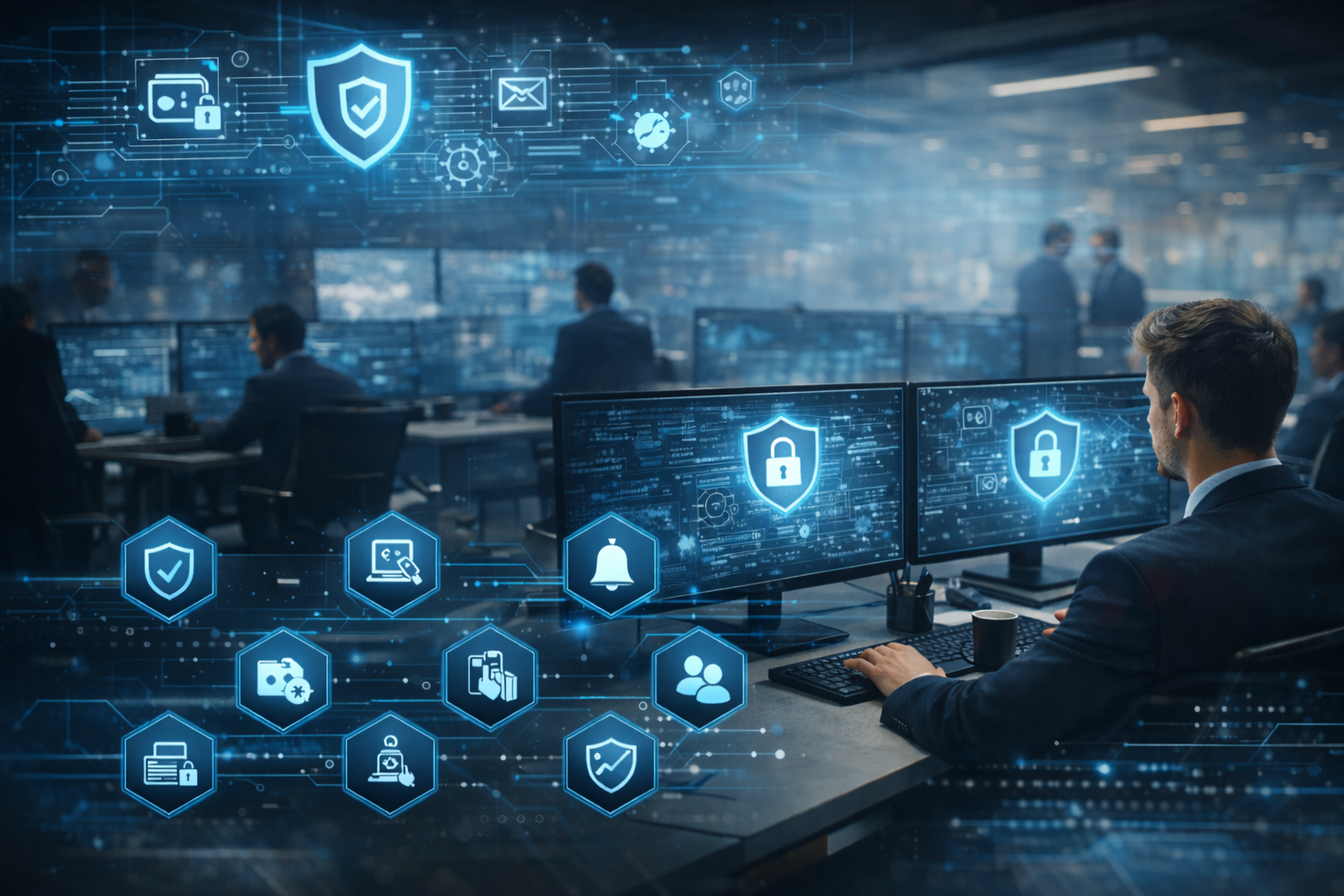
Cybersecurity for SMBs is no longer optional. If your company has between 20 and 100 employees, you’re large enough to be a valuable target for cybercriminals, but often not large enough to have an internal security department watching your systems around the clock.
That’s why cybersecurity protections should not be treated as luxury add-ons. Instead, they should be built directly into any managed IT services package your business invests in. At minimum, your IT provider should be delivering layered security tools and ongoing oversight designed to prevent threats, detect suspicious behavior quickly, and respond immediately when something goes wrong.
In this guide, we’ll break down what protections should be included in managed IT for SMBs, why each layer matters, and what businesses should look for when choosing an IT partner.
Why Cybersecurity for SMB’s Matters More Than Ever
It’s a common misconception that hackers only target massive corporations. In reality, SMBs are often easier to compromise because they tend to have fewer security controls, outdated systems, limited internal IT staffing, and employees who are stretched thin. Many attacks are not sophisticated, they’re opportunistic. Cybercriminals scan the internet looking for exposed systems, weak passwords, unpatched devices, and employees who can be tricked into clicking the wrong email link. And once a threat enters your environment, the impact can be severe:
• Loss of access to critical files
• Ransomware downtime that halts operations
• Financial loss and potential legal exposure
• Reputation damage that impacts customer trust
• Compliance issues for regulated industries
This is why cybersecurity needs to be proactive and layered, not reactive.
24/7 Cybersecurity Monitoring and Threat Detection
One of the most important services that should be included in managed IT is 24/7 cybersecurity monitoring.
Threats don’t happen only during business hours. Attacks often occur late at night, over weekends, or during holidays when businesses are least prepared to respond. That’s why continuous monitoring is critical.
A strong managed IT provider should be monitoring:
• Endpoints, servers, and network activity
• Suspicious login attempts
• Abnormal account behavior
• System alerts and security events
• Unauthorized access attempts
It’s also important to understand the difference between monitoring tools and monitoring people. Many vendors install software and call it “security monitoring,” but true protection requires alerts to be reviewed by a real security team, not just automated scripts.
With real oversight, threats can be detected early, before they become a full-scale breach.
Endpoint Protection and Device Cybersecurity for SMBs
For most SMBs, laptops and desktops are the easiest attack entry point. Employees travel, work remotely, click links, download files, and use personal devices. That means endpoints need strong protection at all times.
A managed IT cybersecurity plan for SMBs should include endpoint security on every device, including laptops, desktops, and servers.
This protection should include:
• Advanced antivirus and anti-malware
• Behavior-based detection (not just signature-based scanning)
• Automated threat containment
• Isolation of compromised machines
Modern attacks don’t always look like viruses from the early 2000s. Today’s ransomware and credential theft tools are designed to bypass older antivirus systems. That’s why layered endpoint cybersecurity is essential.
If your IT provider isn’t deploying modern endpoint detection tools, your business is likely exposed.
Email, Phishing, and Human-Based Cybersecurity Threats
Email remains the #1 way attackers get into small businesses.
Even with employee training, phishing scams are becoming harder to detect. Attackers now use social engineering, impersonation, and realistic email templates that mimic vendors, coworkers, or executives.
Managed IT should include cybersecurity email protections such as:
• Advanced spam and phishing filtering
• Malicious link scanning
• Attachment inspection and sandboxing
• Protection against impersonation and credential theft
• Email account monitoring for suspicious activity
A strong email security layer reduces the chance of your staff ever seeing the threat in the first place, which is always better than relying on employees to spot scams 100% of the time.
Even the best employees can make mistakes. Your systems should be prepared for that reality.
Patch Management and Vulnerability Reduction
Cybercriminals don’t always “hack” systems the way people imagine. Many breaches happen because businesses fail to apply updates that already exist.
Unpatched operating systems and outdated software are a major risk factor for ransomware and exploit attacks.
That’s why patch management should be a standard part of any managed IT service package.
A proper patch management program includes:
• Operating system updates
• Third-party application patching
• Security updates pushed automatically
• Ongoing vulnerability reduction across the environment
When patching is handled consistently, it eliminates many of the vulnerabilities that attackers rely on.
If your managed IT provider is not proactively patching your devices, your cybersecurity strategy is incomplete.
Incident Response, Containment, and Cybersecurity Recovery
Even with layered protection, incidents can still happen. The real difference between a small problem and a business-threatening event often comes down to response time.
When something goes wrong, managed IT should include immediate incident response services such as:
• Rapid detection and containment
• Isolation of infected devices or accounts
• Threat remediation
• Recovery support
• Documentation for compliance or insurance needs
Too many businesses find out too late that their IT provider doesn’t have a real response process. Or worse, they outsource response after the fact, leading to hours or days of downtime.
A strong plan for Cybersecurity for SMBs assumes incidents will occur and prepares for them in advance.
A Real-World Cybersecurity Example: When One Click Becomes a Crisis
Even companies that invest in training can still be hit.
A common scenario looks like this:
An employee receives an email that appears to come from someone they know. The message references a recent conversation or project, making it seem legitimate. Without thinking twice, they click the link.
That single click can result in stolen credentials, unauthorized access, and a compromised account, potentially opening the door to a much larger breach.
This is where professional managed IT makes a difference.
With the right cybersecurity tools in place, a security team can detect the suspicious activity immediately, isolate the affected account, lock down access, and stop the threat before it spreads throughout the organization.
Fast containment is what prevents a simple phishing click from turning into a full ransomware shutdown.
Cybersecurity for SMBs in Regulated Industries: Compliance Requirements Matter
For businesses in regulated industries, cybersecurity isn’t just a best practice—it’s often required.
If your company operates in:
• Healthcare
• Financial services
• Government contracting
• Legal or insurance industries
…you may have specific compliance requirements that demand stronger controls and reporting.
Managed IT should support compliance-driven security controls designed to reduce:
• Breach risk
• Audit exposure
• Regulatory penalties
• Insurance claim denial risk
Compliance is not just paperwork. It is deeply tied to your organization’s real-world security posture.
A managed IT provider should be able to align your cybersecurity strategy with your regulatory requirements, not just install generic antivirus and call it done.
Why Layered Cybersecurity Is the Only Real Cybersecurity
Many SMBs assume that buying one product, like antivirus, means they are “covered.” Unfortunately, attackers don’t rely on a single method anymore.
Modern threats use multiple tactics:
• Credential theft
• Email impersonation
• Malware downloads
• Exploits of outdated software
• Remote access attacks
• Lateral movement across networks
That’s why effective cybersecurity must be layered.
A strong managed IT cybersecurity stack includes:
1. 24/7 monitoring
2. Endpoint protection
3. Email filtering
4. Patch management
5. Incident response planning
6. Compliance support (if required)
Each layer covers gaps that other layers can’t. Together, they create meaningful protection.
What You Should Expect from Managed IT Services and Cybersecurity for SMBs
If you’re paying for managed IT, you should expect security to be included, not treated like a separate product line.
A well-designed managed IT program should include:
• Predictable pricing (no surprise add-ons)
• Security tools deployed across all devices
• Continuous monitoring by a dedicated team
• Ongoing maintenance and patching
• Fast response when threats appear
• Documentation and reporting when needed
Your business shouldn’t have to guess whether security is included. It should be clearly defined, proactive, and consistently delivered.
Recommended Outbound Cybersecurity Resources
If you’d like to explore additional trusted cybersecurity resources, here are a few strong references:
• National Institute of Standards and Technology (NIST Cybersecurity Framework): https://www.nist.gov/cyberframework
• Cybersecurity & Infrastructure Security Agency (CISA): https://www.cisa.gov/cybersecurity
• FBI Internet Crime Complaint Center (IC3): https://www.ic3.gov
• Microsoft Security Blog: https://www.microsoft.com/en-us/security/blog/
These resources provide ongoing updates and best practices that SMBs can use to strengthen their cybersecurity posture.
Why Small and Medium Sized Businesses Trust Da-Com IT Pros for Cybersecurity and Managed IT
Organizations choose Da-Com IT Pros because cybersecurity is built into managed IT services, not bolted on later.
Da-Com IT Pros provides Cybersecurity for SMBs with 20–250 employees across St. Louis and Southern Illinois, delivering the security controls businesses need without forcing them to build an in-house security department.
Key reasons businesses partner with Da-Com IT Pros include:
• Dedicated security team providing 24/7 monitoring and response
• Strong experience supporting regulated industries (medical, financial, government contracting)
• Proven execution, not just recommendations
• Virtual CIO services included to align security with business strategy
If you want managed IT that actually protects your business, not just “fixes computers,” you need a provider that treats cybersecurity as a core responsibility.
Final Thoughts: Managed IT Without Cybersecurity Isn’t Managed IT
The days of “basic IT support” are over. Today, managed IT should come with built-in cybersecurity protections designed to prevent ransomware, stop phishing attacks, reduce vulnerabilities, and respond immediately to incidents.
If your IT provider isn’t offering layered security protections as part of their standard services, your business is likely under-protected.
Your systems, your employees, and your customers deserve better.
If you want to learn more about cybersecurity protections for your St. Louis or Southern Illinois business, contact Da-Com IT Pros today to discuss managed IT services built with real security at the core.




Leave A Comment