
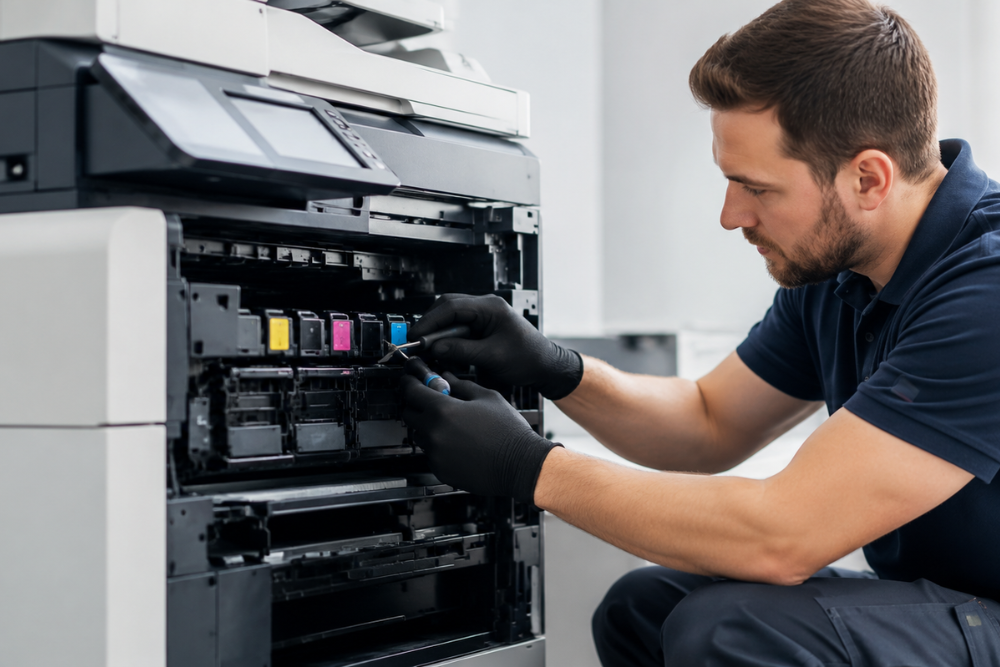
When a copier breaks down and a technician arrives with a replacement part, most businesses are focused on one thing: getting the machine back up and running as quickly as possible. But the type of replacement part being used can affect more than just the immediate repair. It can influence long-term performance, reliability, service costs, and even how your maintenance agreement applies in the future. Copier repair parts generally fall into three categories: OEM, remanufactured, and compatible aftermarket components. Each can play a legitimate role in maintaining office equipment depending on the age of the device, the application, and the quality standards of the service provider. Understanding the differences can help businesses make more informed decisions about copier maintenance and repairs.
OEM, Remanufactured, and Compatible Parts Explained
OEM (Original Equipment Manufacturer) parts are produced by the same manufacturer that built the copier itself. For example, a Kyocera copier would use replacement parts manufactured by Kyocera. These parts are designed specifically for that equipment and match the original factory specifications.
Compatible aftermarket parts are manufactured by third-party companies rather than the original equipment manufacturer. Quality can vary significantly among compatible parts, which is why experienced service providers carefully vet the manufacturers and suppliers they use. High-quality compatible components can perform very well in the right applications, while poorly manufactured alternatives may create reliability issues over time.
Remanufactured parts occupy a middle ground. These are OEM components that have been refurbished, tested, and restored to meet original performance standards. Because they begin as genuine OEM components, remanufactured parts are often considered a reliable and cost-effective option for certain repairs, especially for larger assemblies or older equipment.
The right choice often depends on factors such as machine age, operating demands, repair history, and long-term cost considerations.
Why Part Quality Matters in Copier Repair
For consumables like paper and basic office supplies, the difference between brands is often relatively minor. However, for internal mechanical or imaging components, quality and compatibility become much more important.
Even when a replacement part physically fits inside a copier, variations in manufacturing tolerances or material quality can affect machine performance over time. In some cases, lower-quality components may contribute to premature wear on surrounding parts, recurring service calls, or intermittent performance issues that are difficult to diagnose immediately.
This is one reason experienced copier technicians evaluate more than just the upfront cost of a replacement part. They consider how the component is likely to perform over the lifespan of the equipment and whether it supports reliable day-to-day operation.
Toner is one of the most common examples. While many compatible toner options perform well, lower-quality toner products can sometimes contribute to buildup, feeding issues, or unnecessary wear on drums and fusers — components that are significantly more expensive to replace. The quality of both the consumables and the service provider’s sourcing standards matters.
The Service Agreement Factor
Many copier service agreements include specific language regarding the use of consumables and replacement parts. The purpose is typically to ensure that equipment is maintained using products that meet appropriate performance and reliability standards.
For example, if a machine experiences damage directly related to an incompatible or poor-quality consumable supplied outside the service provider’s recommendations, certain repairs may not be covered under the agreement. Reputable service providers explain these policies clearly so clients understand how consumables and replacement parts interact with warranty and maintenance coverage.
This does not mean compatible or remanufactured parts are inherently problematic. In fact, many experienced copier service providers successfully use vetted remanufactured and compatible components when they represent the best balance of performance, reliability, and value for the client.
The important factor is working with a provider that understands the equipment thoroughly and stands behind the parts and service they provide.
When Compatible or Remanufactured Parts Make Sense
As office equipment ages, sourcing brand-new OEM components may become more difficult or less cost-effective. In some situations, the cost of a new OEM assembly may approach the value of the machine itself.
In those cases, high-quality remanufactured or carefully selected compatible components can provide an excellent alternative that extends the useful life of the equipment while controlling operating costs.
Experienced copier service providers evaluate:
- the age of the machine
- expected remaining lifespan
- availability of OEM inventory
- repair history
- long-term reliability considerations
before recommending the best repair approach.
This consultative approach allows businesses to make practical decisions based on operational needs rather than relying on one solution for every situation.
Questions Businesses Should Ask Their Copier Service Provider
Many businesses never ask what types of parts their service provider uses, which means those decisions are made entirely behind the scenes.
A reputable copier service provider should be able to clearly explain:
- Whether service agreements specify OEM, remanufactured, or compatible components
- How replacement part decisions are made based on machine age and repair type
- Which manufacturers or suppliers they trust for compatible parts
- How toner and consumable choices affect service agreement coverage
- What steps they take to ensure long-term equipment reliability
Transparency matters just as much as the parts themselves.
Choosing the Right Service Partner
At Da-Com, our technicians are trained and certified on all equipment we service, and we believe businesses deserve clear, honest guidance about their repair and maintenance options.
We help organizations balance reliability, performance, and long-term operating costs by recommending the right repair approach for each device — whether that involves OEM, remanufactured, or carefully vetted compatible components.
Our focus is not simply replacing parts. It’s helping clients maximize the value, performance, and lifespan of their office technology through experienced service and transparent support.
Serving businesses throughout St. Louis, Columbia, Missouri, and western Illinois, Da-Com provides responsive copier repair and maintenance solutions designed around your operational needs. Contact Da-Com today to learn more about building a reliable, long-term service partnership.



Leave A Comment