
Touchless Bottleless Water Coolers for Offices: Benefits, Cost and Hygiene
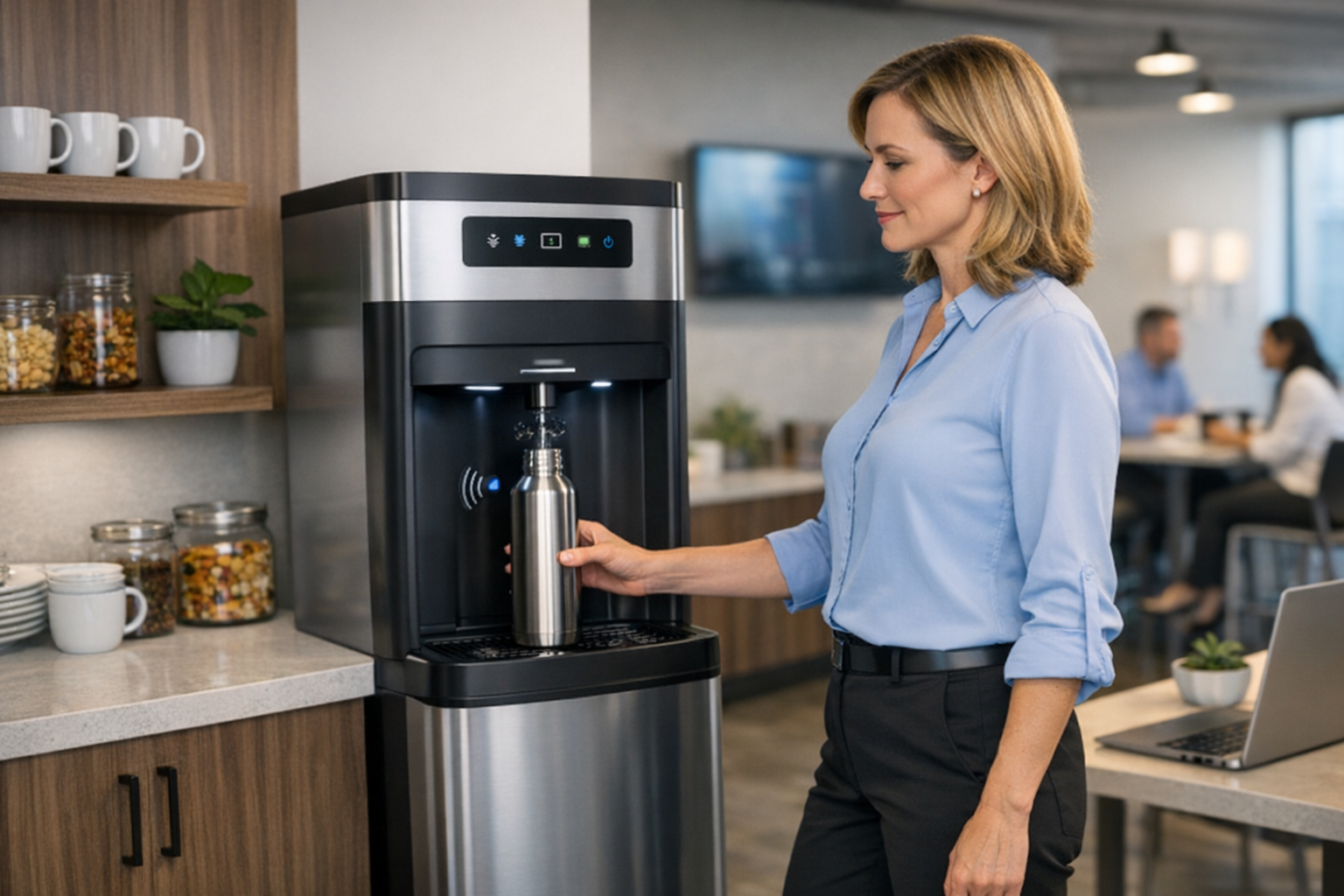
A touchless bottleless water cooler is one of the smartest breakroom upgrades an office can make in 2026. It gives employees and guests easy access to cleaner, better-tasting drinking water while cutting back on shared touchpoints, bottle storage, delivery hassles, and the daily friction that comes with old-school jug service.
For businesses trying to improve hygiene, simplify operations, and create a better workplace experience, this kind of office hydration upgrade can be a practical, high-visibility improvement that people actually notice.
That matters because office water is no longer just a utility. It is part of the employee experience, part of the first impression visitors get, and part of the trust people place in your workplace. When water access feels outdated, cluttered, or questionable, people notice that too.
A touch-free system helps modernize the breakroom without creating more work for your team. Da-Com’s Purity Source purified water systems are designed to give businesses a cleaner, more predictable alternative to bottled delivery while supporting a better overall office experience.
What Is a Touchless Bottleless Water Cooler?
A touchless bottleless water cooler is a plumbed-in office water dispenser that connects directly to a building’s water line and uses built-in filtration or purification instead of 3- or 5-gallon jugs. The touchless part usually refers to sensor-activated dispensing or reduced-touch bottle filling, which helps limit how often multiple people put their hands on the same buttons, paddles, or levers throughout the day.
The bottleless part is just as important. Rather than waiting on deliveries, storing heavy bottles, swapping empties, and hoping nobody runs out during a busy week, your office gets a continuous water source treated at the point of use.
In practical terms, a touchless bottleless water cooler gives offices three meaningful upgrades at once:
Cleaner everyday interaction
Fewer shared touchpoints can support a more hygiene-conscious workplace, especially in busy breakrooms, reception areas, clinics, and conference spaces.
More predictable water access
A direct water-line connection means there is no last-bottle problem and no pile of empties taking over a corner of the office.
A more modern employee experience
Touch-free dispensing, bottle-fill areas, and cleaner design cues make the breakroom feel more current and better cared for.
This is why businesses often start by asking about water coolers but end up really comparing convenience, cleanliness, image, and ongoing service.
Why Offices Are Moving Toward Touchless Bottleless Water Coolers
The appeal of a touchless bottleless water cooler is not just that it looks newer. It solves several small but constant frustrations that add up over time.
Traditional bottled water setups create a chain of office chores. Someone has to monitor inventory. Someone has to move bottles. Someone has to remember to reorder. Someone has to deal with empty jugs and clutter. If the dispenser is heavily used, the system may feel outdated and annoying long before anyone formally complains.
A touchless bottleless setup changes that experience. Water is available on demand, the dispenser area feels cleaner, and the breakroom no longer depends on a delivery cycle to function.
There is also a broader workplace reason this matters. In high-traffic office environments, reducing unnecessary shared contact points fits naturally with broader hygiene efforts and helps create a cleaner everyday experience.
For many offices, this makes a touchless bottleless water cooler feel less like a luxury and more like the updated standard.
The Real Hygiene Benefits of a Touchless Bottleless Water Cooler
When people hear the word hygiene, they often think of marketing claims first. A more useful approach is to ask what actually changes day to day.
A touchless bottleless water cooler improves hygiene in several realistic ways:
Reduced shared contact
In a standard cooler, many people may touch the same buttons or levers each day. A touchless model reduces that repeated contact at one of the most-used stations in the office.
Cleaner bottle filling
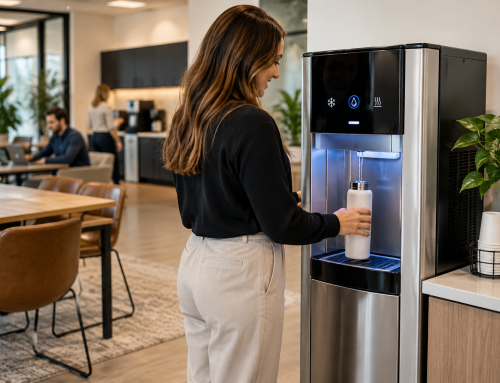
Many newer units are designed to make it easier to fill reusable bottles without awkward tipping or touching the dispensing area. That improves both convenience and cleanliness.
Less bottle handling
Bottled delivery systems involve repeated handling of heavy jugs, caps, storage racks, and empties. Bottleless systems remove much of that process.
Better breakroom perception
People do not only judge cleanliness by lab results. They judge it by what they see. A clutter-free, well-maintained hydration station sends a stronger message than stacked bottles and a stained old dispenser.
This does not mean a touchless unit replaces routine cleaning or scheduled service. It means the system starts from a better baseline.
This is especially relevant in clinics, dental practices, customer-facing offices, and workplaces where a lot of people share common areas. Businesses that want a healthier, more polished breakroom often find that the dispenser itself sets the tone.
Why Filtration, Certification, and Service Matter
A touchless bottleless water cooler should never be evaluated only on the sensor feature. Touchless is useful, but purification quality, service support, and certification matter just as much.
Many offices assume municipal water being regulated means point-of-use treatment is unnecessary. In reality, business owners and office managers often care about more than regulatory compliance alone. They care about taste, odor, consistency, confidence, and how water may be affected by premise plumbing inside an older building.
That is why filtration claims should be specific. When evaluating a system, look for clear documentation rather than vague promises.
What NSF and filtration standards actually mean
When comparing office hydration systems, certifications help buyers understand what a system is designed to address. In simple terms:
- NSF/ANSI 42 often relates to taste and odor reduction
- NSF/ANSI 53 often relates to certain health-effect contaminants
- NSF/ANSI 401 often relates to some emerging contaminants
For office buyers, the takeaway is simple:
- Touchless matters for user experience and shared-space hygiene
- Filtration or purification matters for confidence and taste
- Service matters for long-term performance
- Certification matters for trust
A strong office hydration solution brings those four things together.
Why routine maintenance still matters
Even the best system needs regular filter changes, sanitation, and service checks. A cleaner dispensing experience only stays that way when the unit is maintained properly over time. That is one reason businesses often prefer a managed service approach instead of putting the upkeep on an already busy office team.
How a Touchless Bottleless Water Cooler Improves the Office Experience
One reason these systems perform well in search and in sales conversations is that they solve both practical and emotional problems.
On the practical side, employees get fast access to chilled, purified water without waiting for deliveries or dealing with an empty bottle at the worst possible time.
On the emotional side, people read the breakroom as a signal. If the office has fresh coffee, good seating, and a modern hydration station, it suggests the business pays attention to details. That matters to current employees, job candidates, clients, and visitors.
A touchless bottleless water cooler can improve the office experience in several ways:
Employees use it more
When water tastes better and feels easier to access, people are more likely to choose it over soda or another quick option.
The breakroom looks less cluttered
Without bottle stacks, spare jugs, and empties, the area feels more organized and professional.
Guests notice the upgrade
A well-designed hydration station in a reception or conference area feels thoughtful and current.
Operations feel smoother
There is less dependence on manual restocking, bottle handling, and interruptions.
In other words, a touchless bottleless water cooler is not only about water. It is about lowering friction in a part of the office everyone uses.
Touchless Bottleless Water Cooler Buying Checklist
A good buying process starts with better questions. Before choosing a system, ask:
- Is dispensing truly sensor-based or just reduced-touch?
- What kind of filtration or purification is included?
- What certifications support the claims?
- Who changes filters and handles sanitation?
- Is the unit sized correctly for headcount and traffic?
- Do you want water only, or water plus ice?
- What does the monthly service plan include?
- How quickly can the provider respond if something goes wrong?
This kind of checklist helps businesses compare more than appearance. It helps them evaluate whether a system will actually be reliable, easy to maintain, and worth the investment over time.
What Does a Touchless Bottleless Water Cooler Cost?
Cost is usually where interest turns into action. The good news is that a touchless bottleless water cooler is often easier to justify when businesses look beyond the machine itself and focus on total operating convenience.
The exact price depends on the model, filtration setup, whether the unit includes hot water or ice, installation requirements, and what service plan is included. Touchless features may raise the monthly cost somewhat compared with a basic non-touch unit, but the added value usually comes from hygiene perception, cleaner user interaction, and a more current experience in shared spaces.
For most offices, cost should be evaluated in four layers:
Equipment level
A simpler cold-and-hot dispenser will generally cost less than a premium unit with touchless controls, advanced purification, UV features, or an integrated bottle-fill station.
Installation
A bottleless system needs water-line access and proper setup. The complexity of the space affects the installation scope.
Service and filter replacement
A touchless bottleless water cooler performs best when filters are changed on schedule and the unit is properly maintained over time.
Hidden labor savings
This is where many offices undervalue the switch. If your team no longer has to receive deliveries, move bottles, clean up clutter, or troubleshoot constant shortages, that convenience has real value.
If you are evaluating total spend, it also helps to compare short-term equipment pricing with the long-term cost of bottled delivery, manual handling, and recurring reorders.
Who Should Consider a Touchless Bottleless Water Cooler?
Not every office needs the same water setup. But a touchless bottleless water cooler is especially strong for businesses that meet one or more of these conditions:
Client-facing offices
If visitors regularly pass through reception, waiting rooms, or conference spaces, the hydration setup becomes part of your brand presentation.
Shared breakrooms
The more people use a water station each day, the more helpful touch-free dispensing becomes.
Healthcare and wellness environments
Clinics, dental offices, and similar workplaces often care more deeply about hygiene, appearance, and confidence in common-area amenities.
Offices tired of bottled delivery
If your current system creates clutter, lifting, scheduling, or we-ran-out problems, bottleless is usually worth a serious look.
Businesses trying to improve employee experience
This is one of the easiest visible upgrades to make in a breakroom because it combines utility, aesthetics, and convenience.
Why This Matters for St. Louis, and Southern Illinois Businesses
For local businesses, the right water setup is not just about equipment. It is about support.
Installation, maintenance, sizing, and follow-through determine whether a touchless bottleless water cooler becomes a smooth upgrade or another office frustration. Businesses want a provider that can help them choose the right setup, install it properly, and keep it running.
That local angle matters for businesses across St. Louis, and Southern Illinois. Older buildings, high-traffic workplaces, and employee expectations all make office water quality and convenience more important than many teams realize.
Buyers today are asking fewer vague questions like do we need a cooler and more practical ones like:
- How clean is the dispensing experience?
- How easy is it to maintain?
- Will employees actually use it?
- What does it cost over time?
- Who supports it locally?
A touchless bottleless system answers those questions better than many older setups.
Final Thoughts on Touchless Bottleless Water Coolers for Offices
A touchless bottleless water cooler is one of those workplace upgrades that feels small until you live with the difference. Better hygiene. Less clutter. No heavy bottles. No delivery dependence. Better taste. Easier hydration. A more modern look in the spaces your team and guests use every day.
For offices trying to create a cleaner, easier, more professional breakroom experience, it is a strong next step. The best systems pair touch-free convenience with proven purification, clear certification support, and dependable ongoing service.
If your office is evaluating hydration upgrades, the goal should not be just to replace an old dispenser. The goal should be to make drinking water easier, cleaner, and more reliable for everyone who walks through your space.
Ready to Upgrade Your Office Hydration Setup?
If your team is comparing cleaner, easier, and more modern water options, Da-Com can help you evaluate bottle-free systems, filtration options, touchless dispensing, and ongoing service support. To learn more about purified water solutions for your St. Louis, or Southern Illinois business, contact Da-Com today!
Frequently Asked Questions
What is a touchless bottleless water cooler?
A touchless bottleless water cooler is a plumbed-in office water dispenser that uses a building’s water line and internal filtration instead of refillable jugs. It typically dispenses water through sensor activation or reduced-touch controls.
Are touchless bottleless water coolers more hygienic?
They can help reduce shared touchpoints in busy breakrooms and common areas. While they still need routine cleaning and maintenance, they often provide a cleaner everyday user experience than traditional button- or lever-based coolers.
How much does a touchless bottleless water cooler cost per month?
Cost depends on the model, filtration level, installation requirements, and service plan. Premium features like touchless dispensing, hot water, or advanced purification can increase the monthly price.
Is a bottleless water cooler better than bottled water delivery for offices?
For many offices, yes. Bottleless systems reduce storage needs, eliminate bottle swapping, and provide a more continuous water supply. They can also create a cleaner, more modern breakroom setup.
Who should use a touchless bottleless water cooler?
These systems are a strong fit for offices, clinics, reception areas, customer-facing businesses, and shared breakrooms where hygiene, convenience, and appearance matter.



Leave A Comment