
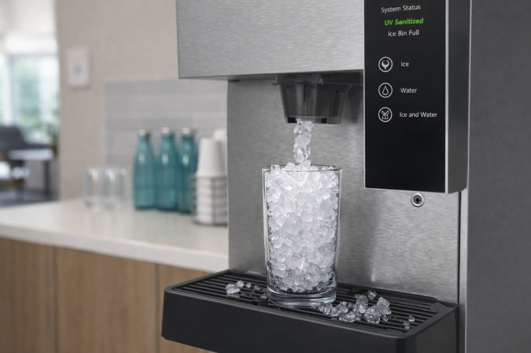
Nugget Ice Machine: Sizing, Cost & Care
Ice machine searches usually start with a simple complaint: “Our ice is gross” or “We keep running out.” If you manage a breakroom, clinic, office, or warehouse, you have probably heard all three of the big concerns. Ice quality complaints. Peak-time shortages. Sanitation worries, especially when everyone is using the same machine all day.
This guide is written to help you make a smart, buyer-level decision. You will learn why chewable nugget ice units are so popular in workplaces, how to size a machine using simple math, and what causes the most common ice problems like soft ice, clumping, low output, and odd taste or odor. We will also cover the number one issue with office ice, which is sanitation and maintenance, and how a managed approach reduces risk and frustration.
Finally, you will see how Da-Com’s Purity Source program can provide a reliable ice and water solution with support that stays consistent in the real world. That means fewer complaints, fewer interruptions, and no one on your team babysitting a machine.
Why workplaces prefer chewable ice
Nugget ice is not just a “nice extra.” In many offices, it becomes the feature people talk about. That matters because what employees like is what they use, and what they use is what actually improves hydration.
Better employee experience with zero learning curve
People do not need instructions for nugget ice. They grab a cup, fill it, and go. Nugget ice feels softer and easier to chew than hard cubes, and it chills drinks quickly. Those simple factors drive repeat use.
When the ice is enjoyable, you tend to see two things happen:
- Employees refill water bottles more often.
- The breakroom becomes a real amenity instead of a utility corner.
A hospitality feel inside an office
A high-quality ice experience is common in hotels, restaurants, and waiting areas. When you bring that into an office or clinic, it upgrades the perception of your space. For client-facing businesses, that is a small detail that supports a professional experience.
This is why nugget ice fits well in:
- Reception areas and conference suites
- Clinics and dental offices
- Customer service centers
- Office environments that host visitors regularly
Helps hydration adoption
Many workplaces try to push hydration with posters, wellness emails, or new reusable bottles. Those efforts can help, but the fastest path is simple: make water and ice easier and more enjoyable.
When you pair purified water with nugget ice, people drink more water because:
- It tastes better.
- It is colder.
- It feels like a treat.
That is not marketing hype. It is basic behavior. Convenience plus enjoyment increases usage.
How to size an ice machine (simple math)
Sizing is where most buyers get stuck. They either buy too small and run out every afternoon, or they buy too big and waste money and space.
The right approach is to size based on:
- Headcount
- Shift patterns
- Peak demand windows
- Whether the ice is for employees only or also for guests
Production vs storage explained
Two specs matter most:
Daily production
This is how much ice the machine can make in 24 hours under specific conditions.
Storage capacity
This is how much ice the bin holds at one time.
Here is the practical takeaway:
- Production is what refills the bin over the day.
- Storage is what gets you through peak periods.
You can run out even with high production if storage is low and demand spikes at the same time.
Simple sizing guidelines by use case
These are general guidelines. A quick assessment will refine them based on your environment.
Small office (10 to 25 people, single shift)
- Moderate daily production
- Lower storage can still work if demand is spread out
Mid-size office (25 to 75 people, single shift)
- Higher production and enough storage to survive lunch rush
- Consider guest usage if you host meetings
Large office or multi-shift (75 to 150+ people, shifts or heavy use)
- Higher production is essential
- Storage becomes a major factor
- Consider dedicated hydration stations to reduce bottlenecks
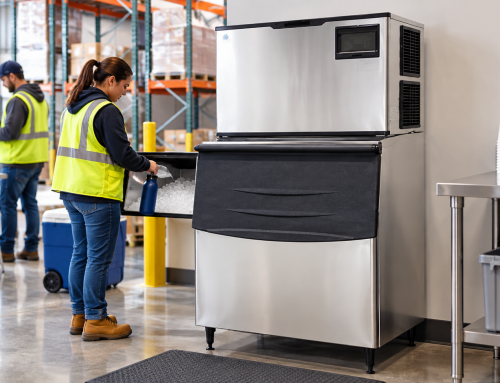
Warehouse or industrial (variable headcount, high heat, high demand)
- Production and storage both need to be sized for peak conditions
- Placement matters for access and traffic flow
Sizing worksheet you can use today
Use this as a quick checklist before you call any vendor:
- How many people are on site on a normal day?
Include full-time, part-time, and frequent visitors. - Do you have one shift or multiple shifts?
Ice use often spikes when shifts change. - What are your peak windows?
Lunch, meetings, shift changes, or afternoon slump. - Is the ice for employee use only, or also for guests and events?
Guest-facing spaces use more ice than most people expect. - How far will people walk to the machine?
Longer walks reduce usage and create crowding. - Do you want one central machine or multiple smaller stations?
A single machine can become a bottleneck.
If you can answer those questions, you can avoid the biggest mistake: buying a machine that matches a brochure, not your real usage.
The #1 issue with office ice: sanitation and maintenance
If there is one reason ice machines fail in workplaces, it is not the equipment itself. It is sanitation and maintenance falling behind real usage.
Ice is food in the practical sense. People consume it, and it touches cups, hands, and sometimes bottle mouths. That means cleanliness matters.
A useful general reference is the FDA Food Code, which provides guidance used by many local and state agencies for food safety practices. You are not running a restaurant, but the principles are helpful for understanding why cleaning routines exist.
Why ice gets funky
Ice problems usually come from a short list of causes:
- Infrequent cleaning
- Biofilm buildup inside the machine
- Poor air circulation or dusty environments
- Water quality issues that affect taste and odor
- Drains and bins that are not maintained
- High-touch surfaces that transfer germs
When people say “the ice tastes weird,” it can be:
- Water quality
- Dirty internal components
- Odor absorption from the environment
- A mix of all three
Cleaning schedule basics
Every machine and environment is different, but the general concept is consistent:
- You need routine cleaning and sanitizing.
- You need filter changes on schedule.
- You need inspections that catch issues before people complain.
CDC guidance on cleaning and disinfection in facilities is a good baseline for understanding shared space hygiene practices. It is not ice-machine specific, but it supports the broader principles of keeping shared equipment clean and reducing contamination risks.
Features that help reduce risk
No feature replaces cleaning. Still, some features can reduce risk and reduce friction:
- Touch-free or reduced-touch dispensing options
- Sanitization support features that help control microbial growth
- Better sealed dispensing zones that reduce exposure
The biggest “feature” is often not hardware. It is having a service plan that keeps maintenance and sanitation from slipping.
Common ice problems and what they usually mean
When a nugget ice machine starts acting up, the symptoms are often predictable. Here is how to interpret what you are seeing and what it typically points to.
Soft ice
Soft or slushy nugget ice can happen when:
- Machine settings are off
- Ambient temperature is high and ventilation is poor
- The unit is struggling to freeze properly
- Maintenance is overdue, which reduces efficiency
If the machine is in a hot corner, near ovens, or in a tight cabinet space, performance will suffer.
Odd taste or odor
This usually points to:
- Water quality issues that need better filtration
- Filters that are overdue
- Internal components that need cleaning and sanitizing
- Nearby odors being absorbed into the ice environment
A helpful concept when talking about filtration is NSF standards, which explain categories of filtration and safety requirements for equipment and materials. NSF resources can help you understand certification language without needing to become an expert.
Low production
Low ice output often comes down to:
- Dirty condenser or airflow issues
- Scale buildup and maintenance gaps
- Water line restrictions or pressure problems
- A unit that is simply undersized for real usage
If you sized your machine for 30 people and now you have 55, the machine is not failing. It is doing what it can with the demand you give it.
Clumping in the bin
Clumping often points to:
- Temperature issues inside the bin
- Poor sealing or frequent opening
- Melt and refreeze cycles
- Infrequent stirring or cleaning depending on design
Clumping can also happen when the machine is overproducing relative to usage and ice sits too long.
When it is water quality vs maintenance vs placement
A quick rule of thumb:
- Taste and odor issues often start with filtration and sanitation.
- Low output often starts with maintenance and placement.
- Consistent shortages usually start with sizing.
The best providers look at all three, because these issues overlap in real life.
Purity Source ice + water solutions (and why support matters)
A nugget ice machine St Louis businesses love is the one that keeps working after the novelty wears off. That requires the right equipment and the right support structure.
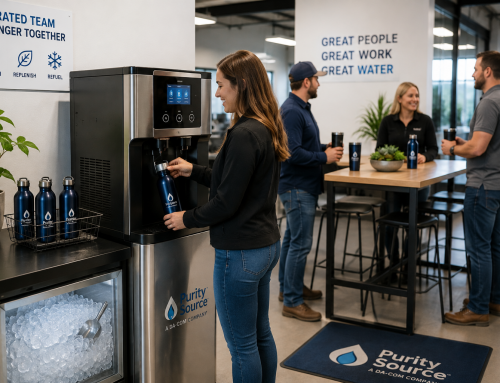
This is the point of Purity Source. Da-Com does not just drop off a unit and hope it goes well. The program is built around long-term performance so your team does not end up managing an ice machine like it is another employee.
What Da-Com handles for you
With a managed ice and water solution, the goal is simple: you should not have to think about it.
Da-Com can handle:
- Right-sizing based on headcount and peak demand
- Placement planning to improve flow and reduce bottlenecks
- Installation and setup
- Ongoing service and support
- Preventive maintenance and scheduled upkeep
This is where many organizations see the real return. A machine is only valuable if it stays consistent.
The “no babysitting” advantage
When you do not have managed support, the machine becomes a slow drip of tasks:
- Someone notices the bin is low
- Someone complains about taste
- Someone tries to clean it with whatever is under the sink
- Someone calls around for service and waits
A managed program reduces that. It makes the ice station a dependable utility again.
Quick next step: assessment and recommendation
If you are considering a nugget ice setup, the fastest path forward is a short assessment. It clarifies:
- The right production and storage
- The best placement
- Whether a combined ice and water solution makes sense
- What service expectations look like
That way, you do not overbuy or underbuy. You buy what works.
FAQ: Nugget ice for workplaces in the St. Louis area
How much ice do we need for 25, 50, or 100 people?
It depends on your peak demand windows, shift patterns, and whether guests use the station. A 50-person office with frequent meetings can use more ice than a 75-person office with spread-out breaks. The best approach is to size based on how many people hit the station at the same time, not only headcount.
How often should an office ice machine be cleaned?
Frequency depends on usage, environment, and machine design. High-traffic or dusty environments typically require more frequent cleaning. A service plan helps ensure cleaning and sanitizing does not slip.
Do you service St. Louis and Metro East locations?
Yes. Da-Com supports organizations across St. Louis and nearby areas, including St. Charles County and Southern Illinois in the Metro East.
What if the unit needs repair?
With a managed solution, you have a clear service path. The goal is to minimize downtime and avoid your staff troubleshooting equipment.
Get the right nugget ice solution, then stop thinking about it
If you are looking for a nugget ice machine St Louis teams actually enjoy and trust, Da-Com can help you size the right unit, place it correctly, and keep it running with included support.
If you’re looking for a nugget ice solution for St. Louis, St. Charles, Chesterfield, Edwardsville, or the Metro East, contact Da-Com to size the right unit and keep it running with included support.


Leave A Comment