
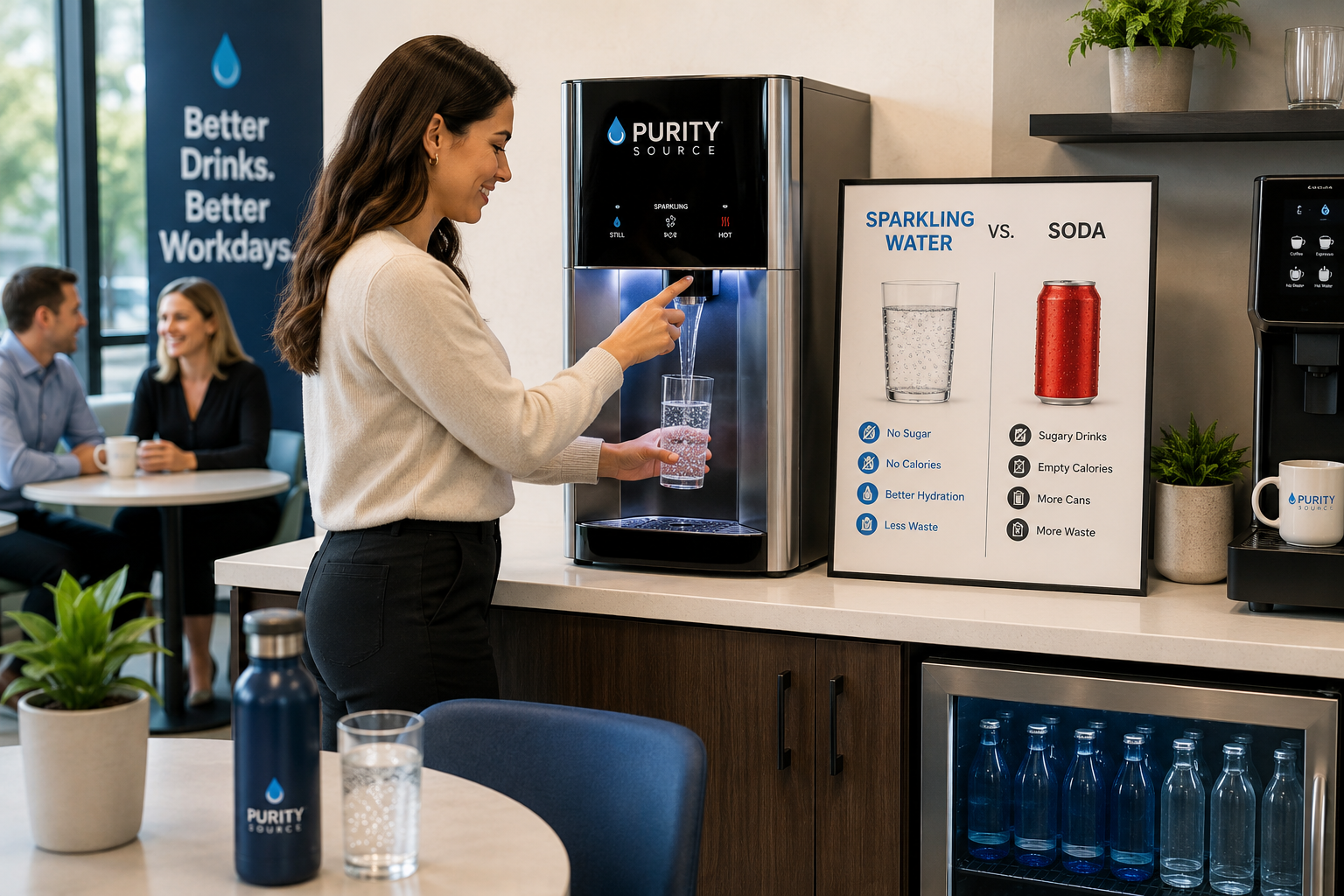
Sparkling Water vs Soda: Better Office Drinks
Sparkling water vs soda is becoming a practical breakroom question for offices that want to offer employees and guests more drink options without adding more clutter, sugar, cans, bottles, and restocking work. For years, soda was the default “extra” beverage in many workplaces. It was familiar, easy to buy, and simple to place in a breakroom fridge.
But soda comes with its own breakroom problems.
Cans pile up. Bottles take over fridge space. Someone has to restock flavors. Employees may want alternatives. Guests may prefer something lighter. Office managers may want fewer single-use containers. Facilities teams may want less recycling overflow. Leadership may want a workplace amenity that feels more modern and wellness-friendly without being restrictive or preachy.
That is why many businesses are comparing sparkling water vs soda as part of a larger office beverage station strategy. Sparkling water gives employees the bubbles and variety they may enjoy from soda, but it can be offered through a cleaner, more streamlined beverage setup. When paired with purified water, ice, hot water, FreshCup, and coffee areas, sparkling water can help the breakroom feel more intentional and easier to manage.
For businesses in St. Louis, St. Charles, the Metro East, Collinsville, Bethalto, Belleville, Edwardsville, and Southern Illinois, sparkling water can be a smart way to upgrade the breakroom while reducing soda dependence, can clutter, and daily beverage management headaches.
Quick Answer: Sparkling Water vs Soda at Work
Sparkling water vs soda at work comes down to what your office wants from its breakroom beverage program. Soda offers familiar flavors and convenience, but it often adds sugar, single-use cans, fridge clutter, recurring restocking, and waste. Sparkling water offers carbonation, a more modern beverage experience, and a lighter alternative that can be dispensed from a workplace beverage station.
For many offices, sparkling water can help:
- Offer a soda alternative without removing choice.
- Reduce cans and bottles in the breakroom.
- Support employee hydration habits.
- Improve guest and client hospitality.
- Modernize the workplace beverage station.
- Reduce fridge clutter and restocking work.
- Pair with purified still water, ice, coffee, and hot water.
- Create a cleaner, more polished breakroom experience.
Sparkling water does not need to replace every soda in every workplace. The best approach is often balance. Offices can provide sparkling water as a more modern everyday option while still offering other drinks for special events, meetings, or employee preferences.
Purity Source, a Da-Com company, provides purified water solutions for businesses that want clean, great-tasting water as the foundation of a better workplace beverage station.
Why Offices Are Rethinking Soda in the Breakroom
Soda is convenient, but it can create more work than many office leaders realize. The breakroom fridge fills with cans. Someone has to decide what flavors to buy. Employees may complain when their preferred drink is gone. Empty cans and bottles fill recycling bins. Storage space gets used for cases. Meeting rooms need drinks moved in and out. Costs repeat every week or month.
For small offices, those tasks may be annoying. For larger offices, clinics, schools, dealerships, service departments, and customer-facing workplaces, they can become a regular facilities or office management chore.
Common soda-related breakroom problems include:
- Fridges crowded with cans and bottles.
- Cases stored in closets, kitchens, or under counters.
- Employees asking for specific flavors.
- Recycling bins overflowing with cans.
- Soda running out before meetings or events.
- Sticky spills around counters or refrigerators.
- Guests having limited non-soda options.
- Restocking becoming one more office task.
There is also the wellness side. The CDC says sugary drinks are the leading source of added sugars in the American diet, and adults who often drink sugary drinks are more likely to experience health problems such as weight gain, obesity, type 2 diabetes, heart disease, cavities, and gout. You can review the CDC resource here: CDC Rethink Your Drink.
That does not mean offices need to ban soda. It means many workplaces are looking for a better default beverage option that still feels enjoyable.
What Sparkling Water Adds to the Office Beverage Station
Sparkling water gives employees and guests carbonation without requiring a breakroom full of soda cans. It can feel more special than plain water while still fitting into a hydration-focused beverage station.
The CDC lists sparkling water, seltzers, flavored waters, plain coffee, and teas as low or no calorie beverage choices that can be part of healthy eating patterns. You can review the CDC resource here: CDC Water and Healthier Drinks.
In the workplace, sparkling water can support:
- Employees who want something more interesting than still water.
- Guests who prefer a lighter meeting beverage.
- Offices trying to reduce soda dependence.
- Breakrooms with limited fridge space.
- Reception areas that need a polished beverage option.
- Teams trying to reduce cans and bottles.
- Companies building a modern beverage station.
Da-Com’s article on sparkling water at work explains when sparkling water makes sense, how it compares with bottled or canned options, and what businesses should ask before adding it.
Sparkling Water vs Soda: Daily Workplace Differences
When comparing sparkling water vs soda, the biggest differences often show up in daily operations. This is not only a nutrition conversation. It is also a breakroom management conversation.
| Category | Soda | Sparkling Water |
|---|---|---|
| Breakroom storage | Requires cases, cans, bottles, or fridge space | Can be dispensed from a beverage station |
| Restocking | Needs frequent flavor and inventory management | Can reduce packaged drink restocking |
| Waste | Creates cans, bottles, cartons, and packaging | Can support reusable bottles and glasses |
| Employee choice | Familiar and flavor-based | Carbonated option without soda as the default |
| Guest experience | Casual and familiar | Modern, polished, and meeting-friendly |
| Wellness positioning | Often sugar-sweetened or artificially sweetened | Can be offered as a low or no calorie option |
| Breakroom appearance | Can create clutter | Can look cleaner and more intentional |
For many offices, the reason to add sparkling water is not to make a strict “either-or” decision. It is to give employees a better everyday choice while reducing the operational burden that comes with stocking soda.
Reducing Cans, Bottles, Fridge Clutter, and Restocking
One of the strongest reasons to compare sparkling water vs soda is clutter. Packaged beverages can quickly take over the breakroom. Even when the office has recycling, cans and bottles still need to be purchased, transported, stored, chilled, used, sorted, and removed.
Packaged soda can create hidden work:
- Someone orders the drinks.
- Someone carries cases into the office.
- Someone finds storage space.
- Someone restocks the fridge.
- Someone cleans spills.
- Someone empties bins.
- Someone tracks which flavors are popular.
- Someone handles complaints when drinks run out.
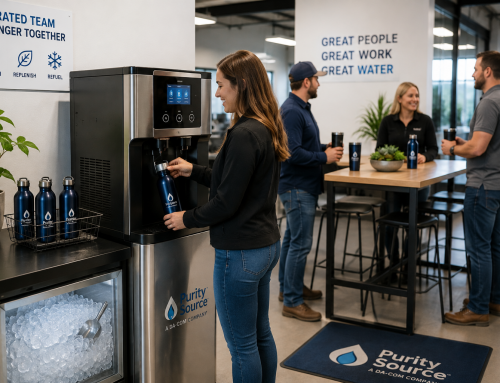
A bottleless sparkling water system can reduce some of that work by dispensing carbonated water directly from a station. Employees can fill reusable bottles, cups, or glasses instead of reaching for another can.
The EPA recommends using a water bottle or thermos instead of disposable bottles and cartons. The EPA also recommends putting a filter on a water tap and refilling bottles with filtered water instead of buying bottled water. You can review the EPA resource here: EPA Reduce Plastic Waste.
Da-Com’s guide to bottleless water systems explains how point-of-use systems can reduce bottled water delivery, storage needs, and recurring restocking problems.
Employee Wellness Without Taking Away Choice
Office beverage decisions can be sensitive. Employees may not want leadership telling them what to drink. That is why sparkling water works best as an added option, not a forced replacement.
The message should not be “no more soda.” A better message is “more choices, less clutter, better breakroom.”
Sparkling water gives employees a carbonated option that feels more enjoyable than plain water but does not require the office to stock as many sugary drinks. Some people may still prefer soda. Others may choose sparkling water most of the time. The benefit is that the workplace offers a more balanced station.
A strong beverage station may include:
- Still purified water.
- Cold water.
- Hot water for tea or instant drinks.
- Ice.
- Sparkling water.
- Coffee.
- Reusable bottles, cups, or mugs.
- FreshCup for reusable drinkware support.
This gives employees options without making the office feel restrictive.
Da-Com’s office beverage station blog can be used as a supporting internal link once published to connect sparkling water with the broader breakroom beverage strategy.
Guest and Client Hospitality Benefits
Sparkling water can make a workplace feel more polished. That matters in offices that host clients, patients, vendors, candidates, board members, partners, or community visitors.
Offering guests a choice between still water, sparkling water, coffee, tea, or ice water feels more intentional than offering a can of soda from the back of the fridge. It also works well in conference rooms, reception areas, waiting rooms, training spaces, and customer lounges.
Sparkling water can support hospitality in:
- Law firms.
- Accounting and financial offices.
- Medical and dental practices.
- Dealerships.
- Customer waiting areas.
- Executive meeting spaces.
- Schools and administrative offices.
- Nonprofits and community organizations.
- Professional service firms.
For businesses that care about first impressions, the beverage station is part of the environment. Clean water, sparkling water, good coffee, fresh ice, and reusable glassware can help the office feel cared for and professional.
When Sparkling Water Makes Sense
Sparkling water is not automatically the right choice for every office. It works best when the workplace has enough daily use, interest from employees, or guest traffic to justify the setup.
Sparkling water may make sense if your office:
- Already stocks soda, canned seltzer, or bottled sparkling water.
- Wants to reduce cans and bottles.
- Has employees asking for better drink options.
- Hosts clients, patients, or guests regularly.
- Has a modern breakroom or conference area.
- Wants to support hydration without relying only on plain water.
- Is upgrading purified water, ice, or coffee service.
- Wants a more polished beverage station.
Sparkling water may not be the first priority if the office still lacks reliable purified water, cold water, hot water, or basic beverage access. In that case, start with the foundation first. Then add sparkling water when the rest of the station is ready.
How to Add Sparkling Water Without Creating Another Chore
The best sparkling water setup should make the breakroom easier, not harder. If adding sparkling water creates more restocking, more cleaning, more supplies to track, or more vendors to manage, it may miss the point.
Before adding sparkling water, ask:
- How many employees would use it?
- Do guests or clients need beverage options?
- Where should the dispenser be placed?
- Will it connect to the existing water line?
- Is filtered or purified water included?
- Who handles service?
- How are CO2 or carbonation needs managed?
- Does the provider also support still water, ice, and coffee?
- Will the system reduce packaged beverage purchases?
- Can employees use reusable bottles or glasses?
Service matters because beverage stations are used every day. If the system is not maintained, employees will notice quickly.
Da-Com’s office water filter changes guide explains why maintenance, filter changes, and clear service ownership matter for workplace water and beverage systems.
Workplace Water Still Comes First
Sparkling water is a breakroom upgrade, but drinking water access is foundational. OSHA’s workplace sanitation standard defines potable water as water that meets drinking water standards of the state or local authority with jurisdiction, or EPA National Primary Drinking Water Regulations. You can review OSHA’s standard here: OSHA 1910.141 Sanitation.
For office managers and facilities teams, this means the beverage station should start with reliable drinking water. Sparkling water should build on that foundation.
A complete beverage station may include:
- Purified still water.
- Cold water.
- Hot water.
- Ice.
- Sparkling water.
- Coffee.
- FreshCup for reusable cups and mugs.
When these pieces work together, the breakroom becomes easier to manage and more useful for the people who use it every day.
Sparkling Water vs Soda for Different Office Types
Different businesses may compare sparkling water vs soda for different reasons.
Professional Offices
Law firms, accounting firms, insurance offices, financial firms, and consulting teams often want a polished beverage option for clients and conference rooms. Sparkling water can make meetings feel more elevated without stocking cases of bottled beverages.
Medical and Dental Offices
Healthcare environments often care about cleanliness, guest comfort, and employee amenities. Sparkling water can support staff breakrooms or patient-facing hospitality areas when paired with still water and coffee.
Dealerships and Customer Waiting Areas
Dealerships often provide drinks for customers waiting on service. Sparkling water can offer a cleaner, more modern alternative to a fridge full of cans.
Schools and Administrative Offices
School offices and staff lounges may use sparkling water as part of a broader beverage station for faculty, administrators, and visitors.
Service and Industrial Offices
Service departments, warehouse offices, and industrial teams may still need strong water and ice access first. Once that foundation is in place, sparkling water can add variety for office areas, guests, and employee breakrooms.
Sparkling Water vs Soda Checklist
Use this checklist before deciding whether sparkling water belongs in your office beverage station.
- Review current soda, canned drink, and bottled beverage purchases.
- Look at fridge space and storage space used for drinks.
- Estimate how often employees drink soda or canned sparkling water.
- Ask whether employees want a soda alternative.
- Consider guest, client, patient, or visitor traffic.
- Review current recycling and trash volume from beverage containers.
- Decide where sparkling water would be placed.
- Ask how carbonation and service are managed.
- Make sure purified still water is already part of the setup.
- Consider whether reusable bottles or glasses will be used.
- Ask whether the provider can also support water, ice, coffee, and FreshCup.
Common Mistakes to Avoid
Replacing Soda Without Asking What Employees Want
Sparkling water works best when it is introduced as a better option, not as a surprise restriction. Employee buy-in matters.
Adding Sparkling Water Before Fixing Basic Water Access
If employees do not have reliable cold, purified water, start there first. Sparkling water should build on a strong water foundation.
Keeping the Same Amount of Packaged Drinks
If the office adds sparkling water but continues buying the same amount of soda, clutter and cost may not improve. Review purchasing habits after installation.
Ignoring Service Requirements
Sparkling water needs service, filtration, and carbonation support. Make sure ownership is clear.
Forgetting About Cups, Bottles, and Glassware
A sparkling water station works best when employees have easy access to reusable bottles, cups, or glasses. FreshCup may help support reusable drinkware in the breakroom.
Why St. Louis and Southern Illinois Offices Are Adding Sparkling Water
Businesses across St. Louis and Southern Illinois are upgrading breakrooms because employee expectations, guest hospitality, and office management needs have changed. A beverage station is no longer just a coffee pot and a water cooler. It can be a practical workplace amenity that supports hydration, choice, convenience, and a cleaner environment.
A St. Louis professional office may add sparkling water for client meetings. A Belleville healthcare practice may use it to offer staff and guests a more polished beverage option. A Collinsville service business may want to reduce soda cans and fridge clutter. A Bethalto industrial office may want sparkling water in the main office while keeping water and ice available near the warehouse team. A St. Charles company may want a modern breakroom that feels more intentional.
The best setup depends on how the workplace actually uses beverages. For some offices, sparkling water may be the missing piece. For others, it may make sense after purified water, ice, and coffee are already in place.
Frequently Asked Questions About Sparkling Water vs Soda
Is sparkling water better than soda for offices?
For many offices, sparkling water can be a better everyday beverage option because it reduces reliance on sugary drinks, cans, bottles, and restocking. Some workplaces may still keep soda for special events or employee choice.
Does sparkling water hydrate like regular water?
Plain sparkling water can support hydration similarly to still water for many people. Offices should still provide access to regular potable drinking water as the foundation of the beverage station.
Can sparkling water replace soda in the breakroom?
It can replace some soda use, but it does not have to replace every soda immediately. Many businesses introduce sparkling water as an additional option first.
Will employees actually use sparkling water?
Usage depends on employee preferences, placement, taste, temperature, and how easy the system is to use. Offices that already buy canned sparkling water or soda are often good candidates.
Does sparkling water reduce breakroom clutter?
It can. A bottleless sparkling water dispenser may reduce the need for cases of soda, canned sparkling water, and bottled beverages.
Where should sparkling water be placed?
Good locations include breakrooms, conference areas, reception spaces, employee lounges, and customer waiting areas. Placement should follow traffic patterns and beverage use.
Can sparkling water be part of a full office beverage station?
Yes. Sparkling water works well with purified still water, hot water, ice, coffee, and FreshCup as part of a complete workplace beverage station.
Make the Better Drink Choice Easier
Sparkling water vs soda is not only about what employees drink. It is about how the breakroom works.
Soda may be familiar, but it often brings cans, bottles, fridge clutter, sugar, restocking, and waste. Sparkling water gives offices a modern alternative that can support employee choice, guest hospitality, hydration, and a cleaner beverage station.
The best approach is not to take choice away. It is to make better choices easier. Start with purified water. Add ice if employees use it. Consider coffee, hot water, and FreshCup for a complete beverage experience. Then add sparkling water when your office is ready for a more polished soda alternative.
To learn more about sparkling water vs soda for your St. Louis, St. Charles, Metro East, Collinsville, Bethalto, Belleville, Edwardsville, or Southern Illinois business, contact Da-Com today. Purity Source can help you evaluate sparkling water, purified water, ice, coffee, FreshCup, placement, capacity, and service so your breakroom is easier to manage and better for employees and guests.


Leave A Comment