
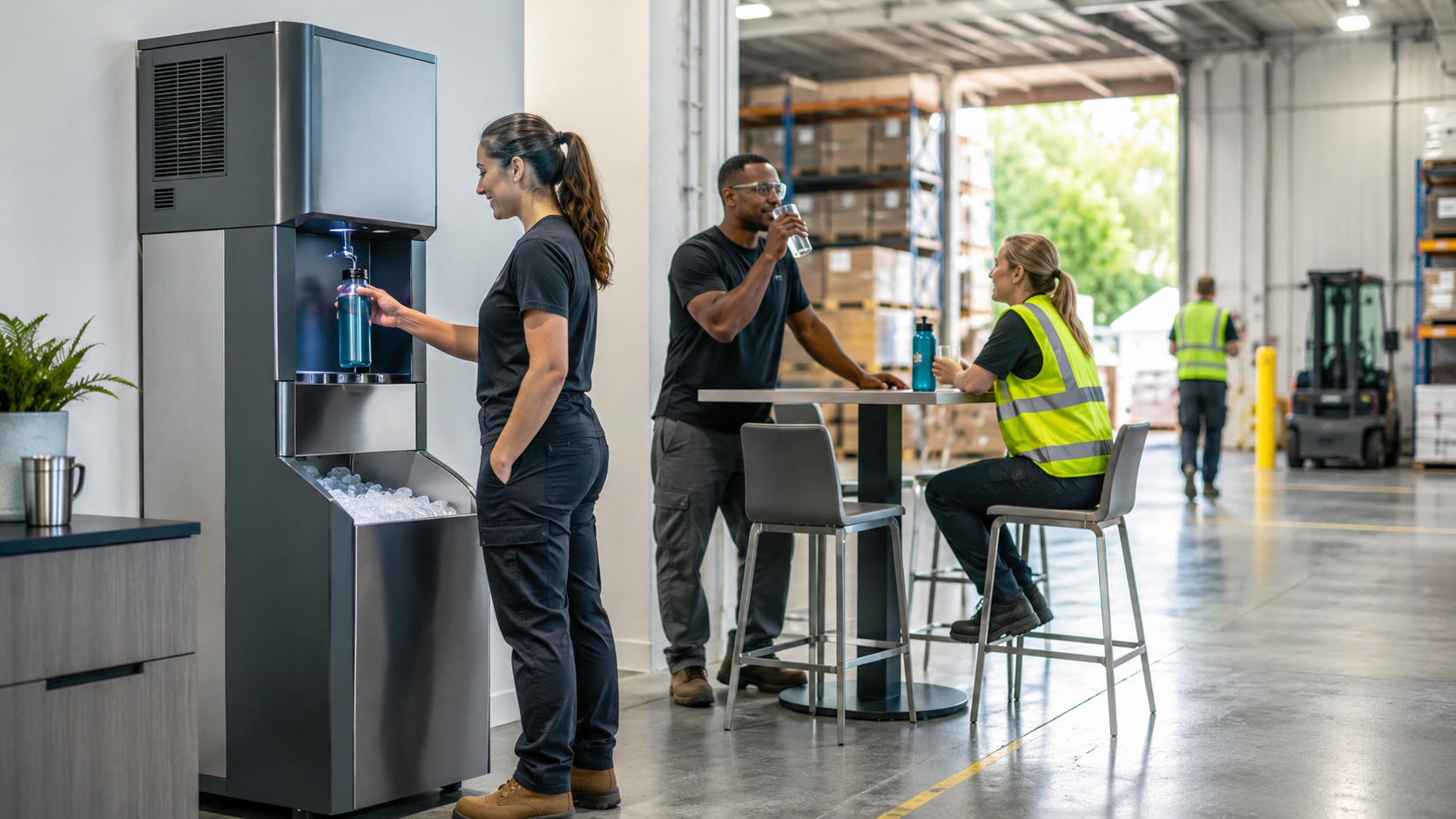
Warehouse Water Station: Water and Ice Setup for Summer Heat
Warehouse water station planning becomes especially important during summer heat, when employees are working in large spaces, moving between departments, loading trucks, handling physical tasks, or spending long shifts away from a traditional office breakroom. Warehouses, manufacturing plants, distribution centers, service departments, auto dealerships, school facilities, and production spaces all have different hydration needs than a standard office.
In an office, employees may be only a short walk from a breakroom, refrigerator, or kitchen sink. In a warehouse or manufacturing environment, water access can be more spread out. Teams may be working near dock doors, production lines, storage areas, shipping stations, repair bays, or large equipment. During hot months, especially in St. Louis and Southern Illinois, the difference between a convenient hydration setup and an inconvenient one becomes much more noticeable.
A good water and ice setup is not just about having a cooler in the corner. It is about making cold, good-tasting drinking water easy to access, easy to refill, and easy to maintain. It is also about reducing bottled water clutter, avoiding constant restocking, supporting employees through high-traffic periods, and giving facilities managers one less thing to chase during the hottest part of the year.
For businesses in St. Louis, St. Charles, the Metro East, Collinsville, Bethalto, Belleville, Edwardsville, and Southern Illinois, the right warehouse water station can help support employee comfort, workplace hydration, operational efficiency, and a more reliable breakroom or production floor experience.
Quick Answer: What Is the Best Water and Ice Setup for Warehouses?
The best water and ice setup for a warehouse is a high-capacity, easy-to-access hydration station that provides cold, filtered or purified water, reliable ice production, bottle-filling convenience, and scheduled service. For many facilities, this means a bottleless water system, commercial ice and water dispenser, or a combination of purified water units placed near the areas where employees actually work.
A strong warehouse hydration setup should include:
- Cold, purified drinking water.
- Enough capacity for peak usage.
- Fast refill access for reusable bottles.
- Ice availability for water bottles, cups, coolers, and break areas.
- Placement near high-traffic employee areas.
- Clear service and filter change schedules.
- Sanitary dispensing features.
- Reduced dependence on delivered bottled water.
- Reliable support if a unit needs maintenance.
The right system depends on headcount, shift structure, building layout, traffic patterns, temperature conditions, and how employees currently access water. A small service department may need one strategically placed unit. A larger manufacturing plant or warehouse may need multiple hydration points across the facility.
Purity Source, a Da-Com company, offers purified water solutions designed to help businesses provide clean, great-tasting drinking water without the storage, lifting, and delivery headaches of traditional bottled water programs.
Why Summer Hydration Looks Different in Warehouses and Manufacturing Spaces
Summer hydration is different in warehouses and manufacturing environments because employees may be working harder physically, moving through larger spaces, wearing protective equipment, operating near equipment, or working in areas where temperatures fluctuate throughout the day.
OSHA’s heat prevention guidance emphasizes water, rest, and shade as part of protecting workers in hot conditions. OSHA advises employers to provide cool water for workers and notes that hydration is essential to helping prevent heat-related illness. For workers in the heat for two hours or more, OSHA also recommends access to additional fluids that contain electrolytes. You can review OSHA’s guidance here: OSHA Water. Rest. Shade.
CDC/NIOSH also explains that indoor and outdoor workers exposed to hot environments can experience occupational heat stress, which may increase the risk of heat-related illness and injury. You can review the CDC/NIOSH heat stress resource here: CDC/NIOSH Heat Stress and Workers.
A warehouse water station does not replace a formal heat illness prevention plan, proper supervision, training, rest breaks, or safety procedures. But it can be an important part of making hydration easier and more visible during hot workdays.
Common warehouse hydration challenges include:
- Water access points are too far from active work zones.
- Employees rely on plastic bottled water cases.
- Delivered water runs out during hot weeks.
- Ice is not available where employees need it.
- Reusable bottles are hard to refill quickly.
- Breakroom coolers cannot keep up with multi-shift teams.
- Facilities staff have to restock, lift, store, and manage bottles.
- Older dispensers create complaints about taste, temperature, or reliability.
When hydration is inconvenient, employees may drink less water than they should during the day. A better setup makes the right choice easier.
What High-Traffic Teams Need From a Warehouse Water Station
A warehouse water station needs to be designed for real usage, not just ideal conditions. The right system should fit the number of employees using it, the layout of the building, the busiest refill times, and the way people move through the facility.
High-traffic workplaces often need more than a basic water cooler. They may need a system that can support employees before shifts, during breaks, after lunch, and during hot afternoon periods when refills increase.
Capacity
Capacity matters because water demand is not always evenly spread throughout the day. Employees may refill bottles at shift start, during scheduled breaks, at lunch, and before leaving. If the system cannot keep up, lines form and people look for other options.
Cold Water Performance
Temperature matters during summer. Employees working in hot environments are more likely to appreciate cold water that is consistent throughout the day. A unit that produces cold water for the first few users but warms up quickly may not be the best fit for high-traffic teams.
Fast Bottle Filling
Reusable bottles are common in warehouses, production facilities, and service departments. A good setup should make bottles easy to fill without awkward angles, slow dispensing, or splashing.
Easy Placement
Placement should reflect how employees move. The best location is not always the office breakroom. It may be near a time clock, warehouse entrance, production support area, dispatch desk, maintenance zone, or employee corridor.
Service Reliability
A water station that performs well on installation day but is not maintained properly can become a frustration later. Filters need service. Units need care. Ice machines need cleaning. Usage patterns need to be reviewed over time.
Da-Com’s guide to bottleless water systems explains how point-of-use water can help businesses reduce bottled water delivery, storage requirements, and recurring delivery problems.
Why Ice Matters for Warehouse and Manufacturing Teams
Water is the priority, but ice can make a major difference in high-heat workplaces. Ice helps employees keep bottles cold longer, fill personal cups, prepare coolers, support outdoor crews, and improve the overall break experience during summer.
For warehouses, manufacturing teams, and industrial spaces, ice can be useful for:
- Reusable water bottles.
- Employee cups and tumblers.
- Breakroom drink stations.
- Coolers for outdoor or mobile teams.
- Service departments and field crews.
- Customer or visitor areas.
- Shift change refill periods.
A water-only setup may work for some offices, but warehouses and production spaces often benefit from a combined water and ice strategy. If employees are working in warm areas or away from air-conditioned spaces, ice can help keep water cold throughout the shift.
The type and size of ice machine matters. A small office ice machine may not keep up with a multi-shift warehouse. A machine that works well for 25 office employees may struggle with 75 warehouse employees using it during the same break period. Capacity should be based on actual use, not only total headcount.
Purity Source can help businesses think through ice and water together rather than treating them as two unrelated decisions. Da-Com’s nugget ice machine guide explains why sizing, sanitation, service, and ongoing support matter for workplace ice.
Warehouse Water Station Placement: Where Should Units Go?
Placement is one of the most important parts of planning a warehouse water station. A great unit in the wrong location may not solve the problem.
Before choosing a location, ask:
- Where do employees naturally pass during the day?
- Where do employees clock in and out?
- Where are breaks taken?
- Where do teams gather before shifts?
- Which areas get hottest?
- Are there long walks between work zones and the current water source?
- Do employees need ice near dispatch, loading, maintenance, or production areas?
- Can the unit connect to the building water line?
- Is there enough space around the unit for safe access?
- Will the location create congestion during shift changes?
For some buildings, one central unit is enough. For larger warehouses or production facilities, multiple smaller hydration points may be better than one overloaded station. Employees are more likely to drink water regularly when access is convenient.
Breakroom Placement
A breakroom is the most common location because employees already expect beverages there. This works well when the breakroom is central, accessible, and large enough for peak traffic.
Production Support Areas
Some manufacturing teams benefit from a hydration station near production support offices or team areas, especially if the main breakroom is far from the floor.
Shipping and Receiving Areas
Shipping and receiving teams often work near dock doors and high-movement areas. A nearby hydration point can reduce long walks and make water access easier during busy periods.
Service Departments
Auto dealerships, equipment service teams, and field service departments may need water and ice close to technicians who move between bays, vehicles, and customer areas.
Bottleless vs. Delivered Water for Warehouses
Many warehouses start with bottled water because it seems simple. Cases of water or large jugs can be ordered quickly, stored somewhere in the facility, and handed out as needed. But over time, bottled water often creates hidden work.
Bottled water programs can create challenges such as:
- Storage space taken up by cases or jugs.
- Employees lifting and moving heavy bottles.
- Plastic waste from single-use bottles.
- Running out during hot weeks.
- Delivery schedules that do not match usage.
- Clutter in breakrooms or warehouse corners.
- Empty bottles or packaging needing disposal.
- Inconsistent availability across shifts.
A bottleless water system connects to the building water line and treats water at the point of use. This gives employees continuous access without relying on delivered bottles or cases.
For warehouses and manufacturing environments, bottleless systems can be especially useful because they reduce restocking work. Instead of someone checking inventory, moving cases, and managing empties, the system is installed and maintained through a service plan.
Da-Com’s article on office water delivery vs. bottleless systems explains how bottleless systems compare with delivered water from a cost, storage, service, and convenience perspective.
What Employers Should Know About Potable Water
Workplace drinking water is not only a convenience issue. OSHA’s sanitation standard defines potable water as water that meets drinking water standards of the state or local authority with jurisdiction, or EPA National Primary Drinking Water Regulations. You can review the OSHA sanitation standard here: OSHA 29 CFR 1910.141 Sanitation.
For facilities managers, that means water access should be treated as part of the workplace environment, not an afterthought. Employees need reliable access to drinking water that is clean, available, and practical for the way the facility operates.
A warehouse water station can help support a more visible and consistent water access strategy. It gives employees a clear place to refill bottles, get cold water, and access ice when needed. It also helps create a better experience than scattered cases of bottled water or outdated dispensers that employees may avoid.
For businesses in older buildings, industrial spaces, or facilities with multiple water access points, point-of-use filtration can also provide visible reassurance. Employees can see where drinking water is dispensed and know that the system is part of a managed service program.
How to Size a Warehouse Water Station
Sizing should be based on how the facility operates. Headcount matters, but it is not the only factor.
Consider:
- Total employee count.
- Number of shifts.
- Peak break periods.
- Building square footage.
- Distance between work zones and water access.
- Temperature conditions.
- Whether employees use reusable bottles.
- Whether ice is needed daily.
- Whether outdoor or field teams fill coolers.
- Visitor, customer, or driver traffic.
- Existing breakroom layout.
- Plumbing and installation options.
A warehouse with 40 employees on one shift may need a different setup than a facility with 25 employees spread across three shifts. A manufacturing plant with hot production zones may need more access points than a climate-controlled distribution office. A service department with technicians leaving for calls may need ice and water near dispatch.
A good provider should ask about real usage before recommending a unit. If the recommendation is based only on headcount, it may miss important details.
Service Matters More During Peak Heat
A water and ice setup is only helpful if it keeps working. During summer, usage usually increases. That is exactly when service matters most.
Facilities teams should ask:
- Who changes the filters?
- How often is service performed?
- Who cleans or maintains the ice machine?
- What happens if the unit is not dispensing properly?
- How quickly can support respond?
- How is usage reviewed over time?
- Can the provider adjust the setup if the current unit is too small?
- Are there seasonal needs to plan for before summer starts?
Without a clear service plan, the hydration station can become another facilities task. The goal should be the opposite. A managed water and ice program should simplify the work, not add to it.
This is especially important in high-traffic workplaces where employees rely on the unit every day. If a cooler or ice machine is down during a hot week, the issue becomes noticeable quickly.
Common Mistakes to Avoid
When planning a warehouse water station, avoid these common mistakes:
Choosing a Unit That Is Too Small
A unit that works for a small office may not support a warehouse or manufacturing team. Undersized systems can lead to slow refills, warmer water, ice shortages, and complaints during peak usage.
Putting the Station Too Far Away
If employees have to walk too far, they may not use it as often. Placement should fit the flow of the building.
Ignoring Ice Demand
In summer, ice can become just as important as water for many teams. If employees fill large bottles or coolers, plan for that demand.
Relying on Bottled Water Forever
Bottled water may be useful for temporary needs, but it can create recurring storage, lifting, restocking, and waste issues over time.
Skipping Service Planning
Filters, cleaning, and maintenance cannot depend on someone remembering. A clear service schedule protects the experience over time.
Warehouse Water Station Checklist
Use this checklist before choosing a water and ice setup for a warehouse, manufacturing facility, or high-traffic workplace.
- Identify the highest-traffic employee areas.
- Review shift schedules and break times.
- Estimate bottle refill demand.
- Decide whether ice is needed.
- Review current bottled water costs and storage issues.
- Check plumbing and installation options.
- Consider one central station versus multiple access points.
- Ask about filtration and service schedules.
- Ask about ice machine cleaning and maintenance.
- Plan for summer usage before peak heat arrives.
- Choose a provider that can support the system after installation.
This checklist can help facilities managers think beyond the machine and focus on how the system will work in daily operations.
Why St. Louis and Southern Illinois Businesses Are Updating Workplace Hydration
Businesses across St. Louis and Southern Illinois are rethinking workplace hydration because employee expectations, summer heat, facility layouts, and service needs have changed. A few cases of bottled water or an old cooler may not be enough for teams working in large, busy, or physically demanding environments.
Warehouses, manufacturers, dealerships, schools, distribution centers, service departments, and industrial facilities often need hydration setups that are more durable, more convenient, and easier to manage.
That does not always mean choosing the largest unit. It means choosing the right setup for the building and the team.
For example, a Collinsville warehouse may need a bottleless water and ice unit near the shipping area. A Bethalto industrial facility may need purified water access near a production support area. A St. Louis service department may need ice and water close to technicians before they leave for the day. A Southern Illinois manufacturing plant may need multiple hydration points across a larger footprint.
The best setup is the one employees will actually use.
Frequently Asked Questions About Warehouse Water Stations
What is a warehouse water station?
A warehouse water station is a dedicated water access point designed for high-traffic workplaces such as warehouses, manufacturing facilities, distribution centers, service departments, and industrial spaces. It may include cold purified water, bottle filling, ice, or a combination of water and ice features.
Why do warehouses need a different water setup than offices?
Warehouses often have larger layouts, more physical work, shift changes, dock areas, warmer environments, and employees farther away from traditional breakrooms. A better hydration setup makes water more accessible throughout the workday.
Should a warehouse water station include ice?
Many warehouses and manufacturing teams benefit from ice, especially during summer. Ice helps employees keep bottles cold, fill cups, prepare coolers, and stay more comfortable during hot workdays.
Is bottleless water better than delivered bottled water for warehouses?
For many high-traffic workplaces, bottleless water can reduce storage, lifting, restocking, delivery coordination, plastic waste, and the risk of running out. The best choice depends on headcount, layout, usage, and service needs.
Where should a warehouse water station be placed?
Good locations include breakrooms, time clock areas, shipping and receiving zones, production support areas, service departments, and employee corridors. Placement should follow employee traffic patterns.
How many water stations does a warehouse need?
The right number depends on headcount, shift structure, building size, work zones, and peak usage. Larger facilities may need multiple hydration points instead of one central station.
How often should water and ice systems be serviced?
Service schedules depend on the equipment, usage, water quality, and manufacturer recommendations. Businesses should choose a provider that manages filter changes, maintenance, and ice machine service on a clear schedule.
Build a Better Hydration Setup Before Peak Heat
Summer is not the time to discover that your workplace hydration setup is not keeping up.
A warehouse water station can help employees access cold, purified water and ice more easily throughout the workday. It can reduce bottled water storage, improve refill convenience, support reusable bottles, simplify service, and create a cleaner, more reliable hydration experience for high-traffic teams.
For warehouses, manufacturing teams, service departments, and industrial workplaces, the right system should be planned around real usage. Headcount matters, but so do shift schedules, layout, heat exposure, ice demand, bottle filling, and service reliability.
Purity Source helps businesses think through the full setup, including purified water, bottleless systems, ice, placement, capacity, and ongoing service.
To learn more about a warehouse water station for your St. Louis, St. Charles, Metro East, Collinsville, Bethalto, Belleville, Edwardsville, or Southern Illinois business, contact Da-Com today. Purity Source can help you choose a water and ice setup that supports employees, reduces restocking headaches, and keeps hydration easier to manage during summer heat and beyond.



Leave A Comment