
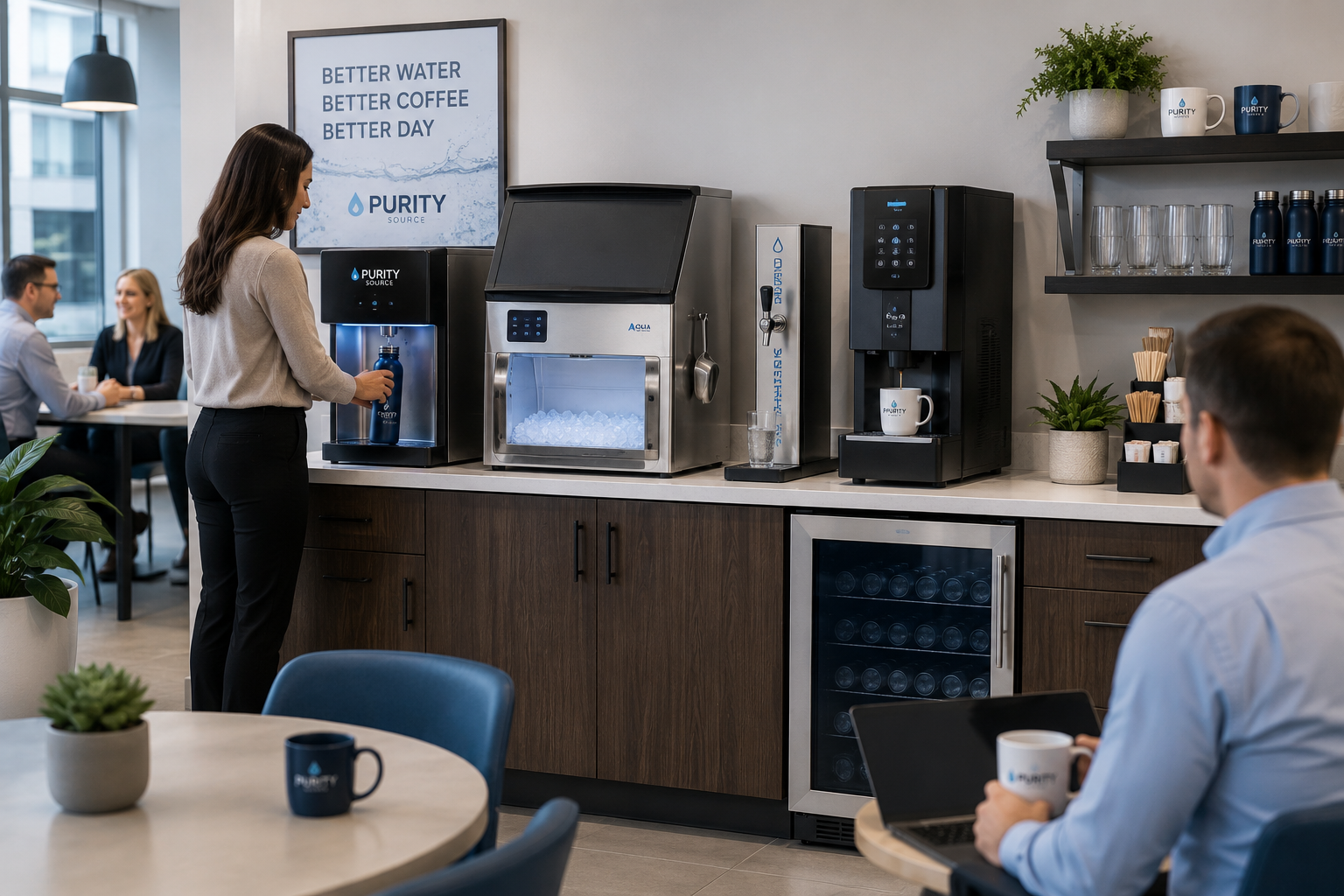
Office Beverage Station: Water, Ice, Coffee and Sparkling
Office beverage station planning is becoming more important as businesses rethink what employees, guests, clients, patients, and visitors expect from the workplace breakroom. Years ago, a basic coffee pot, a water cooler, and maybe a few cases of soda may have felt like enough. Today, many workplaces want a cleaner, easier, more modern setup that supports hydration, hospitality, employee experience, and facility management without creating another chore.
A strong office beverage station brings the most-used drink options into one practical setup. That may include purified still water, cold water, hot water, ice, sparkling water, and fresh cup coffee. The goal is not to make the breakroom complicated. The goal is to make it easier for people to get what they need during the day while reducing clutter, restocking, storage, and service headaches.
For businesses in St. Louis, St. Charles, the Metro East, Collinsville, Bethalto, Belleville, Edwardsville, and Southern Illinois, a modern beverage station can help solve several common breakroom problems at once. Employees stop relying on random bottled water cases. Guests have a better experience during meetings. Facilities teams spend less time chasing supplies. Offices reduce single-use bottles and cans. Coffee tastes more consistent. Water and ice are easier to access. The whole breakroom feels more intentional.
This guide explains what an office beverage station should include, how to choose the right setup based on your workplace, where purified water, ice, sparkling water, and fresh cup coffee fit, and what to ask before upgrading your breakroom.
Quick Answer: What Is an Office Beverage Station?
An office beverage station is a dedicated workplace drink area that gives employees and visitors convenient access to the beverages they use most often. A complete setup may include purified water, cold water, hot water, ice, sparkling water, fresh cup coffee, cups, reusable bottle filling, and simple service support.
A modern workplace beverage station may include:
- Purified still water.
- Cold water for daily hydration.
- Hot water for tea, instant drinks, and oatmeal.
- Ice for bottles, cups, meetings, and hospitality areas.
- Sparkling water as an alternative to soda or cans.
- Fresh cup coffee for employees and guests.
- Reusable bottle filling access.
- Sanitary dispensing options.
- Scheduled filter changes and service.
- A layout that reduces clutter and restocking.
The best office beverage station is not the one with the most equipment. It is the one that fits your team, space, traffic patterns, visitor experience, and service expectations.
Purity Source, a Da-Com company, provides purified water solutions for businesses that want clean, great-tasting drinking water without the storage, lifting, and delivery issues that often come with bottled water.
Why Office Beverage Stations Are Becoming More Popular
Workplace expectations have changed. Employees are paying more attention to breakroom quality, hydration options, wellness-friendly choices, and whether the workplace feels clean and cared for. Clients, candidates, and visitors notice those details too.
A beverage station may seem like a small amenity, but it affects the day in practical ways. People use it when they arrive, before meetings, during breaks, after lunch, and before leaving. It becomes part of the office rhythm.
Many workplaces are upgrading because they want to solve problems such as:
- Cases of bottled water taking up storage space.
- Empty cans and bottles cluttering the breakroom.
- Employees complaining about coffee taste or stale coffee pots.
- Guests having limited drink options during meetings.
- Facilities teams constantly restocking drinks.
- Older water coolers that feel outdated or inconvenient.
- Separate vendors for water, ice, coffee, and supplies.
- Breakrooms that no longer reflect the company’s employee experience goals.
The CDC explains that drinking enough water is important for health and that water can help prevent dehydration, which may contribute to unclear thinking, mood changes, overheating, constipation, and kidney stones. The CDC also notes that water has no calories and can help reduce caloric intake when it replaces sugary drinks. You can review the CDC resource here: CDC Water and Healthier Drinks.
That matters in the workplace because beverage choices are daily habits. When water is easy, cold, clean-tasting, and convenient, employees are more likely to use it.
The Core Setup: Purified Water, Cold Water and Hot Water
The foundation of most office beverage station setups is purified water. Before adding sparkling water, coffee, ice, or specialty beverages, the workplace needs reliable water that people actually want to drink.
A point-of-use or bottleless water system connects to the building water line and treats water where employees use it. This is different from delivered bottled water, which requires storage, lifting, delivery coordination, bottle swapping, and empty bottle management.
A strong water station should provide:
- Clean, good-tasting water.
- Cold water for daily hydration.
- Hot water for tea, instant coffee, cocoa, oatmeal, and other breakroom uses.
- Fast dispensing for cups and bottles.
- A service plan for filters and maintenance.
- A professional look that fits the office.
For many offices, purified water becomes the anchor of the breakroom because it supports everything else. Coffee tastes better when the water is consistent. Ice feels more trustworthy when it is made from treated water. Sparkling water becomes more appealing when the base water tastes clean. Employees and visitors are more likely to choose water when the dispenser feels modern and reliable.
Da-Com’s guide to bottleless water systems explains how point-of-use water can help businesses reduce bottled water delivery, storage, and restocking challenges.
Why Ice Belongs in a Modern Office Beverage Station
Ice may seem like a small detail until the office does not have enough of it. Employees use ice for water bottles, tumblers, iced coffee, tea, personal drinks, meetings, and guest hospitality. In larger offices, medical offices, dealerships, schools, service departments, and high-traffic workplaces, ice can become one of the most-used breakroom features.
Adding ice to an office beverage station can help with:
- Cold water bottles.
- Meeting beverages.
- Employee tumblers and cups.
- Guest hospitality.
- Client-facing areas.
- Iced coffee and tea.
- Breakroom satisfaction.
- Reducing trips to store-bought ice bags.
The right ice setup depends on headcount, daily traffic, space, and whether your team prefers nugget ice or cube ice. A small office may only need a compact option. A larger workplace may need a higher-capacity ice and water unit. A dealership, clinic, school, warehouse office, or service department may need more capacity than a traditional office breakroom.
Da-Com’s nugget ice machine guide explains why sizing, cost, cleaning, service, and ongoing support matter when choosing an office ice machine.
Nugget Ice vs. Cube Ice
Nugget ice is soft, chewable, and popular with employees who like the familiar “Sonic-style” texture. It can be a strong choice for employee breakrooms, healthcare environments, hospitality areas, and offices where the ice experience is part of the perk.
Cube ice is denser and melts more slowly, which can make it useful for drinks that need to stay cold longer. It may be a better fit for higher-volume areas, coolers, service departments, and spaces where durability matters more than texture.
The right choice depends on how people use the ice. A provider should ask about real usage rather than recommending the same machine for every workplace.
Where Sparkling Water Fits in the Office Beverage Station
Sparkling water is becoming a popular workplace beverage option because it gives employees and guests something more interesting than plain still water without relying on soda, cans, or bottled drinks.
For many offices, sparkling water works well when the company wants to:
- Reduce soda and canned drink dependence.
- Offer a more premium guest experience.
- Encourage more water consumption.
- Reduce bottle and can clutter.
- Modernize the breakroom.
- Give employees more choice without adding major restocking work.
The CDC notes that sugary drinks are the leading source of added sugars in the American diet and says adults who often drink sugary drinks are more likely to experience health problems such as weight gain, obesity, type 2 diabetes, heart disease, cavities, and gout. You can review the CDC’s guidance here: CDC Rethink Your Drink.
Sparkling water can be useful because it gives employees a drink that feels more enjoyable than plain water, especially when they are trying to reduce soda. It can also create a more polished experience in reception areas, conference rooms, hospitality spaces, and client-facing offices.
Da-Com’s article on sparkling water at work explains when sparkling water makes sense, how it compares with bottled or canned options, and what businesses should ask before adding it.
Fresh Cup Coffee and the Bigger Breakroom Experience
Coffee is often the most emotionally charged part of the breakroom. Employees may tolerate a basic water cooler, but they usually have opinions about coffee. Too weak. Too strong. Burnt. Stale. Messy. Empty. Wasteful. Too many pods. Not enough options. Someone forgot to make another pot.
Fresh cup coffee can help solve some of those complaints by giving employees and guests a more consistent beverage experience. Instead of relying on a shared pot that sits too long or single-serve pods that create waste and supply clutter, a fresh cup system can produce coffee on demand.
Fresh cup coffee can support:
- Better taste consistency.
- Less stale coffee waste.
- More professional guest hospitality.
- Cleaner breakroom presentation.
- More choice for employees.
- Better support for hybrid offices with uneven traffic.
Water quality matters here too. Coffee is mostly water, so the quality and consistency of the water can affect taste. When the office beverage station uses purified water, coffee, tea, ice, and still water can all feel more consistent.
This is one of the reasons a complete beverage station works better than a scattered setup. Instead of treating water, ice, coffee, and sparkling water as separate decisions, the business can build one more intentional breakroom experience.
Office Beverage Station Layout: Where Should Everything Go?
Layout matters because even the best equipment can become frustrating if it is placed poorly. An office beverage station should be easy to access, easy to clean, and easy to use during peak times.
Before choosing the layout, ask:
- Where do employees naturally gather?
- Where do guests and clients enter?
- Where are meetings hosted?
- Is the current breakroom crowded?
- Are cups, mugs, lids, and supplies easy to reach?
- Can people fill bottles without blocking others?
- Is there enough counter space?
- Is plumbing available nearby?
- Does the space need ice, coffee, sparkling water, or only still water?
- Will the beverage station create traffic during lunch or shift changes?
A small office may need one compact beverage station in the breakroom. A larger business may need separate beverage zones, such as a main breakroom, reception area, conference room area, and warehouse or service department station.
Breakroom Setup
The breakroom is the most common location. It works best when employees already use the space for food, coffee, water, and breaks.
Conference Room Setup
Client-facing businesses may want water, sparkling water, or coffee near meeting spaces so guests do not need to walk through employee areas.
Reception Setup
A polished water or coffee option near reception can improve the visitor experience for clients, patients, candidates, vendors, and guests.
Warehouse or Service Area Setup
Some businesses need a second hydration point near warehouse, service, or production teams. This can reduce long walks and make water access more practical for employees away from the main office breakroom.
Da-Com’s recent warehouse hydration guide can be used as a supporting internal link once published to connect office beverage planning with higher-traffic industrial hydration needs.
How to Choose Equipment Based on Headcount and Traffic
A strong office beverage station should be sized for real usage. Headcount is a starting point, but it does not tell the whole story.
Consider:
- Number of employees.
- Number of daily visitors.
- Hybrid work schedules.
- Meeting volume.
- Shift schedules.
- Breakroom traffic.
- Conference room usage.
- Whether employees use reusable bottles.
- Whether ice is needed throughout the day.
- Whether coffee demand is steady or only morning-heavy.
- Whether guests are offered beverages.
- Whether the business wants still, sparkling, hot, cold, or coffee options.
A 20-person professional office may need a very different setup than a 75-person company with a service department, customer waiting area, and frequent meetings. A medical office may care more about sanitary dispensing and patient-facing presentation. A dealership may need water and coffee in both customer and employee areas. A school office may need simple, durable, high-traffic options. A law firm may prioritize conference room hospitality. A manufacturing office may need ice and water near both office and warehouse teams.
The right provider should ask questions before recommending equipment. If every business gets the same recommendation, the solution may not be tailored enough.
How a Managed Beverage Station Reduces Breakroom Chores
One of the biggest benefits of an office beverage station is not just the drink experience. It is the reduction in day-to-day chores.
Without a managed setup, someone in the office often has to:
- Restock bottled water.
- Order coffee supplies.
- Track creamer, cups, lids, and stirrers.
- Empty and recycle cans or bottles.
- Move heavy cases or jugs.
- Call for service when a cooler slows down.
- Remember filter changes.
- Buy bags of ice before meetings.
- Clean up around old coffee pots.
- Handle complaints when something runs out.
Those tasks may seem small, but they add up. A managed beverage station is designed to remove friction. The system is installed, serviced, and supported so the office does not have to constantly manage beverages as a side job.
The EPA recommends using a water bottle or thermos instead of disposable bottles and cartons and says filtered tap water can be used to refill bottles rather than buying bottled water. You can review the EPA resource here: EPA Reduce Plastic Waste.
For offices trying to reduce clutter and single-use bottles, a modern beverage station can support both sustainability and convenience.
Service Matters More Than the Machine
The equipment matters, but service matters more over time. A beautiful office beverage station can quickly become frustrating if filters are not changed, ice production falls behind, coffee supplies are inconsistent, or no one knows who to call when something stops working.
Before choosing a beverage setup, ask:
- Who installs the system?
- Who changes the filters?
- How often is service performed?
- Who maintains the ice machine?
- What happens if the unit needs repair?
- Are parts, filters, and labor included?
- Can the provider adjust the setup if usage changes?
- How quickly does support respond?
- Can one provider support water, ice, sparkling, and coffee?
OSHA’s workplace sanitation standard defines potable water as water that meets drinking water standards of the state or local authority with jurisdiction, or EPA National Primary Drinking Water Regulations. You can review the OSHA standard here: OSHA 1910.141 Sanitation.
For employers, this is a reminder that workplace drinking water should be reliable, sanitary, and easy to access. For office managers and facilities teams, the practical question is whether the system will stay dependable after installation.
Da-Com’s office water filter changes guide explains why maintenance, filter schedules, and service ownership matter for bottleless water coolers, purified water dispensers, reverse osmosis units, and ice and water machines.
Office Beverage Station Checklist
Use this checklist before upgrading your breakroom or choosing a beverage provider.
- Identify who uses the beverage area each day.
- Estimate employee count, visitor traffic, and meeting volume.
- Decide whether you need still water, hot water, ice, sparkling water, coffee, or all of them.
- Review current bottled water, soda, coffee, and ice costs.
- Look at storage space used for bottles, cans, coffee supplies, and cups.
- Review current breakroom complaints.
- Choose locations based on traffic patterns.
- Ask about water filtration or purification.
- Ask about ice capacity and cleaning.
- Ask about coffee options and supply support.
- Ask about service, repairs, filters, and maintenance.
- Choose a setup that can scale as the office changes.
This checklist helps keep the decision practical. The right office beverage station should match the workplace, not just look good in a brochure.
Common Mistakes to Avoid
Choosing Equipment Before Understanding Usage
Do not choose a water, ice, coffee, or sparkling system before understanding how many people will use it, when they will use it, and where it should be located.
Forgetting About Service
A beverage station is only as good as the maintenance behind it. Filter changes, ice machine cleaning, and equipment support should be part of the plan.
Keeping Too Many Separate Vendors
Separate vendors for water, ice, coffee, and supplies can create more administrative work. A combined approach may be easier to manage.
Ignoring Visitor Experience
Client-facing offices should think about reception, conference rooms, and meeting hospitality. A better beverage setup can make the workplace feel more polished.
Overbuilding the Station
Not every office needs every option. Some businesses need purified water and ice. Others need sparkling water and coffee. The best setup is the one people will actually use.
Why St. Louis and Southern Illinois Offices Are Upgrading Breakrooms
Businesses across St. Louis and Southern Illinois are upgrading breakrooms because the workplace experience matters. Employees notice whether the office feels cared for. Candidates notice whether amenities feel modern. Clients notice small hospitality details. Office managers notice whether breakroom tasks are taking too much time.
A strong beverage station can help businesses create a cleaner, easier, more thoughtful workplace experience without turning the breakroom into a complicated project.
For example, a St. Louis professional office may want purified water, sparkling water, and fresh cup coffee near conference rooms. A Belleville healthcare practice may want clean, easy water access for employees and guests. A Collinsville service business may need water and ice near both the office and technician area. A Southern Illinois school office may need durable, high-traffic water and coffee support. A St. Charles company may want to reduce bottled water storage while improving employee amenities.
The best office beverage station is not just about drinks. It is about making the workplace easier to manage and more enjoyable to use.
Frequently Asked Questions About Office Beverage Stations
What should an office beverage station include?
An office beverage station may include purified water, cold water, hot water, ice, sparkling water, fresh cup coffee, cups, bottle filling access, and storage for supplies. The best setup depends on headcount, visitor traffic, space, and service needs.
Is an office beverage station better than bottled water delivery?
For many businesses, yes. A bottleless beverage setup can reduce storage, lifting, delivery coordination, plastic waste, and the risk of running out. It can also support ice, sparkling water, and coffee from a more organized station.
Does sparkling water make sense for an office?
Sparkling water can make sense for offices that want to reduce soda, improve guest hospitality, offer employees more choice, and reduce cans or bottles in the breakroom.
Why does water quality matter for office coffee?
Coffee is mostly water, so water taste and consistency can affect the final drink. Purified water can help create a more consistent coffee experience.
How do I know what size beverage station my office needs?
Start with employee count, visitor volume, meeting frequency, office layout, breakroom traffic, and beverage preferences. A provider should review usage before recommending equipment.
Can one provider handle water, ice, sparkling water, and coffee?
Yes, and for many businesses that is the simpler approach. One provider can help coordinate installation, service, maintenance, filter changes, equipment support, and future adjustments.
Where should an office beverage station be placed?
Common locations include breakrooms, conference areas, reception spaces, employee lounges, and service or warehouse-adjacent areas. The right location depends on traffic patterns and who uses the station most.
Build a Better Breakroom With One Beverage Strategy
A modern office beverage station can do more than provide drinks. It can reduce breakroom clutter, improve employee satisfaction, support guest hospitality, simplify service, and make hydration easier throughout the day.
Purified water creates the foundation. Ice adds convenience. Sparkling water gives people a better alternative to soda and canned drinks. Fresh cup coffee improves the everyday breakroom experience. Together, those options can turn a basic breakroom into a cleaner, more useful workplace amenity.
The key is choosing a setup that fits your real workplace. Think about headcount, visitor traffic, meeting volume, layout, storage, service needs, and the problems you want to solve. The goal is not to add more work. The goal is to create a beverage station that feels easy, reliable, and well-supported.
To learn more about building an office beverage station for your St. Louis, St. Charles, Metro East, Collinsville, Bethalto, Belleville, Edwardsville, or Southern Illinois business, contact Da-Com today. Purity Source can help you evaluate purified water, ice, sparkling water, fresh cup coffee, placement, capacity, and service so your breakroom is easier to manage and better for the people who use it every day.


Leave A Comment