
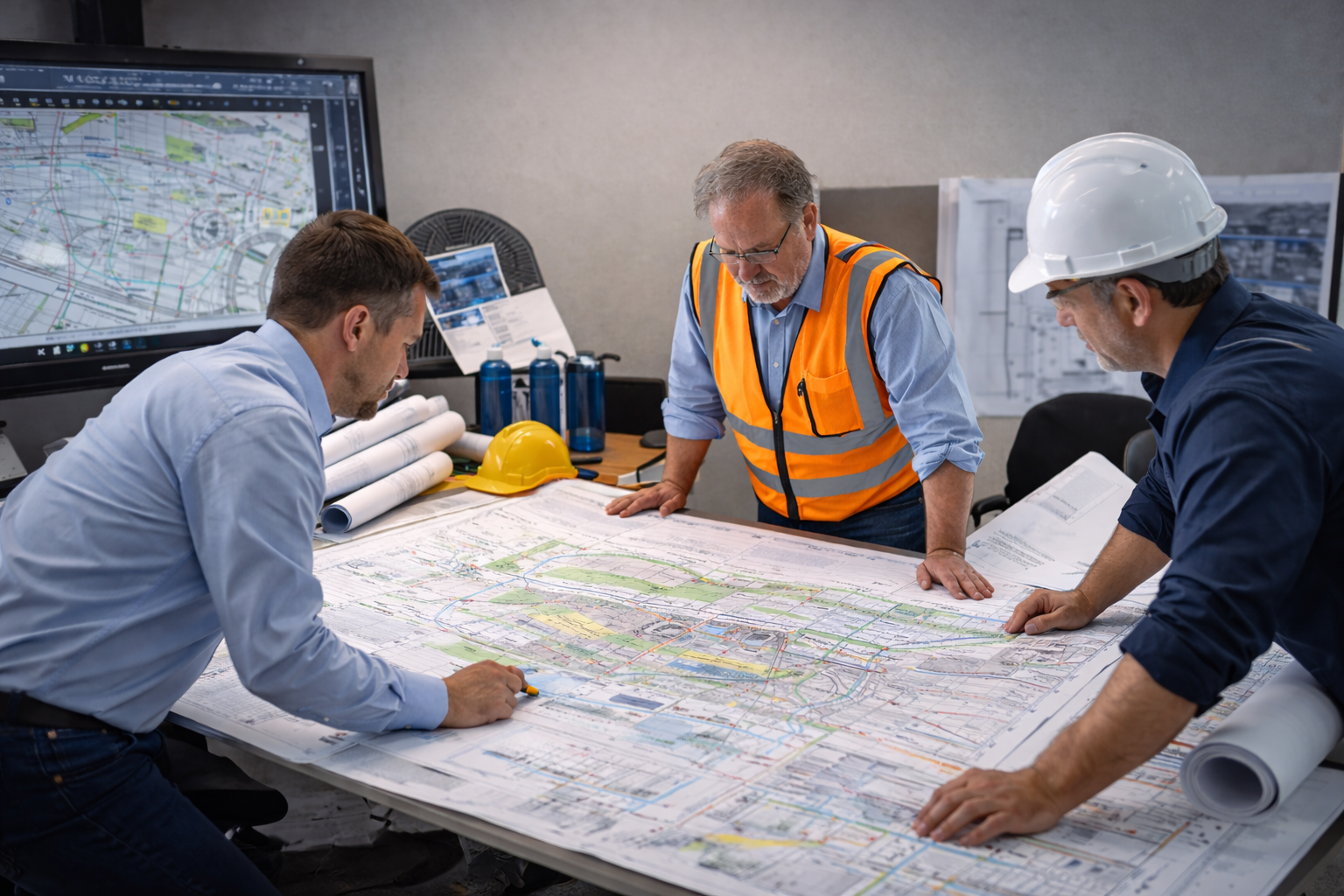
Wide Format Printing for Civil Engineering Projects: What Actually Matters in the Field
Wide format printing remains a practical part of civil engineering work, even as digital tools continue to improve.
That is because civil projects rely on documents that need to be easy to read, easy to share, and easy to trust in real working conditions. Site plans, grading sheets, utility drawings, erosion control details, profiles, plats, phasing exhibits, and traffic control plans all carry information that is difficult to use effectively when it is compressed onto a small screen or reduced to a small-format page.
In civil engineering, printed plans are not just a record of design intent. They are working documents used in coordination meetings, permit reviews, field conversations, inspections, and active construction environments.
This article explains why wide format printing still matters for civil engineering projects, where print workflows tend to create friction, and what makes large-format output more useful for review, coordination, and field use.
Why Civil Engineering Projects Still Rely on Wide Format Documents
Civil work is highly visual and coordination-heavy. A single project may involve multiple disciplines, agencies, consultants, contractors, and field teams, all working from related but evolving information.
Large-format documents help because they allow teams to see how all of those layers connect. Utilities, grades, drainage paths, roadway features, structures, easements, notes, and dimensions often need to be reviewed together, not one small section at a time.
That visibility matters in several common situations:
- reviewing site relationships across a full sheet
- comparing revisions between drawing sets
- marking up plans during coordination meetings
- issuing field-ready sets for active work
- sharing exhibits with municipalities, owners, and contractors
- supporting inspection, redline, and record drawing workflows
For many civil teams, wide format output is still the most practical way to communicate complex information clearly.
Why Print Still Matters in a Digital Workflow
Digital collaboration platforms are essential, but they have not made printed plans irrelevant.
In practice, civil engineering teams often use both digital and printed documents for different parts of the same workflow. Digital tools help with storage, sharing, review, and version access. Printed plans help with side-by-side viewing, in-person coordination, field reference, and markup.
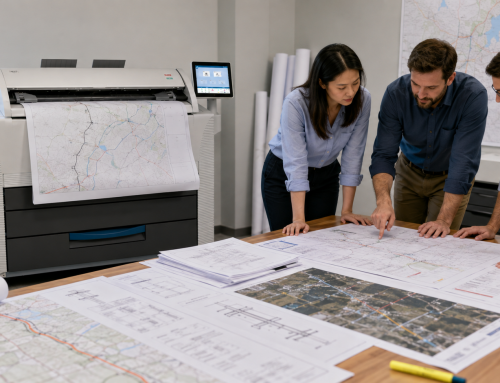
A full-size sheet is still useful when multiple people need to gather around the same drawing, review a site issue together, or compare design intent against actual field conditions.
That does not mean print replaces digital. It means each format solves different problems. The most effective workflows usually treat print as a complement to digital coordination, not as a competing system.
For organizations evaluating how print fits into a broader document environment, wide format printing solutions are often part of a larger workflow conversation rather than a stand-alone equipment decision.
Where Civil Engineering Print Workflows Usually Break Down
The challenges around wide format printing are rarely about whether a sheet can be printed. The bigger issue is whether the right version reaches the right people in a usable form.
Revisions move quickly across multiple stakeholders
Civil projects change often. A utility conflict is discovered. A grading adjustment affects drainage. A permit comment requires an update. A field condition changes a detail. Once that happens, updated information needs to move quickly across the office, jobsite, and review teams.
Different audiences need different outputs
The field may need full-size working sets. An owner may need a presentation-quality color exhibit. A municipality may need a permit submittal package. A contractor may need a specific revised sheet or marked-up detail. These are different use cases, and they do not always require the same output style.
Field conditions are hard on documents
Civil plans are frequently rolled, folded, carried, marked up, exposed to dirt or moisture, and handled repeatedly in trucks, trailers, and active jobsites. That is why durable output matters in many field-heavy workflows, especially when weather-resistant construction plans can help extend the usability of critical sheets.
Version drift creates confusion
One of the most common problems in document-heavy civil work is when the office, field team, and external partners are not working from the same current set. Once different groups rely on different revisions, coordination becomes harder and mistakes become more likely.
8 Ways Wide Format Printing Supports Civil Engineering Work
1. It improves readability for dense technical information
Civil drawings often contain overlapping utilities, grading notes, contours, easements, callouts, symbols, dimensions, and details that become difficult to interpret at reduced size. Wide format output preserves the intended scale and layout of the drawing.
2. It supports field coordination
Printed plans are still widely used in the field for reference, discussion, and annotation. Teams often need a document that can be unfolded quickly, reviewed on-site, and marked up in real time.
3. It makes revision handling more practical
When projects are revision-heavy, teams benefit from being able to reprint only what changed rather than reproducing complete sets unnecessarily. That can make updates easier to distribute and easier to track. It also supports cleaner communication, which is one reason many teams care about how wide format printing can reduce construction risk.
4. It helps teams work across multiple document types
Civil departments do not print only construction sheets. They may also need color exhibits, phasing diagrams, plats, public meeting boards, review copies, and redlined working sets. A good workflow supports more than one output need.
5. It strengthens communication with reviewers and stakeholders
Permit agencies, utility providers, owners, and contractors often need drawings that are easy to interpret during meetings and review sessions. A clear full-size exhibit can make those discussions faster and more productive.
That is especially relevant for firms working on transportation or public infrastructure projects influenced by agencies such as the Missouri Department of Transportation and the Illinois Department of Transportation.
6. It helps keep office and field documents aligned
Wide format printing is most useful when it fits into a broader document control process. Printing alone does not solve version issues, but it plays an important role in making current information available where it is needed. Some teams support this with a formal current set system in the job trailer so the latest plans are easier to identify and distribute.
7. It supports high-handling use cases
Civil plans often go through more physical wear than other technical documents. Print environments that can handle repeat use, replacements, and practical media options are easier to live with over the course of a project.
8. It reduces avoidable confusion
When people can read the right plan at the right size and confirm they are using the right revision, coordination becomes easier. That clarity helps reduce delays, miscommunication, and unnecessary rework.
Common Civil Engineering Documents Printed in Wide Format
Wide format printing is especially useful for documents such as:
- site development plans
- grading and drainage sheets
- utility plans
- stormwater and erosion control plans
- roadway and pavement details
- traffic control plans
- plats and easement maps
- phasing diagrams
- profiles and cross sections
- permit exhibits
- public meeting boards
- field markups and redlines
- record drawing sets
These document types all have one thing in common: they depend on visual clarity and often need to be used by multiple people in multiple settings.
What Civil Engineers Should Evaluate in a Wide Format Print Workflow
When assessing a print setup, the most useful questions are usually workflow questions rather than equipment questions.
- Can revised sheets be reprinted quickly without reproducing the full set?
- Are linework, fine details, and annotations consistently readable?
- Can the workflow support both monochrome plans and color exhibits?
- Is it easy to keep field sets aligned with office revisions?
- Can teams reproduce current plans fast when deadlines tighten?
- Are documents durable enough for repeated field handling?
- Can multiple project locations get updated information without confusion?
- Is there a clear method for tracking what was issued and when?
These questions usually reveal more about whether a workflow works than a simple feature checklist. In many cases, they also overlap with broader conversations around managed print services, document control, and support across distributed teams.
How Wide Format Printing Fits with Digital Review Tools
Digital displays, markup tools, and cloud-based plan access all play an important role in modern civil engineering workflows. They can make reviews faster, improve collaboration, and help teams catch issues before updated sets are issued.
But in many cases, digital review works best when it improves the quality of what eventually gets printed for field use, stakeholder review, or formal distribution.
In other words, digital review and wide format printing are often most effective when they work together. One helps teams review and coordinate. The other helps teams communicate and execute.
For example, shared review environments such as KIP Digital Displays can support collaborative markup and discussion before revised paper sets are produced for field use.
Why This Topic Matters for Civil Engineering Teams
Civil engineering teams often deal with transportation work, utility coordination, site development, municipal projects, public infrastructure, and active field conditions that place real demands on their document workflow.
That means wide format printing is not just about producing large sheets. It is about making sure information stays readable, revisions stay controlled, and the field has usable documents when decisions need to be made quickly.
That practical side of documentation is also reflected in broader industry organizations such as the American Society of Civil Engineers, where communication, coordination, and documentation remain central to project delivery.
Questions to Ask if Your Current Process Feels Inefficient
If a civil engineering team wants to understand whether its print workflow is helping or creating friction, these are useful starting points:
- Which document types are printed most often?
- Where do revisions create the most confusion?
- How often are teams reprinting full sets when only a few sheets changed?
- Are field teams consistently receiving current information?
- Do printed plans remain usable in real field conditions?
- Are color exhibits and technical line drawings both handled well?
- Is there a clear process for identifying and distributing the current set?
- Are digital review tools improving downstream print accuracy?
These questions can help identify process issues that are easy to overlook when teams focus only on the printer itself.
Frequently Asked Questions About Wide Format Printing for Civil Engineering
Why is wide format printing important for civil engineering projects?
Wide format printing is important because civil documents often contain detailed technical information that needs to be reviewed at full size for readability, coordination, markup, and field use.
What types of civil engineering documents are commonly printed in wide format?
Common examples include site plans, grading and drainage sheets, utility plans, stormwater and erosion control drawings, traffic control plans, plats, profiles, cross sections, and permit exhibits.
Does digital plan access make wide format printing unnecessary?
No. Digital tools are valuable, but printed full-size documents are still useful for field coordination, in-person review, markup, and situations where multiple people need to work from the same drawing at once.
What is the biggest risk in a poor print workflow?
One of the biggest risks is version drift, where the office, field team, and project partners end up working from different revisions. That can lead to confusion, delays, and avoidable mistakes.
What should civil teams focus on when improving wide format printing?
They should focus on readability, revision handling, current-set control, output flexibility, and how well printed documents support real office-to-field workflows.
Final Thoughts
Wide format printing is still a practical tool in civil engineering because civil work depends on clear visual communication.
Plans need to be readable. Revisions need to move cleanly. Field teams need documents they can use with confidence. Reviewers and stakeholders need exhibits they can understand quickly. When those things happen consistently, the project feels more controlled and coordination becomes easier.
The value of wide format printing is not just that it produces large sheets. It is that it helps civil engineering teams communicate complex information clearly in the environments where real project decisions get made.
For firms in Southern Illinois, Columbia, and St. Louis reviewing their current process, it can be helpful to look at both the equipment and the workflow behind it. If you want to explore that topic further, Da-Com has additional resources on wide format printing and document workflow support.

Leave A Comment