
Wide Format Printers for Safety Signage in Plants
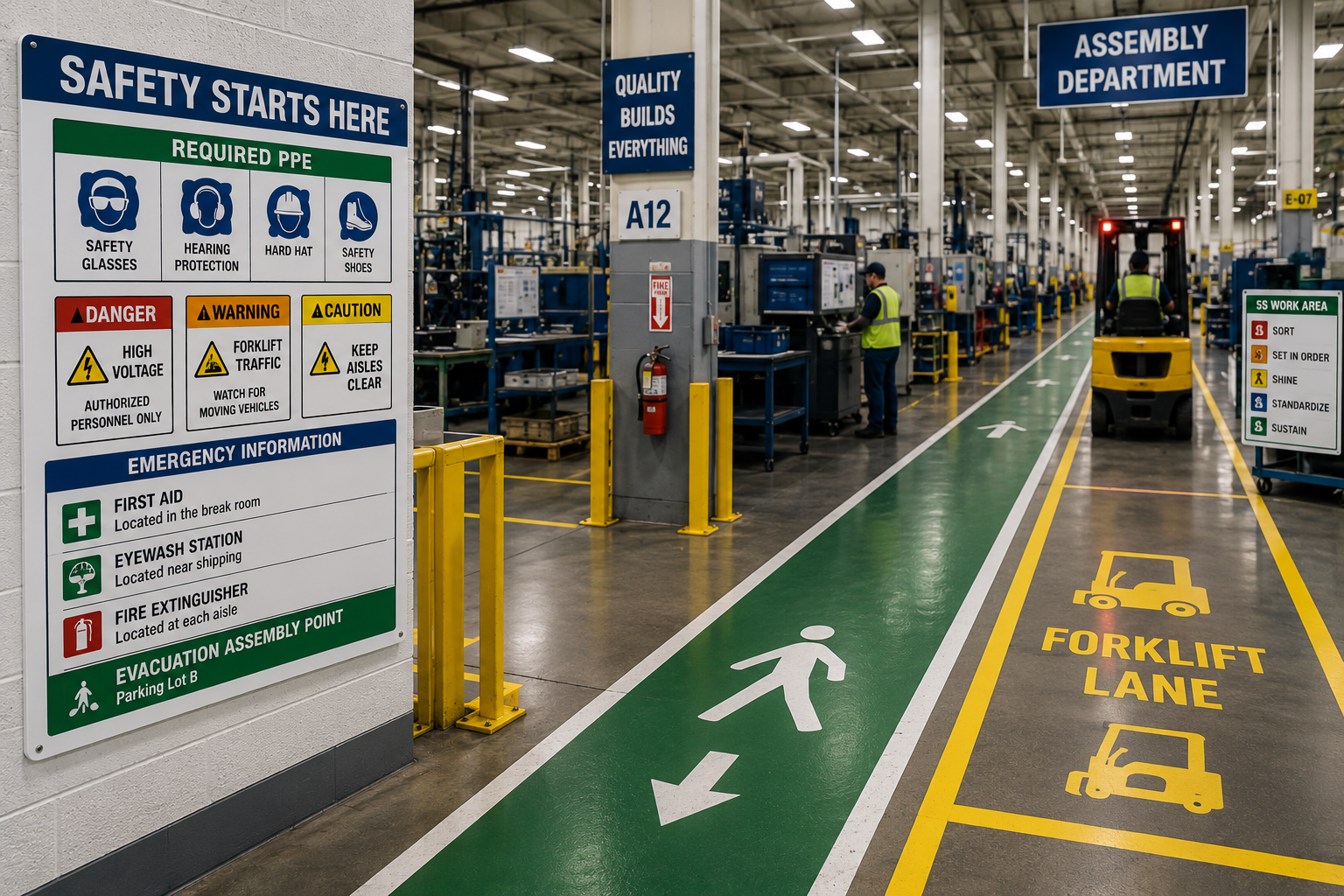
Wide format printers for safety signage help manufacturers create clear, durable visual communication for plant floors, production areas, warehouses, maintenance spaces, docks, and employee work zones. In a manufacturing facility, signage is not just something hanging on a wall. It is part of how the operation communicates safety expectations, traffic flow, equipment identification, access control, and compliance information every day.
Plant environments change quickly. A new machine gets installed. A walkway shifts. A production line expands. A forklift route changes. A quality process gets updated. A customer tour gets scheduled. A safety procedure changes after a near miss or internal review.
Then one day someone notices that the signs, labels, floor graphics, and boards no longer match the way the facility actually operates.
That is when problems start.
Employees hesitate because they are not sure where to go. Visitors get confused. Contractors enter the wrong area. Forklift traffic overlaps with pedestrian paths. Auditors ask questions. Customers walk through and see signs that look worn, outdated, inconsistent, or temporary.
This is why many manufacturers invest in wide format printers for safety signage, facility labels, floor graphics, and compliance visuals. These systems help create clear visual communication that supports safety, organization, Lean manufacturing, audit readiness, and operational control throughout the facility.
For manufacturers across St. Louis, St. Charles, the Metro East, and Southern Illinois, strong plant signage helps reduce confusion and create a facility that looks organized, current, and easier to manage.
Quick Answer: How Manufacturers Use Wide Format Printers for Safety Signage
Manufacturers use wide format printers for safety signage to produce large, visible, durable graphics that communicate safety rules, facility navigation, equipment identification, compliance requirements, and workflow expectations.
Common applications include:
- OSHA and ANSI-style safety signs.
- PPE requirement signs.
- Forklift and pedestrian traffic graphics.
- Plant floor graphics.
- Equipment labels.
- Facility labels.
- Wayfinding signage.
- Quality control graphics.
- Inspection area signs.
- Dock and warehouse identification.
- Compliance boards.
- Training visuals.
- Lockout/tagout reminders.
- Emergency response signs.
- Temporary project signs.
These graphics help facilities improve safety communication, reduce confusion, support audits, standardize visual cues, and maintain a professional appearance throughout the plant.
Da-Com’s wide format printer solutions support organizations that need large-scale output for signs, posters, graphics, technical drawings, maps, plans, and facility communication materials.
Why Manufacturing Safety Signage Matters More Than Ever
In manufacturing, signs help people make decisions. A clear sign can tell an employee what PPE is required, where a restricted area begins, which direction forklift traffic moves, where emergency equipment is located, or how to recognize a hazard before entering a work zone.
When signs become faded, inconsistent, temporary, or outdated, people start guessing.
That creates risk.
Manufacturing facilities are busy, high-information environments. Employees, contractors, visitors, inspectors, supervisors, maintenance teams, and delivery drivers all need to move through the facility safely and efficiently. Not everyone knows the plant layout. Not everyone knows current workflow changes. Not everyone knows which areas have new hazards, temporary routes, or updated requirements.
Strong manufacturing safety signage helps answer important questions quickly:
- Do I need safety glasses in this area?
- Is hearing protection required?
- Where should pedestrians walk?
- Where does forklift traffic cross?
- Is this area restricted?
- Where is the first aid station?
- Which equipment is locked out?
- Where should materials be staged?
- Which dock door should a vendor use?
- Where is the inspection area?
OSHA’s accident prevention sign and tag standard defines signs as surfaces prepared to warn or provide safety instructions to workers or members of the public who may be exposed to hazards. You can review OSHA’s standard here: OSHA 1910.145 accident prevention signs and tags.
Signage is not a replacement for safety training, hazard controls, or supervisory communication. But it does support the broader safety system by making critical information visible where people need it.
How Wide Format Printers Support Industrial Signage
Wide format printers for safety signage allow manufacturers to produce large visual materials that are sized for real plant environments. Standard office printers are not designed for large floor graphics, oversized signs, durable banners, production boards, or high-visibility facility labels.
Wide format systems can produce larger graphics for plant-wide communication, including:
- Wall signs.
- Mounted signs.
- Floor graphics.
- Banners.
- Window graphics.
- Large labels.
- Wayfinding panels.
- Process boards.
- Safety boards.
- Training posters.
- Engineering drawings.
- Temporary construction signs.
This matters because manufacturing signage needs to be seen in the real world. A small sign that works in an office hallway may not work in a noisy production area. A temporary paper label may not hold up near a dock. A floor path needs to be visible beneath traffic, equipment, dust, and movement.
Wide format printing also gives manufacturers more flexibility. When a workflow changes, signs can be updated. When a temporary hazard appears, a sign can be produced quickly. When a customer tour is scheduled, outdated displays can be replaced. When a facility standard is created, signs and labels can be repeated consistently across departments.
Da-Com’s managed print services help businesses gain visibility and control over print processes, which can be valuable for manufacturers managing recurring print needs across offices, production floors, warehouses, and departments.
Common Safety Signage Applications in Manufacturing
Manufacturing facilities use safety signs in many ways. The right sign depends on the location, hazard, audience, viewing distance, material, and purpose.
| Safety Sign Type | Purpose |
|---|---|
| PPE signs | Communicate required protective equipment |
| Danger signs | Identify immediate hazards |
| Warning signs | Highlight potential risks |
| Emergency signs | Direct employees during emergencies |
| Lockout/tagout graphics | Reinforce safety procedures |
| Chemical area signs | Improve hazard communication |
| Arc flash signs | Support electrical safety awareness |
| Restricted area signs | Control facility access |
| Forklift traffic signs | Warn pedestrians and direct vehicle flow |
| Visitor safety signs | Help guests understand facility expectations |
Many manufacturing facilities standardize these sign families across departments. A standard system makes future reorders easier and helps employees recognize visual cues faster.
ANSI Z535 provides guidance for a comprehensive system for the design, application, and use of safety signs, colors, symbols, labels, tags, and safety information. You can review the ANSI resource here: ANSI Z535 Safety Collection.
Consistent colors, signal words, symbols, and layouts can help reduce confusion. A manufacturing facility does not need every department creating its own sign style from scratch. A standard approach makes the plant easier to understand.
Facility Labels Help Keep Operations Organized
One of the most overlooked uses of wide format printing is facility labeling. Many plants start with clear labels, but over time those labels get replaced by temporary fixes.
Handwritten labels. Tape. Printed paper sheets. Old decals. Mismatched signs from different vendors. Labels that once made sense but no longer match the current layout.
The problem is that these quick fixes often become permanent.
Facility labels help employees quickly identify:
- Equipment.
- Storage locations.
- Work cells.
- Utility systems.
- Electrical panels.
- Pipe systems.
- Inventory areas.
- Maintenance zones.
- Inspection areas.
- Tool storage.
- Dock doors.
- Quality hold areas.
- Department boundaries.
Clear labeling reduces confusion and supports smoother daily operations. It also creates a more professional environment for customers, auditors, vendors, contractors, and new employees walking through the facility.
When everything is labeled consistently, the entire plant feels more organized and under control.
This is one reason wide format printers for safety signage can be valuable beyond traditional safety signs. The same equipment and workflow can support broader facility communication, from equipment labels to wayfinding signs and department identification.
Compliance Graphics Support Audit Readiness
Most manufacturing leaders do not worry about compliance graphics until an audit, customer tour, or leadership walk-through appears on the calendar. That is understandable. There are already enough things to manage.
But compliance graphics play an important role in helping facilities stay prepared.
These graphics often include:
- Safety procedures.
- Emergency response instructions.
- Process flow charts.
- Quality control visuals.
- Inspection area signs.
- Controlled access graphics.
- Hazard communication boards.
- Training posters.
- Visitor instruction signs.
- Production status boards.
- Documentation reminder signs.
For aerospace, defense, advanced manufacturing, food production, medical device, and regulated environments, consistency becomes even more important. Facilities operating under formal quality systems often require standardized messaging, documented approvals, and repeatable graphics across multiple departments.
When customer tours, leadership visits, or audits occur, clear compliance graphics help demonstrate operational discipline and attention to detail.
The goal is to be ready before someone asks. If a plant waits until the week before an audit to update every sign and label, the process becomes stressful. If the facility maintains a repeatable signage and graphics system, audit preparation becomes easier.
Plant Floor Graphics Improve Safety and Flow
One of the fastest-growing uses of wide format printers for safety signage is plant floor graphics. Manufacturers use floor graphics to create visual guidance without changing physical infrastructure.
Floor graphics can help define and reinforce:
Forklift Routes
Clearly marked forklift lanes help separate vehicle traffic from pedestrian traffic. This reduces confusion and helps visitors, contractors, and new employees understand where vehicles may be moving.
Pedestrian Walkways
Designated walking paths help people move through the plant safely. Walkways can also guide visitors during tours, onboarding, or contractor work.
Material Staging Areas
Visual boundaries help maintain organization and support Lean initiatives. If a material staging zone is clearly marked, it becomes easier to see when materials are out of place.
Inspection Zones
Quality areas can be clearly identified and protected with floor graphics, signs, and labels.
Safety Buffer Areas
Critical equipment can be surrounded by visual safety zones that remind employees to maintain distance or avoid certain areas.
Emergency Access Paths
Marked routes help ensure emergency equipment, exits, and access paths remain visible and unobstructed.
Floor graphics support both safety and operational efficiency. Employees spend less time wondering where things belong and more time focusing on productive work.
Safety Signage and Hazard Communication
Manufacturing facilities often need to communicate chemical, physical, mechanical, electrical, thermal, and process-related hazards. Safety signs and labels help support that communication by reinforcing information at the location where people need it.
OSHA’s Hazard Communication resources explain that information about chemical identities and hazards must be available and understandable to workers. You can review OSHA’s hazard communication overview here: OSHA Hazard Communication.
Manufacturers can use wide format printing to support hazard communication through:
- Chemical storage area signs.
- Flammable material warnings.
- PPE reminders.
- Spill response instructions.
- Safety data sheet location signs.
- Restricted area signs.
- Waste handling signs.
- Emergency shower and eyewash signs.
- First aid signs.
- Training graphics.
These visuals should support the facility’s actual safety program and procedures. They should be kept current, placed correctly, and reviewed when processes change.
Wide Format Printing Supports Lean Manufacturing Programs
Many manufacturers invest heavily in Lean and 5S initiatives. Yet visual communication is often the missing piece.
Wide format printing supports Lean manufacturing through:
- 5S boards.
- KPI boards.
- Production dashboards.
- Shadow boards.
- Tool control systems.
- Workflow graphics.
- Process maps.
- Department signage.
- Shift communication boards.
- Continuous improvement walls.
- Kaizen project displays.
These visual tools help standardize communication across the facility. They make expectations easier to understand. They reduce the amount of verbal explanation required throughout the day.
NIST MEP’s Lean and Process Improvement resource explains that MEP Center experts help manufacturers implement Lean process improvements to increase efficiency and value-added operations. You can review the resource here: NIST MEP Lean and Process Improvement.
In a Lean environment, visual management helps people understand the current condition. Where does the tool belong? Is the work cell meeting target? Which action items are open? Where should materials be staged? Which area is ready for inspection?
A well-designed signage and graphics system makes the answers easier to see.
Material Selection Matters in Industrial Environments
One mistake manufacturers sometimes make is choosing signage materials based only on cost. The least expensive option is not always the best long-term value.
Industrial environments are tough. Signs and graphics may face:
- Abrasion.
- Chemicals.
- Heat.
- Moisture.
- UV exposure.
- Frequent cleaning.
- Heavy foot traffic.
- Forklift traffic.
- Dust.
- Oil.
- Temperature changes.
The right substrate depends on where the sign will be installed. A dock sign has different requirements than a production floor label. A chemical area sign may need different durability than a lobby graphic. A floor graphic needs different material and finish considerations than a wall-mounted compliance board.
This is why manufacturers benefit from working with partners who understand industrial environments and can recommend materials based on real-world conditions rather than simply printing artwork.
Da-Com’s office equipment solutions can support businesses that need dependable print, scan, and document technology to reinforce workflows across office and production environments.
The Value of a Standardized Signage System
Many facilities accumulate signage over time. Different departments order signs independently. Different vendors are used. Different designs appear throughout the building. Some signs are new. Others are faded. Some use different colors, fonts, or layouts. Eventually the facility feels inconsistent.
A standardized signage system solves that problem.
| Benefit | Impact |
|---|---|
| Consistent appearance | Creates a more professional environment |
| Easier reorders | Saves time during future projects |
| Better compliance support | Reduces communication errors |
| Faster expansion | Supports facility growth and layout changes |
| Improved safety communication | Creates familiar visual cues |
| Reduced administrative work | Simplifies sign management |
A plant-wide signage library can include approved files, standard designs, sign families, label templates, documented locations, and reorder instructions.
That way, future updates become much easier to manage. When a new machine is installed, the team does not start from scratch. When a new department opens, the sign style already exists. When a safety message changes, the facility can update the approved template and reprint consistently.
This is another reason wide format printers for safety signage can help manufacturing teams create more control over facility communication.
Facility Wayfinding Helps Visitors, Contractors, and New Employees
Manufacturing plants can be difficult to navigate. Large buildings, multiple docks, production cells, warehouses, maintenance areas, offices, labs, and restricted zones can make it difficult for people to know where to go.
Wayfinding signage helps guide:
- Visitors.
- Contractors.
- Auditors.
- New employees.
- Delivery drivers.
- Vendors.
- Temporary workers.
- Customer tour groups.
Facility wayfinding can include:
- Entrance signs.
- Reception signs.
- Visitor check-in directions.
- Department identification.
- Dock door labels.
- Parking signs.
- Contractor access routes.
- Warehouse aisle labels.
- Emergency route signs.
- Restricted area warnings.
Clear wayfinding reduces interruptions. If visitors know where to report, staff spend less time redirecting people. If contractors understand the approved route, they are less likely to wander into the wrong area. If new employees can identify departments and work zones, onboarding becomes easier.
Training Graphics Reinforce Safe Work Habits
Manufacturing safety training should not end after orientation. Employees benefit from visual reminders where the work happens.
Training graphics can include:
- SOP posters.
- Machine setup graphics.
- Quality check examples.
- Defect identification boards.
- Lockout/tagout process reminders.
- PPE reminders.
- Forklift safety visuals.
- Emergency response steps.
- Tool return instructions.
- Housekeeping expectations.
The National Safety Council provides manufacturing safety training resources covering topics such as machine guarding, lockout/tagout, ergonomics, chemical safety, and more. You can review the NSC resource here: National Safety Council manufacturing training.
Training signs and visuals should be practical. They should reinforce the behaviors the facility wants to see every day. They should be clear enough for new employees and visible enough for experienced employees to use as reminders.
When In-House Signage Printing Makes Sense
Some manufacturers outsource most signage. Others bring printing in-house. Many use a hybrid approach.
In-house signage printing may make sense when the plant frequently needs:
- Updated safety signs.
- Temporary project signs.
- Facility labels.
- Production boards.
- Training posters.
- Lean visuals.
- Small-batch signs.
- Fast revisions.
- CAD drawings.
- Internal graphics.
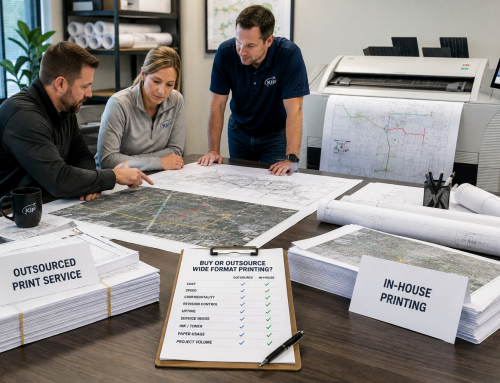
Outsourcing may still make sense for specialized materials, installation-heavy projects, unusual substrates, high-volume runs, or complex graphics. The best strategy depends on volume, urgency, materials, staffing, and the level of control the plant wants.
Da-Com’s article on wide format printers for project teams explains how in-house wide format printing can help teams produce plans, signage, drawings, and large documents more quickly.
Why St. Louis and Southern Illinois Manufacturers Are Investing in Facility Graphics
Manufacturing and aerospace operations throughout the St. Louis region, the Metro East, and Southern Illinois continue to grow and modernize. As facilities expand, add equipment, improve workflows, and recruit new employees, visual communication becomes more important.
Organizations are using wide format graphics to support:
- Safety initiatives.
- Lean manufacturing.
- Workforce training.
- Facility navigation.
- Customer tours.
- Audit readiness.
- Plant modernization.
- Multi-site standardization.
- Equipment installations.
- Warehouse organization.
The goal is not simply to create signs. The goal is to create a facility that feels organized, safe, and ready for whatever comes next.
For manufacturers in St. Louis, St. Charles, the Metro East, Madison County, St. Clair County, and Southern Illinois, consistent visual communication can help teams handle change with less confusion.
Da-Com’s About Da-Com page explains that Da-Com has been a customer-focused, family-owned company for more than 75 years. That local experience matters for manufacturers that need responsive service, practical guidance, and support from a team that understands regional business needs.
Frequently Asked Questions
What are wide format printers used for in manufacturing?
Wide format printers are used to create large graphics such as safety signs, floor markings, facility labels, quality boards, wayfinding signs, CAD drawings, and compliance graphics.
Are wide format graphics durable enough for industrial environments?
Yes. When the correct materials and finishes are selected, graphics can be designed to withstand traffic, chemicals, moisture, UV exposure, cleaning, and other conditions commonly found in manufacturing facilities.
Can wide format graphics help with OSHA compliance?
Wide format graphics can support safety communication by providing clear hazard identification, PPE reminders, emergency instructions, and other visual safety messaging. They should be used as part of a broader safety program that includes training, procedures, and hazard controls.
What types of facilities benefit most from wide format printing?
Manufacturing plants, aerospace facilities, warehouses, distribution centers, maintenance operations, fabrication shops, and industrial campuses can all benefit from durable visual communication systems.
How often should facility signage be reviewed?
Many organizations conduct annual reviews or evaluate signage during facility expansions, safety audits, equipment installations, customer tours, process changes, or operational updates.
Should manufacturers print signs in-house or outsource them?
It depends on the plant’s volume, urgency, materials, and staffing. In-house printing can be useful for fast updates and frequent small-batch signs, while outsourcing may be better for specialty materials, large runs, and installation-heavy projects.
Make Your Plant Safer, Clearer, and Easier to Manage
Manufacturing leaders already have enough to manage. Production has to keep moving. Safety has to stay visible. Employees need clear direction. Auditors, customers, contractors, and leadership teams may walk through at any time.
That is why signage should be treated like part of the operation itself.
Wide format printers for safety signage help manufacturers create safety signs, facility labels, floor graphics, compliance visuals, training graphics, and wayfinding tools that support a safer, more organized, and more professional workplace.
When signs are clear, durable, and consistent, people spend less time guessing. Employees understand expectations faster. Visitors navigate more easily. Contractors know where to go. Auditors see organized communication. The plant feels more prepared before someone asks.
If your facility has outdated signs, worn floor graphics, inconsistent labels, or areas that could be easier to understand, contact Da-Com today. Da-Com works with manufacturers, aerospace facilities, warehouses, and industrial organizations throughout St. Louis, Columbia, and Southern Illinois to create durable, reorderable signage systems built for real-world plant conditions.

Leave A Comment