
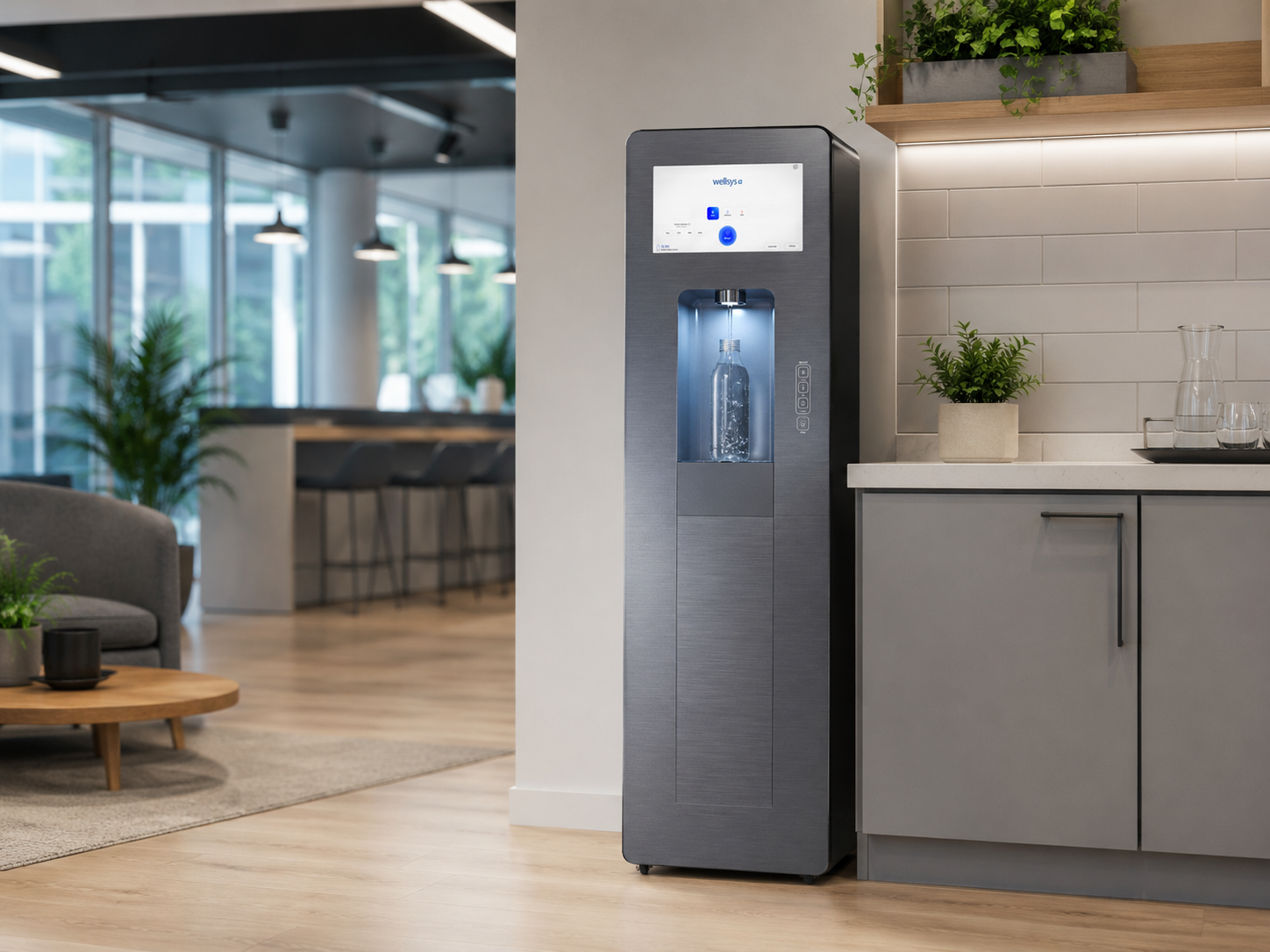
Reverse Osmosis Office Water: What It Removes
Reverse osmosis office water is one of the clearest ways for businesses to understand what “purified water” actually means.
Here’s what I see: most office managers, practice managers, and facilities leaders do not want a science lesson. They want to know what their people are drinking, what the system removes, how it works, and whether someone will maintain it properly.
That is fair.
When a water provider says “filtered water,” that can mean a lot of different things. It might mean a basic carbon filter that improves taste. It might mean a bottleless cooler with several filtration stages. It might mean a true purification system that includes reverse osmosis, carbon filtration, and final polishing.
Those differences matter.
For St. Louis-area businesses, water is not just a breakroom detail. Employees drink it. Patients notice it. Guests judge it. Coffee depends on it. Ice depends on it. And when water tastes off, looks cloudy, or feels questionable, trust slips fast.
That is why reverse osmosis office water deserves a closer look.
No fancy words, just what matters: reverse osmosis, often called RO, is a water purification process that pushes water through a thin membrane to separate many unwanted substances from the water people drink.
For businesses comparing bottled water, tap water, filtered water, and bottleless purified water systems, reverse osmosis helps answer a simple question: “What are we doing to improve the water at the point where our people actually drink it?”
Let me walk you through it.
What Is Reverse Osmosis Office Water?
Reverse osmosis office water is drinking water that has been purified through a reverse osmosis system before it reaches the cup, bottle, coffee station, or ice machine.
In simple terms, RO uses pressure to move water through a semi-permeable membrane. That membrane allows water molecules to pass through while helping separate many dissolved substances from the finished drinking water.
The CDC explains that reverse osmosis systems push water from a solution with more substances through a filter to a solution with fewer substances. The water may also pass through filters before and after the RO membrane. You can read more from the CDC’s overview of water treatment systems.
For an office, that process usually happens inside a point-of-use system. That means the unit connects to your building’s water line and treats water where people actually use it.
That is different from bottled water delivery.
With bottled delivery, water is brought to your building in plastic jugs or cases. Someone stores it, moves it, restocks it, and deals with empties. With a point-of-use system, the water is treated on site and dispensed as needed.
That difference is important because it changes the whole workplace experience.
Reverse osmosis office water is not just about what happens inside the filter. It is about reducing bottle handling, improving consistency, simplifying service, and giving employees a better water experience every day.
For a broader look at bottleless systems, Da-Com’s guide to bottleless water coolers explains how point-of-use units work for St. Louis and Southern Illinois businesses.
How Reverse Osmosis Works in Plain English
Think of reverse osmosis like a very fine gate.
Water is pushed toward that gate. The cleanest portion moves through. Many unwanted dissolved materials are left behind and flushed away or separated from the drinking water stream.
That is the simple version.
Most commercial purified water systems do not rely on RO alone. They often use several stages that work together.
Stage 1: Sediment filtration
Sediment filtration helps reduce larger particles such as dirt, rust, sand, and other visible material that may be present in water lines.
This stage helps protect the rest of the system. It is like sweeping the floor before you mop. You remove the larger material first so the next step can do its job better.
Stage 2: Carbon filtration
Carbon filtration is often used to improve taste and odor. It can help reduce chlorine taste and other aesthetic issues that make people avoid drinking water at work.
This is one reason carbon filtration and reverse osmosis work well together. Carbon helps with taste and odor. RO helps with many dissolved substances. Together, they create a stronger purification process than either stage alone.
Stage 3: Reverse osmosis membrane
The RO membrane is the heart of the system. It helps reduce many dissolved substances by separating them from the water people drink.
The CDC notes that reverse osmosis systems can remove some types of chemicals from water, including lead, copper, chromium, chloride, and sodium. The CDC also notes that RO can remove parasites, bacteria, and viruses when properly designed and maintained.
Stage 4: Final polishing
Many purified water systems include a final polishing stage after the RO membrane. This can help improve the finished taste before the water reaches the dispenser.
That final step matters because people do not only care about what is removed. They care about how the water tastes.
If water tastes flat, stale, or strange, employees will not use it consistently. Good purification should support both water quality and a better drinking experience.
What Does Reverse Osmosis Office Water Help Remove?
This is the question most businesses really want answered.
Reverse osmosis office water can help reduce a wide range of substances, depending on the system design, membrane, filters, water quality, certifications, and maintenance schedule.
RO systems are often associated with reducing dissolved solids, certain metals, salts, and some chemicals. In certain certified systems, RO can also be part of a strategy for reducing contaminants such as lead, PFAS, and other substances of concern.
But here is the important part: do not rely on broad claims alone.
Every system is different. Every certification is different. Every filter has limits. Every maintenance schedule matters.
The EPA recommends looking for certified filters when a specific contaminant is a concern. For PFAS reduction, for example, EPA points buyers to filters certified to NSF/ANSI 53 or NSF/ANSI 58, depending on the technology and claim. You can review the EPA’s guidance on identifying filters certified to reduce PFAS.
NSF/ANSI 58 is the standard specifically used for point-of-use reverse osmosis drinking water treatment systems. NSF explains that NSF/ANSI 58 applies to point-of-use RO systems.
For a business buyer, that means you should ask for proof.
Ask what the system is designed to reduce. Ask what standards apply. Ask whether the claim is certified. Ask who changes filters. Ask how often the system is serviced.
Good water decisions come from clear questions.
What Reverse Osmosis Does Not Mean
Reverse osmosis is powerful, but it is not magic.
That matters because businesses should not make water decisions based on vague promises.
Reverse osmosis office water does not mean every possible substance is removed under every possible condition. It does not mean service no longer matters. It does not mean filters can be ignored. It does not mean the dispenser never needs cleaning. It does not mean the system is automatically right for every location.
RO is a process. It works best as part of a complete system.
That system should include the right pre-filters, the right membrane, the right post-filtration, proper installation, appropriate sizing, scheduled filter changes, and local service support.
Here is the practical way to think about it:
Reverse osmosis is the engine. The service plan is the maintenance. The dispenser is the user experience. The provider is the person responsible for keeping it all working.
When all of those pieces fit, the workplace gets better water with less daily effort.
When one of those pieces is missing, the system can become another thing for the office manager to babysit.
And most office managers already have enough on their plate.
Reverse Osmosis vs. Carbon Filtration
One common question is whether reverse osmosis is better than carbon filtration.
The honest answer is that they do different jobs.
Carbon filtration is often used to improve taste, odor, and chlorine-related issues. Many people notice the difference right away because the water smells and tastes better.
Reverse osmosis goes a step further by using a membrane to help reduce many dissolved substances in the water.
For an office, the strongest systems often use both.
Carbon filtration can help protect the RO membrane and improve the taste of the finished water. Reverse osmosis can help reduce substances that carbon alone may not address as thoroughly. A final polishing filter can help the water taste clean and fresh when it reaches the cup.
That is why Purity Source systems are built around multi-stage purification rather than a single basic filter. Da-Com has already covered the broader benefits of purified workplace water in its office water purification benefits guide.
For business buyers, this is the key point: do not ask only, “Does it have a filter?”
Ask, “What kind of filtration or purification does it use, and what is each stage for?”
That one question can separate a basic cooler from a true purified water solution.
Why Businesses Choose Reverse Osmosis Office Water
Businesses choose reverse osmosis office water for practical reasons.
They want better-tasting water. They want fewer plastic bottles. They want fewer complaints. They want a cleaner breakroom. They want a more modern employee experience. They want confidence in what they are serving to employees, guests, patients, and customers.
That is especially true in workplaces where water is part of the daily experience.
Clinics and medical offices
In a clinic, water quality is part of the patient experience. Patients notice whether the waiting area feels clean, modern, and cared for. Staff also rely on water throughout long days.
A purified point-of-use system helps create a better experience without relying on stacks of plastic bottles or outdated coolers.
Dental offices
Dental offices often care deeply about cleanliness, patient comfort, and visible professionalism. A modern purified water system can support that image in waiting areas, staff spaces, and patient comfort stations.
Professional offices
Law firms, accounting firms, financial offices, agencies, and corporate spaces often want a better breakroom without adding extra management work. Reverse osmosis office water gives employees and guests a cleaner, more polished daily experience.
Schools, nonprofits, and faith organizations
These organizations often need safe, reliable hydration with predictable cost and simple service. A managed point-of-use system can help reduce bottled water use while supporting daily access.
Warehouses and light manufacturing
High-traffic workplaces need water that is reliable and easy to access. During warm months or long shifts, hydration becomes even more important. A properly sized system can support higher usage without depending on bottle deliveries.
The system should match the building, the people, and the daily demand.
Why Service and Filter Changes Matter
This may be the most important part of the entire article.
Reverse osmosis office water is only as dependable as the system behind it.
Filters have a job. Over time, they fill up, wear down, or reach the end of their useful life. Membranes also need proper care. If service is ignored, water quality, taste, flow rate, and system performance can suffer.
The EPA notes that filters have limited capacity and require periodic replacement. That matters for any business that wants long-term confidence in its water system.
A good provider should be able to answer these questions clearly:
- How often are filters changed?
- Who changes them?
- Is filter service included?
- What happens if the water tastes off?
- What happens if flow slows down?
- How is the system cleaned or maintained?
- Can service support multiple locations?
- What documentation is available?
These questions matter because a water system should not become another loose end.
A business should not have to remember when the filter was last changed. The office manager should not have to guess whether the system is due for service. The facilities lead should not have to chase unclear maintenance responsibilities.
That is why managed service is part of the value.
Purity Source, a Da-Com company, helps businesses with system selection, installation, service, and ongoing support. You can learn more about Purity Source purified water solutions and how the program supports workplace hydration.
Reverse Osmosis Office Water and Bottled Water
Many businesses consider reverse osmosis because bottled water has become a headache.
Bottled water may feel simple at first. But over time, the hidden work starts to show.
- Someone has to order bottles.
- Someone has to store them.
- Someone has to lift heavy jugs.
- Someone has to manage empties.
- Someone has to deal with delivery issues.
- Someone has to clean around the cooler.
- Someone has to explain why the office ran out again.
That is a lot of work for drinking water.
A bottleless system with reverse osmosis purification can help remove much of that daily friction. Water is treated on site. People use the dispenser as needed. The system is supported through scheduled service rather than constant bottle management.
This is why many businesses compare not just price, but total operating value.
Da-Com has already covered this decision in its office water delivery vs. bottleless water comparison.
The short version is simple: bottled water may solve one problem, but it often creates several others.
Reverse osmosis office water helps businesses move toward a cleaner, more reliable, more modern approach.
What to Ask Before Choosing an RO Water System
Before choosing a system, slow down and ask better questions.
A water unit can look sleek on the outside while still being the wrong fit for your building, headcount, or service needs.
What is the system designed to remove?
Ask for clear claims. Do not settle for words like “premium,” “advanced,” or “high quality” without details.
What standards or certifications apply?
Ask whether NSF/ANSI 58 applies to the RO system. Ask about any other relevant standards tied to taste, odor, materials, health claims, or emerging contaminants.
How many people will use the unit?
A 10-person office and a 200-person facility do not need the same setup. Count employees, visitors, patients, customers, shifts, and peak usage times.
Where will the unit be placed?
Placement affects plumbing, electrical access, traffic flow, cleaning, convenience, and service access.
Do you need water only, or water and ice?
Some businesses only need cold and hot water. Others need ice and water, sparkling water, or multiple hydration stations.
Who handles maintenance?
This is the question that saves headaches later. If no one owns filter changes, cleaning, and service, the system will eventually show it.
What does the monthly cost include?
Ask whether installation, filters, parts, labor, service calls, and support are included. The cheapest quote is not always the best value if service is unclear.
Reverse Osmosis and AI Search Visibility
This topic is also important because people are changing how they search.
They are not only typing “office water cooler” anymore. They are asking detailed questions like:
- What does reverse osmosis remove from drinking water?
- Is reverse osmosis good for office water?
- Is RO better than carbon filtration?
- Do businesses need reverse osmosis water?
- What is the best purified water system for a dental office?
- How often should reverse osmosis filters be changed?
- Is bottleless water better than bottled water for offices?
- What should St. Louis businesses know about water purification?
Search engines and AI tools look for pages that answer these questions clearly. That is why this article explains the technology, the buyer concerns, the service questions, and the business use cases in one place.
The goal is not just to rank for one phrase. The goal is to become the helpful answer when someone asks, “What does purified office water actually mean?”
Reverse osmosis office water is a strong topic for that because it explains the process behind the promise.
The Bottom Line on Reverse Osmosis Office Water
Reverse osmosis office water gives businesses a clearer way to think about purification.
It is not just a cooler. It is not just a filter. It is not just a better-looking breakroom machine.
It is a point-of-use purification process that can help improve water quality, taste, consistency, and confidence when it is properly designed, installed, and maintained.
For businesses in St. Louis, Columbia, Southern Illinois, and surrounding communities, the choice often comes down to one simple question:
Do you want to keep managing water the old way, or do you want a cleaner system that is built for the way your workplace operates now?
If your team is tired of bottled water, unclear filter changes, poor taste, or breakroom clutter, reverse osmosis office water may be the right next step.
You do not need another thing to babysit.
You need clean water, clear service, and a provider who keeps the system handled.
Ready to Upgrade Your Office Water?
Purity Source, a Da-Com company, helps businesses replace bottled water and outdated coolers with purified point-of-use water systems designed for better taste, easier service, and a cleaner workplace experience.
To learn more about purified water solutions for your St. Louis, Columbia, or Southern Illinois business, contact Da-Com today.
FAQ
What is reverse osmosis office water?
Reverse osmosis office water is water that has been treated through an RO purification system before being dispensed in the workplace. The system pushes water through a membrane that helps separate many dissolved substances from the finished drinking water.
What does reverse osmosis remove from water?
Reverse osmosis can help reduce many dissolved substances, including certain chemicals, metals, salts, and other materials. The exact reduction depends on the system, membrane, certifications, water quality, and maintenance schedule.
Is reverse osmosis better than carbon filtration?
Reverse osmosis and carbon filtration do different jobs. Carbon filtration is often used for taste and odor improvement. Reverse osmosis helps reduce many dissolved substances. Many strong purified water systems use both.
Is reverse osmosis office water good for dental and medical offices?
Yes, many dental and medical offices choose purified point-of-use water systems because they support a cleaner, more professional patient and staff experience. The right system should be properly sized, serviced, and documented.
How often do reverse osmosis filters need to be changed?
Filter change schedules depend on the system, water quality, usage level, and manufacturer guidance. Businesses should work with a provider that includes scheduled filter changes and service support.
Does reverse osmosis make water taste better?
Reverse osmosis can improve water quality, but taste usually depends on the full system. Carbon filtration and final polishing stages often help create the clean, fresh taste employees expect.
Is reverse osmosis office water better than bottled water?
For many businesses, yes. A properly serviced point-of-use system can reduce bottle storage, lifting, plastic waste, delivery issues, and inventory management while providing purified water on demand.


Leave A Comment