
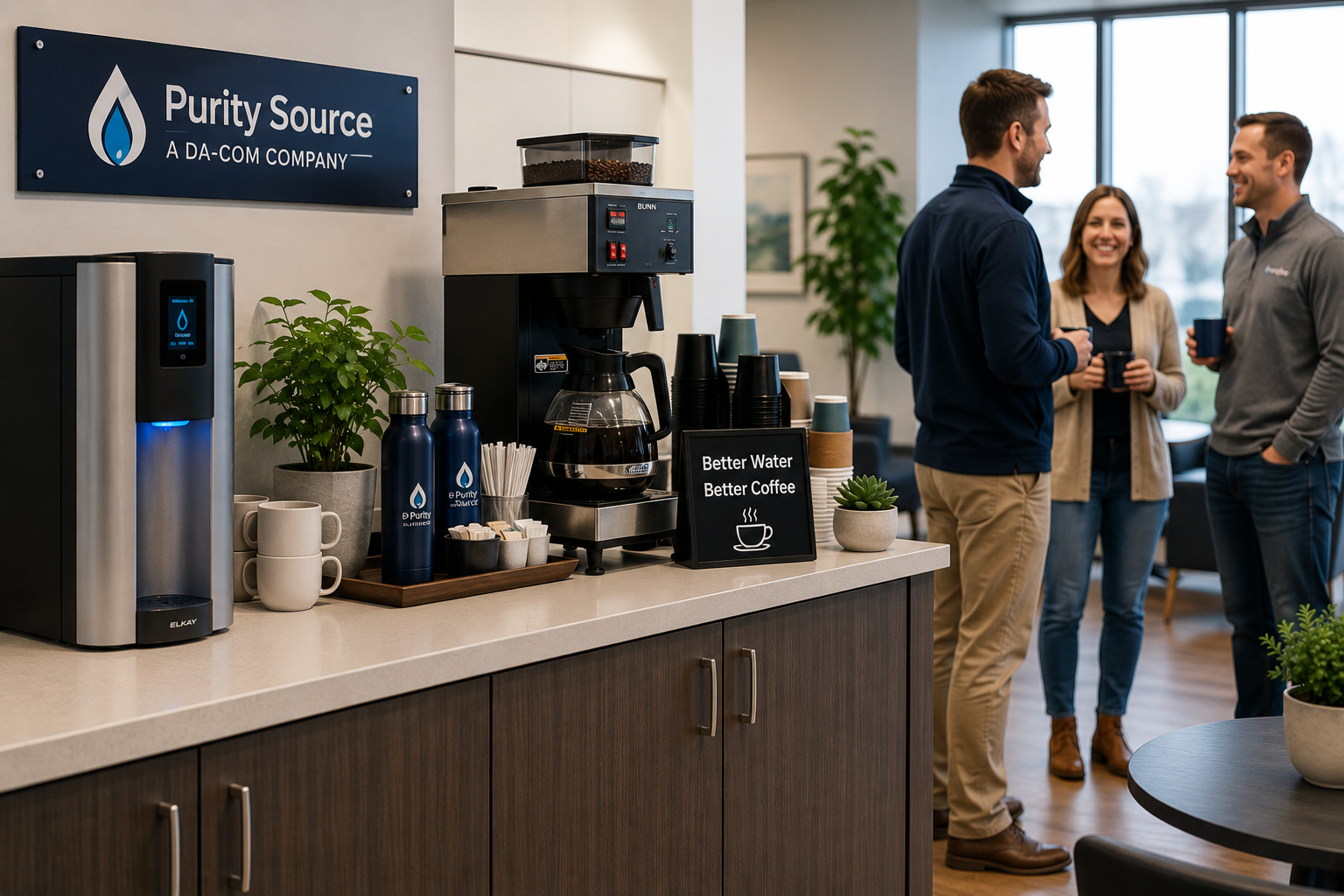
Purified Water for Office Coffee: Why Better Water Makes Better Coffee
Purified water for office coffee is one of the simplest ways to improve the workplace beverage experience, but it is also one of the easiest factors to overlook. Many offices focus on the coffee brand, the brewer, the pods, the roast, or the creamer selection when employees complain about the coffee. Those things matter, but the water matters too.
Coffee is mostly water. That means the taste, odor, consistency, and quality of the water used to brew it can affect the final cup. If the water has an unpleasant taste, odor, or inconsistent mineral content, employees may blame the coffee or the machine when the real issue starts at the water source.
For busy workplaces, better coffee is not only about caffeine. It is about staff satisfaction, guest hospitality, breakroom convenience, and creating a beverage area people actually want to use. A more thoughtful water setup can support coffee, hot water, ice, cold water, bottle filling, and the overall breakroom experience.
Purity Source, a Da-Com company, provides purified water solutions for businesses that want cleaner, more consistent water backed by service and support. For workplaces in St. Louis, St. Charles, the Metro East, Belleville, Edwardsville, Collinsville, Bethalto, and Southern Illinois, the right water strategy can help create a better coffee and water experience for staff and guests.
Quick Answer: Why Does Purified Water Matter for Office Coffee?
Purified water for office coffee matters because brewed coffee is mostly water, so water taste, odor, consistency, and filtration can affect the final cup. Better water can help reduce unpleasant off-tastes, support coffee equipment, improve consistency across the breakroom, and create a better beverage experience for employees and guests.
Purified water can support office coffee by helping with:
- More consistent coffee taste.
- Reduced unpleasant water odor or off-taste.
- Better hot water for tea and instant drinks.
- Cleaner-tasting ice for cold coffee or beverages.
- A more dependable workplace beverage station.
- Clearer filter-change and service ownership.
- Less guesswork for office managers and facilities teams.
Purified water does not automatically fix every coffee issue. The coffee beans, brewer, grind, temperature, cleaning schedule, and employee preferences still matter. But water quality is a practical place to start because it affects more than one part of the breakroom.
Why Office Coffee Taste Starts With the Water
When employees say the office coffee tastes bad, many businesses immediately blame the coffee itself. Sometimes that is fair. Low-quality coffee, stale beans, an old machine, or a dirty brewer can all create a poor cup.
But water is part of every cup of coffee. If the water source has a noticeable taste, odor, or mineral profile, that can carry into the brewed coffee. This is why office coffee water quality matters.
Water can influence office coffee through:
- Taste.
- Odor.
- Mineral content.
- Consistency from day to day.
- Scale buildup in equipment.
- Employee perception of the beverage area.
The Specialty Coffee Association has published industry resources discussing water and coffee quality, including how water can affect the taste experience in the cup. Specialty Coffee Association water and coffee resource
For an office, the goal is not to turn the breakroom into a specialty coffee lab. The goal is simpler: give employees and guests a more consistent water source so coffee, hot water, cold water, and ice all support the same better beverage experience.
Purified Water for Office Coffee vs. Standard Tap Water
Standard tap water may be perfectly acceptable for many uses, but it can still vary by building, plumbing, municipal source, fixtures, and local conditions. Some offices notice taste or odor issues. Others notice mineral buildup around equipment. Some simply want a more consistent workplace water experience.
Purified water for office coffee gives businesses a more intentional approach. Instead of leaving coffee taste and breakroom water quality to chance, offices can choose a managed purified water setup that supports brewing, hot water, cold water, ice, and bottle filling.
Taste and Odor
Employees may not know how to describe the issue. They may just say the coffee tastes “off,” “flat,” “weird,” or “like the water.” When that happens, the coffee brand may not be the only thing to evaluate.
Purified water can help reduce unpleasant water taste or odor that may affect coffee, tea, ice, and daily hydration. This can make the whole beverage area feel cleaner and more dependable.
Mineral Buildup and Scale
Water quality can also affect equipment. Minerals in water may contribute to buildup in coffee brewers, hot water equipment, and other beverage systems over time. That does not mean every office has the same issue, but it does mean water should be part of the equipment conversation.
The EPA provides general drinking water information for consumers and organizations that want to understand drinking water sources, standards, and related public information. EPA ground water and drinking water information
Consistency Across the Breakroom
Many offices treat coffee, water, ice, and hot beverages as separate problems. Someone manages the coffee machine. Someone else orders bottled water. Someone notices when the ice tastes strange. Someone remembers, or forgets, filter changes.
A purified water setup can help align the breakroom around one better water strategy. That can support coffee, hot water, ice, cold water, and bottle filling without making the office manager guess what is causing each issue.
| Category | Standard Tap or Bottled Setup | Purified Water Setup |
|---|---|---|
| Taste | May vary by source, odor, or mineral content. | More consistent taste for coffee, hot water, ice, and bottle filling. |
| Staff experience | Employees may blame the coffee or machine when water is the issue. | Better water supports a more dependable beverage experience. |
| Maintenance | Filter schedules may be unclear or inconsistent. | Service and filter changes can be managed more intentionally. |
| Breakroom use | Coffee, water, and ice may be handled separately. | One water strategy can support coffee, hot water, cold water, and ice. |
| Office workload | Someone may manage bottles, filters, and supplies manually. | A managed service can reduce staff guesswork and maintenance gaps. |
How Better Water Supports Coffee Machines and Hot Beverage Areas
Purified water for office coffee is not only about the cup of coffee. It can also support the equipment and beverage area that employees use every day.
Many modern breakrooms include more than a basic coffee pot. They may include a single-cup coffee system, drip brewer, hot water spigot, tea station, ice machine, sparkling water option, bottle filling area, or cold water dispenser. When those systems depend on water, the water strategy matters.
Better water can support:
- Coffee brewers.
- Single-cup machines.
- Hot water for tea.
- Instant drink areas.
- Ice machines.
- Cold water dispensers.
- Reusable bottle filling.
- Guest beverage stations.
Da-Com’s guide to creating an office beverage station explains how water, ice, sparkling water, coffee, hot water, and service planning can work together to create a better workplace beverage experience.
Where Purified Water Fits in a Modern Breakroom
A modern office breakroom has to do more than provide coffee. It supports employee breaks, meetings, guest hospitality, staff appreciation, onboarding, team lunches, and daily hydration.
Purified water for breakrooms can help create a beverage area that feels cleaner, easier, and more intentional.
Coffee Brewers and Single-Cup Machines
Coffee brewers and single-cup machines are often the most visible part of the breakroom. If employees do not like the coffee, they may bring coffee from home, leave the office to buy it, or avoid the station entirely.
Before replacing the coffee machine or switching brands again, offices should ask whether the water used for brewing is consistent and properly serviced.
Hot Water for Tea and Instant Drinks
Not everyone drinks coffee. Hot water may be used for tea, instant oatmeal, hot chocolate, soup cups, or other breakroom items. If the water tastes or smells unpleasant, those employees notice too.
A purified water setup can help support the entire hot beverage area, not only coffee drinkers.
Ice, Cold Water, and Bottle Filling
Employees who fill water bottles, add ice to drinks, or use cold water throughout the day are also affected by water quality. A coffee-focused water conversation can naturally lead to a better overall hydration setup.
That is why a strong office water strategy should include the full breakroom experience: coffee, hot water, ice, cold water, bottle filling, filter service, and ongoing support.
Service and Filter Changes Matter for Coffee Quality
Even the best water setup can underperform if service is unclear. If no one knows when filters were last changed, who is responsible for maintenance, or what to do when water taste changes, the breakroom can quickly become another office frustration.
Purified water for office coffee works best when the water system is supported by clear service and filter-change ownership.
Important service questions include:
- Who changes the filters?
- How often are filters changed?
- Who monitors filter schedules?
- Who handles service requests?
- What happens if water taste or flow changes?
- Does the same water setup support coffee, ice, and bottle filling?
- Is the office relying on memory, or is service managed?
NSF notes that water treatment systems should use the proper replacement cartridge and have filters changed at the recommended interval to help support performance. NSF guidance on changing water filters
Da-Com’s office water filter changes guide explains why filter schedules, service ownership, and maintenance planning matter for workplace water systems.
For office managers, HR teams, facilities managers, and business owners, the point is simple: the coffee and water station should not depend on someone remembering a filter date. A managed service can reduce guesswork and make the breakroom easier to maintain.
Why Purified Water Supports the Larger Workplace Beverage Experience
Office coffee is often the entry point, but water affects much more than coffee. A workplace beverage area may serve employees, customers, guests, vendors, board members, job candidates, and visiting partners. That area reflects how much care the business puts into everyday experience.
The CDC’s water and healthier drinks guidance supports water as a practical beverage choice. For workplaces, making water easy and appealing to access can support a better daily beverage environment. CDC water and healthier drinks
A better beverage station can support:
- Employee satisfaction.
- Guest hospitality.
- Reusable bottle filling.
- Staff meetings.
- Customer waiting areas.
- Conference rooms.
- Training days.
- Breakroom cleanliness.
- Reduced bottled water clutter.
For many workplaces, coffee is the daily habit that reveals whether the water setup is working. If the coffee tastes inconsistent, the ice tastes strange, or staff do not trust the water, the breakroom experience suffers.
What to Ask Before Choosing Purified Water for Office Coffee
Before choosing a water setup for office coffee, businesses should think beyond the brewer. The right solution depends on how the breakroom is used, how many employees rely on it, what other beverage needs exist, and how much service support the office wants.
Ask these questions before choosing purified water for office coffee:
- How many employees use the coffee station daily?
- Do guests, customers, or vendors use the beverage area?
- Does the office use a drip brewer, single-cup machine, or other coffee system?
- Does the coffee taste inconsistent from day to day?
- Do employees complain about water taste or odor?
- Is hot water used for tea or instant drinks?
- Does the same area need cold water or bottle filling?
- Does the office need ice for drinks, meetings, or guests?
- Who currently manages filters or water service?
- Are filter changes tracked clearly?
- Is bottled water taking up storage space?
- Would a managed service reduce staff workload?
- Where should the water and coffee station be placed?
- How important is guest-facing presentation?
- Who should employees contact if water taste, flow, or equipment performance changes?
These questions help offices evaluate the full beverage experience instead of solving one small problem at a time.
Signs Your Office Coffee Problem May Actually Be a Water Problem
It is not always obvious when water is affecting office coffee. Employees may simply say the coffee is bad, the machine is old, or the breakroom needs an upgrade.
Your office may need to evaluate its water setup if:
- The coffee tastes different from day to day.
- Employees describe an off-taste or odor.
- The same coffee tastes better somewhere else.
- The brewer is newer, but complaints continue.
- There is visible scale or buildup around equipment.
- Staff avoid the office coffee station.
- Tea or hot water tastes unpleasant.
- Ice has an unusual taste or odor.
- Filter changes are not clearly managed.
- No one knows who owns the beverage station service schedule.
These signs do not always prove that water is the only issue. But they do mean water should be part of the conversation before an office replaces the coffee machine again.
Common Mistakes Offices Make With Coffee and Water
Only Changing the Coffee Brand
Switching coffee brands may help, but it does not solve water taste, odor, or service problems. Coffee and water should be evaluated together.
Ignoring Filter Changes
If filter changes are inconsistent, water quality and employee perception can suffer. A managed service can make filter schedules easier to maintain.
Treating Coffee, Water, and Ice Separately
Many offices manage each beverage item separately, which can create more work. A better water strategy can support multiple breakroom needs at once.
Relying on Bottles for Everything
Bottled water can create storage, lifting, restocking, and waste concerns. A purified water system may be a better fit for workplaces with daily beverage needs.
Forgetting About Guests
The coffee and water area is often visible to customers, vendors, job candidates, or board members. A clean, reliable beverage station can support a better impression.
How Purity Source Supports Office Coffee and Water Service
Purity Source helps workplaces evaluate purified water, filter changes, ice, hot water, bottle filling, and service needs as part of a better breakroom strategy.
For businesses looking at purified water for office coffee, Purity Source can help think through:
- Water taste and consistency.
- Breakroom layout.
- Coffee and hot water support.
- Ice and cold water needs.
- Reusable bottle filling.
- Filter-change schedules.
- Service expectations.
- Guest-facing beverage areas.
- Staff workload.
- Long-term workplace hydration planning.
Da-Com’s guide to reverse osmosis office water explains how purified water can support taste, consistency, and a better workplace water experience. This can be especially useful when water supports coffee, tea, ice, and daily hydration.
Frequently Asked Questions About Purified Water for Office Coffee
Why does purified water matter for office coffee?
Purified water matters for office coffee because coffee is mostly water. If the water has an unpleasant taste, odor, or inconsistent quality, it can affect the final cup. Better water can help support more consistent coffee, hot water, ice, and bottle filling.
Can water quality affect coffee taste?
Yes. Water taste, odor, and mineral content can affect how coffee tastes. Coffee quality still depends on the coffee, brewer, cleaning schedule, and preferences, but water should be part of the office coffee conversation.
Is filtered or purified water better for office coffee machines?
Filtered or purified water may help support more consistent taste and reduce issues related to unpleasant water odor or buildup. The right setup depends on the office water source, coffee equipment, usage, and service needs.
Can purified water help reduce odor or off-taste in coffee?
Purified water can help reduce unpleasant water taste or odor that may carry into coffee, tea, ice, and cold beverages. It does not fix every coffee issue, but it can be an important part of improving the beverage experience.
Who handles filter changes for office water systems?
Filter changes depend on the provider and service agreement. Purity Source can help offices evaluate managed service options so filter schedules and water system support are not left entirely to internal staff.
Can one water setup support coffee, ice, and bottle filling?
Yes. In many workplaces, one intentional water strategy can support coffee, hot water, ice, cold water, and bottle filling. The right setup depends on equipment, placement, usage, and service expectations.
What should offices ask before choosing purified water for coffee?
Offices should ask how many people use the coffee station, what coffee equipment is used, whether employees notice water taste or odor, whether ice or bottle filling is needed, who manages filters, and whether a managed service would reduce workload.
Does Purity Source serve offices in Southern Illinois?
Yes. Purity Source serves businesses in St. Louis, St. Charles, the Metro East, Belleville, Edwardsville, Collinsville, Bethalto, and Southern Illinois with purified water and workplace beverage solutions.
Build a Better Coffee and Water Experience at Work
Purified water for office coffee can help businesses improve more than the morning cup. It can support better hot water, cleaner-tasting ice, easier bottle filling, a more organized breakroom, and a beverage area that employees and guests actually use.
When the coffee tastes off, the answer may not be another coffee brand or another machine. Sometimes the better place to start is the water.
To learn more about purified water for office coffee in St. Louis, St. Charles, the Metro East, Belleville, Edwardsville, Collinsville, Bethalto, or Southern Illinois, contact Da-Com today. Purity Source can help your workplace evaluate purified water, filter changes, beverage station placement, ice, hot water, and service options that support a better coffee and water experience for staff and guests.


Leave A Comment