

Gym Hydration Station: 2026 Guide for Fitness Facilities
Gym hydration station decisions matter more than many fitness facilities realize. Members may come to your gym for equipment, classes, coaching, recovery, community, or convenience, but hydration touches nearly every part of the experience. Whether someone is lifting, training for endurance, taking a group fitness class, working with a personal trainer, or stopping in for a quick workout before work, they need easy access to clean, cold, great-tasting water.
For high-traffic gyms and fitness facilities, a basic water fountain is often no longer enough. Members bring reusable bottles. They expect fast refills. They notice when water is warm, slow, or unpleasant. They notice when a dispenser looks outdated. They notice when the refill line backs up between classes. They also notice when the facility provides a clean, modern hydration experience that feels aligned with the rest of the gym.
That is where a high-capacity hydration center becomes a practical facility upgrade. A modern bottleless water solution can help gyms provide purified water without depending on bottled delivery, jug storage, manual lifting, or constant restocking. For busy fitness environments, the right system supports member satisfaction, operational efficiency, and a more polished brand experience.
This guide explains what gyms should know before upgrading their water setup, why hydration access matters for active environments, how high-capacity systems support busy usage patterns, and what facility managers should ask before choosing a commercial water filtration solution.
Why Hydration Matters in a Fitness Facility
Hydration is not just a convenience in a gym. It is part of the workout environment. Members lose fluids during exercise, especially during high-intensity training, long cardio sessions, heated classes, strength circuits, sports training, and physically demanding group programs. When water is easy to access, members are more likely to refill before, during, and after activity.
The American College of Sports Medicine has stated that adequate fluid replacement helps maintain hydration and supports health, safety, and physical performance during regular physical activity. That guidance reinforces a simple point for fitness facilities: hydration should be easy, visible, and convenient for people who are moving their bodies. You can review the ACSM exercise and fluid replacement resource here: ACSM Exercise and Fluid Replacement Position Stand.
Hydration also supports the overall wellness culture of a gym. The CDC’s workplace physical activity guidance emphasizes building a culture of health, which includes creating an environment that supports healthy behaviors. While that resource is written for workplaces, the principle applies directly to gyms: the environment should make healthy choices easier. You can review the CDC resource here: CDC physical activity in the workplace guide.
For a fitness business, water access is part of the member experience. A member should not have to wait too long, question the quality of the water, or leave the facility to buy a bottle. A well-placed, high-capacity hydration station can remove that friction.
What a Gym Hydration Station Should Solve
A gym hydration station should do more than dispense water. It should solve daily operational problems for the facility and create a better experience for members.
Common hydration issues in gyms include:
- Warm or inconsistent water temperature.
- Slow bottle filling during peak hours.
- Outdated drinking fountains that members avoid.
- Heavy use that basic office coolers cannot handle.
- Plastic bottle waste from members buying disposable water bottles.
- Storage and delivery issues from bottled water programs.
- Member complaints about taste, odor, or convenience.
- Maintenance uncertainty around filters and service.
- Busy refill areas before and after group classes.
- Hydration stations that do not match a modern fitness brand.
The right system should help reduce these issues by offering cold, purified water quickly and consistently. For high-traffic facilities, capacity is especially important. A small office water cooler may work for a quiet breakroom, but a busy gym has different usage patterns. Members may refill in waves before classes, after training sessions, during team practices, or around peak morning and evening hours.
Da-Com’s Purity Source purified water solutions are designed for businesses that want a continuous supply of fresh drinking water through Pure Water Technology systems. For fitness facilities, that bottleless approach can help simplify hydration while improving the member experience.
Why High-Traffic Gyms Need a High-Capacity Water Solution
Gyms do not use water the same way a small office does. Usage is concentrated, repetitive, and often heavy. A facility may have dozens of members refilling bottles during short transition windows between classes or training blocks.
That creates several needs.
Fast Flow Matters
Members do not want to wait while a bottle fills slowly. A slow dispenser can create a line and frustrate people during busy hours. Fast filling is especially helpful in group fitness studios, athletic training centers, sports facilities, large gyms, and health clubs with steady traffic.
Cold Water Matters
Cold water feels refreshing after exercise. If the water is only mildly cool or becomes warm during heavy use, members notice. A hydration station built for high demand should be able to keep up during busy periods.
Capacity Matters
A gym hydration station should be matched to the number of users and the facility’s traffic patterns. A boutique studio with 100 daily visits has different needs than a large gym with thousands of weekly check-ins.
Service Matters
A water system that performs well on day one but is not maintained properly will eventually create problems. Filters need to be changed. Systems need service. Usage patterns need to be understood. A managed service relationship helps keep the experience consistent.
The XL1 Hydration Center is designed for high-capacity use. Pure Water Technology’s XL1 spec sheet describes the XL1 as a next-generation, ultra high-capacity hydration center built for on-demand chilling, large-capacity water output, adaptive usage monitoring, filter-life tracking, and service-need identification. You can review the product overview here: Pure Water Technology XL1 spec sheet.
How the XL1 Hydration Center Fits Gym Environments
The XL1 Hydration Center is built for high-demand environments where water quality, speed, cold temperature, and member experience matter. For gyms and fitness facilities, those priorities line up closely with daily operations.
Based on Pure Water Technology’s product information, the XL1 is designed as a high-capacity hydration solution with features that can support heavier use patterns. The system is built around on-demand chilling, high-capacity filtration, usage monitoring, and intuitive operation.
For gyms, this can be useful in several ways.
It Supports Busy Refill Periods
Fitness facilities often experience water demand in waves. Members refill before class, after class, during team training, or around peak check-in times. A high-capacity system can help reduce bottlenecks and keep people moving.
It Helps Create a Premium Member Experience
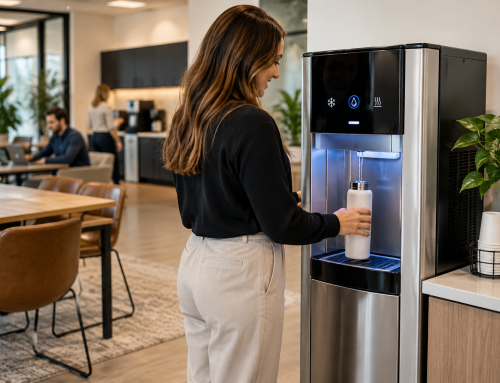
A modern hydration center feels more aligned with today’s fitness expectations than a dated drinking fountain or cluttered bottled water setup. Members notice clean design, easy bottle filling, and consistently cold water.
It Reduces Dependence on Bottled Water
Bottled water programs can create storage, delivery, cost, and waste issues. A bottleless water solution connects to the building’s water line and treats water at the point of use. This helps reduce the need for bottled water inventory and manual restocking.
It Gives Facilities Better Service Visibility
Systems that monitor usage patterns and filter life can support more proactive service. That matters in a gym, where a water station going down during peak traffic can create immediate frustration.
Da-Com’s guide to bottleless water coolers explains how point-of-use systems connect to a building’s water line and reduce the pain points associated with delivered bottles, storage, lifting, and running out.
Member Experience: Water Is Part of the Brand
Gyms compete on more than equipment. Members evaluate the full experience: cleanliness, lighting, locker rooms, class flow, staff, amenities, recovery options, music, technology, and convenience. Hydration is part of that environment.
A modern gym hydration station communicates that the facility pays attention to details. It tells members that the business has considered how people move through the space and what they need during a workout.
Think about the member experience:
- A member walks in with a reusable bottle and can refill quickly.
- A group class ends and members can get cold water without a long wait.
- A personal training client sees a clean, professional water station near the training floor.
- A visitor notices the facility offers purified water instead of relying on disposable bottles.
- A parent at a youth sports facility can refill a bottle while waiting.
- A coach can direct athletes to one clear hydration location.
These details are not flashy, but they matter. They reduce friction and make the gym feel better managed.
For fitness facilities that position themselves as premium, wellness-oriented, family-friendly, or performance-driven, hydration should support the brand instead of feeling like an afterthought.
Operational Benefits for Gym Owners and Facility Managers
A better water system does not only help members. It can also make daily operations easier for gym owners, managers, and staff.
Less Bottle Storage
Delivered bottled water and large jugs take up space. In a gym, storage space is valuable. It may be needed for equipment, cleaning supplies, retail products, towels, mats, or maintenance materials.
Less Manual Handling
Large water jugs are heavy and inconvenient. Staff should not have to stop what they are doing to replace empty bottles during busy periods.
Less Risk of Running Out
Running out of bottled water during a busy day creates frustration. A bottleless hydration system provides a continuous supply as long as the unit is properly installed and maintained.
Cleaner Appearance
Cases of bottled water, empty jugs, delivery stacks, and cluttered refill areas can make a facility look less organized. A sleek hydration center can create a cleaner, more professional appearance.
More Predictable Service
With a managed water service, facilities can rely on scheduled maintenance and professional support. That helps prevent the hydration station from becoming one more thing staff have to remember.
Da-Com’s article on office water delivery versus bottleless purification compares traditional bottled delivery with bottleless systems and explains how businesses can evaluate storage, service, convenience, and long-term fit.
Commercial Water Filtration for Gyms: What to Ask
Before choosing a gym hydration station, facility managers should ask practical questions. The right system should match traffic, space, service expectations, and member needs.
How Many Members Will Use the Station Daily?
Daily traffic matters. Estimate how many people will refill bottles and when they are most likely to use the station. Peak demand may be more important than total daily demand.
Where Should the Station Be Placed?
Placement affects usage. Good locations may include near the training floor, outside group fitness studios, near locker rooms, near turf areas, or near high-traffic walking paths. The station should be visible and easy to access without creating crowding.
Does the System Provide Cold Water Consistently?
In a gym, cold water is a core expectation. Ask how the system handles heavy use and whether it can maintain cold water during peak demand.
What Filtration or Purification Process Is Used?
Ask what the system is designed to reduce or remove, what stages are included, and what documentation supports filtration claims. Da-Com’s Purity Source page notes that Pure Water Technology systems use an extensive 5-step process to remove contaminants and add activated oxygen and electrolytes.
Who Handles Maintenance?
Ask who changes filters, services the unit, responds to issues, and monitors performance. In a busy gym, service should be clear from the beginning.
Can the System Support Reusable Bottles?
Many members bring their own bottles. A gym hydration station should provide enough clearance and speed for modern reusable bottles.
How Does the System Fit the Facility’s Brand?
A fitness facility’s water solution should feel clean, modern, and appropriate for the space. A premium gym should not rely on a water setup that feels outdated or inconvenient.
Hydration, Safety, and High-Activity Environments
Fitness facilities are different from standard office environments because members are physically active. Hydration access is not just nice to have. It supports a safer, more comfortable workout environment.
OSHA’s heat illness prevention guidance states that employers should provide cool water for workers to drink and that proper hydration is essential to help prevent heat-related illness. While gyms are not the same as outdoor job sites, the principle is still useful for high-activity environments: people need access to cool, potable water when they are exerting themselves. You can review OSHA’s resource here: OSHA Water. Rest. Shade. guidance.
Gyms should think about hydration access in areas where people sweat, exert themselves, or gather during activity. This may include strength floors, cardio areas, turf zones, studios, training rooms, basketball courts, indoor sports areas, and recovery spaces.
Facility managers should also consider traffic flow. If the only water source is far from the workout area, members may delay refilling. If one station serves too many users, lines can form. If the water is not cold or does not taste good, members may avoid it.
A well-placed hydration center helps make the healthy choice the easy choice.
Reducing Plastic Waste in Fitness Facilities
Many gyms are trying to reduce waste, improve sustainability, and encourage reusable bottles. A bottleless hydration station supports those goals by reducing reliance on single-use bottled water and delivered jugs.
Members who bring reusable bottles are more likely to use them when refilling is easy. If the water station is fast, cold, and easy to access, there is less need to purchase disposable bottles during each visit.
This can also support the brand image of wellness-focused facilities. A gym that encourages reusable bottles and provides purified water shows that it is thinking about the member experience and operational responsibility.
Da-Com’s guide on how bottleless water can reduce plastic waste explains why businesses are moving away from bottled water delivery and toward point-of-use systems that reduce clutter, handling, and waste.
Where a High-Capacity Hydration Center Makes Sense
The XL1 Hydration Center may be a strong fit for high-traffic locations that need consistent cold water and fast bottle filling.
Examples include:
- Large gyms and health clubs.
- Boutique fitness studios with back-to-back classes.
- Cross-training and functional fitness centers.
- Personal training facilities.
- University fitness centers.
- Corporate gyms.
- Sports performance centers.
- Indoor athletic facilities.
- Youth sports complexes.
- Recreation centers.
- Physical therapy and rehabilitation gyms.
- Wellness centers.
The best fit depends on usage. A smaller studio may need one strategically placed system. A larger gym may need multiple hydration points. A sports facility with tournaments or events may need high-capacity support during peak attendance.
Purity Source can help businesses evaluate placement, traffic patterns, service needs, and the right type of system for the environment.
How to Plan a Gym Water Upgrade
Upgrading a gym water setup is easier when facility leaders think through the full workflow.
Step 1: Identify Current Problems
Start by documenting what is not working. Are members waiting too long? Is the water warm? Are staff managing bottled deliveries? Is storage cluttered? Are members buying disposable bottles because they do not like the current water?
Step 2: Estimate Peak Usage
Look at the busiest times of day. Group classes, after-work traffic, youth programs, sports practices, and tournament events may create refill surges.
Step 3: Choose the Right Location
A hydration station should be easy to see and access. It should not block walkways or create congestion near equipment.
Step 4: Review Installation Needs
Point-of-use systems connect to the building’s water line and require proper installation. Review plumbing, electrical, space, and traffic considerations.
Step 5: Confirm Service and Maintenance
Ask how filters are serviced, how issues are reported, and how routine maintenance is handled. A gym should not have to guess when the system needs attention.
Step 6: Communicate the Upgrade
Let members know about the improved hydration experience. Encourage reusable bottles. Place the station where it becomes part of the member routine.
What Makes Purity Source Different for Fitness Facilities?
Purity Source is Da-Com’s purified water division. It supports businesses that want a cleaner, more reliable, bottle-free way to provide drinking water. For gyms and fitness facilities, that means combining equipment, filtration, installation, service, and local support into one managed solution.
That service relationship matters because fitness facilities are busy. A water station is only valuable if it performs consistently. Members expect it to work every day. Staff need a clear support path when service is needed. Owners want a system that fits the brand and reduces operational headaches.
Purity Source can help evaluate questions such as:
- Which hydration system fits our member traffic?
- Where should the station be installed?
- How many hydration points do we need?
- What type of filtration or purification is right for the facility?
- How will service and filter changes be handled?
- How can we reduce bottled water reliance?
- How can hydration support the member experience?
For businesses across St. Louis and Southern Illinois, and nearby communities, local support can make the upgrade easier to manage.
Build a Better Hydration Experience for Your Members
A gym hydration station is more than a water dispenser. It is part of the member experience, the facility workflow, and the wellness environment. In a high-traffic gym, members need cold, purified water that is easy to access and fast to refill. Staff need a system that does not create storage, restocking, delivery, or maintenance headaches.
The XL1 Hydration Center is designed for high-capacity environments where cold water, performance, and user experience matter. For fitness facilities, that can mean fewer refill bottlenecks, less dependence on bottled water, a cleaner appearance, and a hydration experience that feels aligned with a modern gym.
To learn more about gym hydration station options, high-capacity purified water, and bottleless hydration solutions for your St. Louis or Southern Illinois fitness facility, contact Da-Com’s Purity Source team today. Purity Source can help you evaluate your current setup, choose the right system, and keep your members hydrated with clean, cold, great-tasting water.



Leave A Comment