
Water Cooler Placement: Where Office Stations Work Best
Water cooler placement can make the difference between a purified water station people use every day and a dispenser that sits ignored in the wrong corner. Many businesses spend time choosing the right water system, but they do not always think enough about where that system should go.
Placement matters because people use water stations differently depending on the workplace. Employees may fill bottles before meetings, visitors may want water while they wait, warehouse teams may need hydration near a work area, and office managers may need the system close enough to plumbing, power, supplies, and service access. A water cooler that looks good but is placed poorly can create traffic problems, low usage, mess, or frustration.
For businesses in St. Louis, St. Charles, the Metro East, Belleville, Edwardsville, Collinsville, Bethalto, and Southern Illinois, the right water cooler location should support daily use, guest experience, service access, traffic flow, and the overall feel of the workplace.
This guide explains where office water stations work best, what to consider before choosing a location, how placement differs by workplace type, and how to plan a purified water, ice, or beverage station that employees and guests will actually use.
Quick Answer: Where Should You Put an Office Water Cooler?
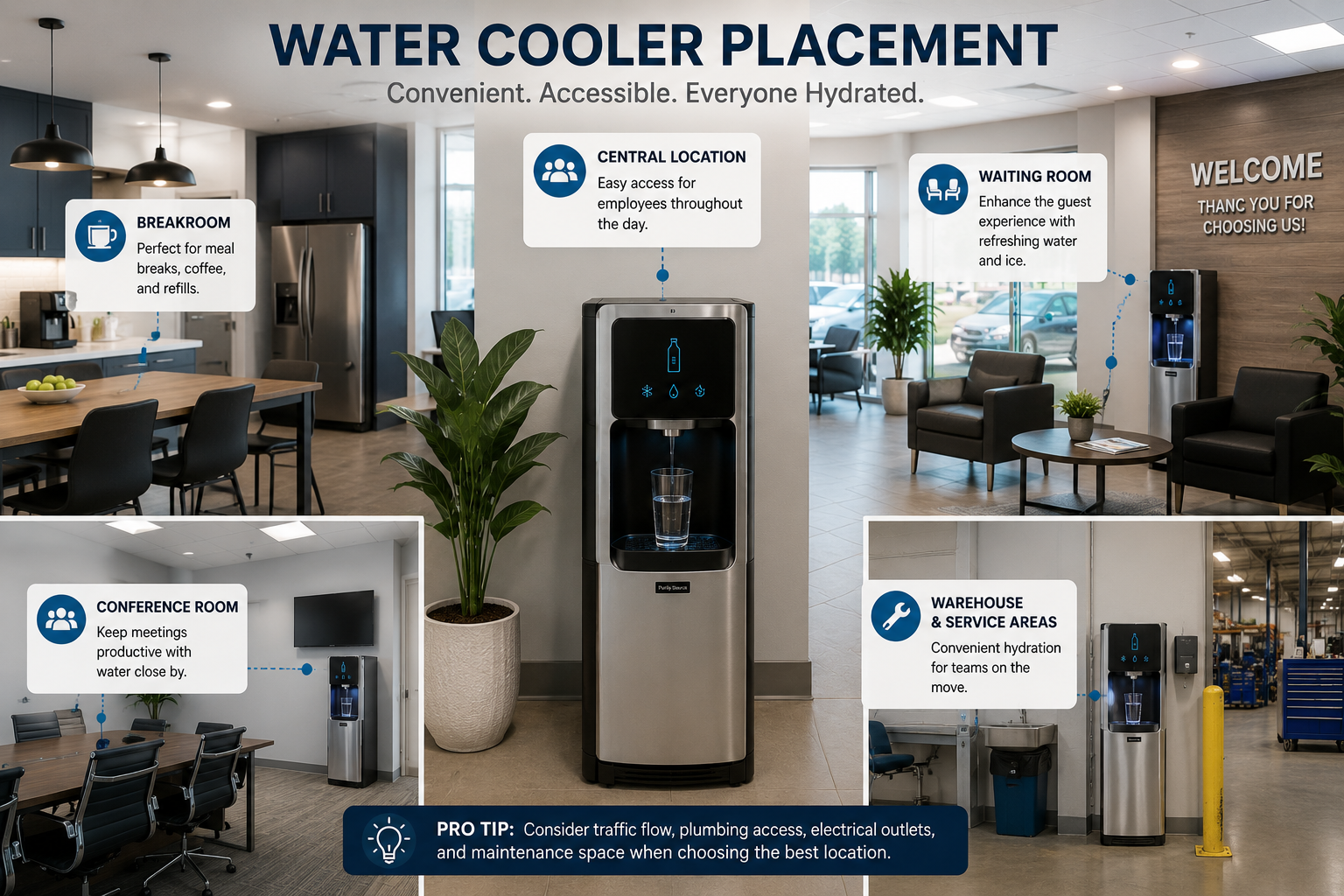
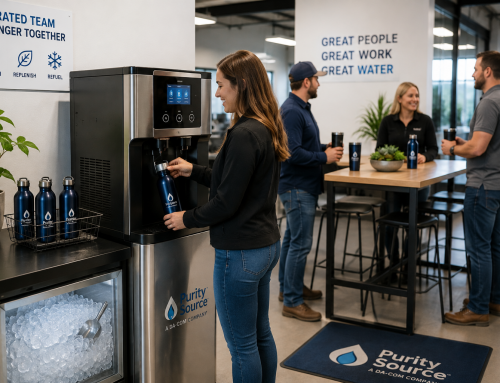
Water cooler placement works best when the dispenser is easy to find, easy to use, close to the people who need it, and positioned where it will not block traffic, create clutter, or interfere with daily work. Common water cooler locations include breakrooms, employee lounges, reception areas, waiting rooms, conference areas, warehouse-adjacent spaces, service departments, and shared corridors with enough room for safe access.
The best water cooler location should consider:
- Who will use the water station most often.
- How many people use it daily.
- Whether guests, customers, patients, or visitors need access.
- Traffic flow around the dispenser.
- Access to a water line and electrical outlet.
- Nearby storage for cups, bottles, or supplies.
- Service access for filter changes and maintenance.
- Whether the station includes hot water, ice, sparkling water, or coffee.
- How clean and professional the area needs to look.
- Whether one station is enough or multiple stations are needed.
Purity Source, a Da-Com company, provides purified water solutions for businesses that want clean, great-tasting water backed by practical service and support.
Why Water Cooler Placement Matters
Choosing a water cooler is only part of the decision. The location affects how often people use it, how clean the area stays, how easy the system is to service, and whether the water station feels like a helpful amenity or an awkward afterthought.
Poor water cooler placement can cause problems such as:
- Employees not using the station because it is too far away.
- Guests missing the station because it is hidden.
- Traffic bottlenecks near doors, hallways, or counters.
- Cups, bottles, or supplies cluttering the area.
- Water drips or spills in a high-traffic path.
- Service technicians having trouble accessing the unit.
- Breakroom counters becoming overcrowded.
- Employees relying on bottled water even though a dispenser exists.
Good placement helps avoid those problems. A water station should feel natural to use. It should be close enough to daily routines that people do not have to think about it. When placement is right, employees and visitors are more likely to choose water throughout the day.
The CDC explains that drinking enough water is important for health and that water can help prevent dehydration. You can review the CDC resource here: CDC Water and Healthier Drinks.
Start With Who Will Use the Water Cooler
The first question is not where the unit looks best. The first question is who will use it most.
Different users have different needs:
- Employees may want quick access throughout the workday.
- Guests may need a visible, polished station near reception or waiting areas.
- Patients or customers may prefer a clean and easy self-serve option.
- Warehouse or service teams may need water closer to work areas.
- Conference room users may need water near meetings.
- Managers may need a setup that is easy to service and keep tidy.
A single water cooler in the breakroom may work for a small office. A larger workplace may need separate stations for employees, guests, and high-traffic areas. A dealership may need a customer lounge station and a staff breakroom station. A healthcare office may need a waiting room station and a staff-only station. A warehouse may need water near office areas and production or service teams.
Da-Com’s guide to office beverage stations explains how water, ice, sparkling water, coffee, and service planning can work together as part of a better workplace beverage strategy.
Best Places for Water Cooler Placement
There is no single perfect location for every business, but some locations tend to work well when they match the way people use the space.
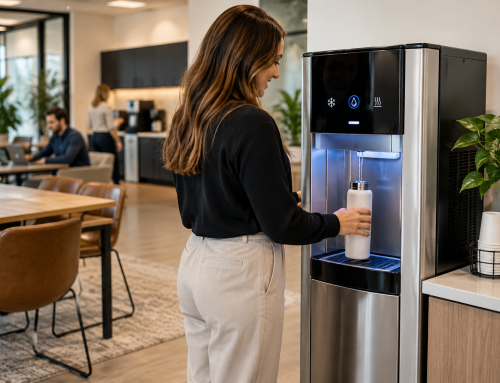
Employee Breakroom
The breakroom is one of the most common water cooler locations because employees already go there for coffee, lunch, snacks, cups, and other daily needs.
A breakroom water cooler works well when:
- Employees regularly use the breakroom.
- There is enough floor or counter space.
- The station can be placed near cups or reusable bottles.
- The area has water line and electrical access.
- Traffic flow allows people to fill bottles without blocking others.
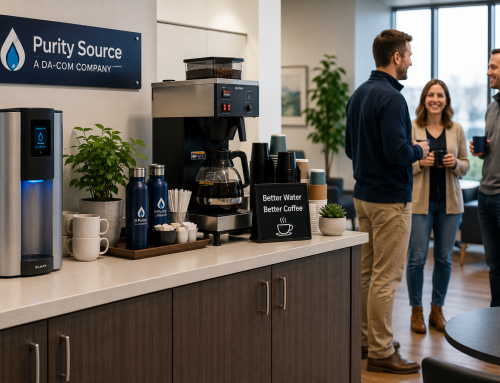
The breakroom is often the best starting point for a small or midsize office. It can also be the best location for a full beverage station that includes hot water, ice, sparkling water, or coffee.
Reception or Waiting Area
A reception or waiting area water station can make guests feel more welcome. This can be especially useful for healthcare offices, car dealerships, schools, professional services firms, customer service centers, and any business where visitors may spend time waiting.
A guest-facing water station should be:
- Easy to see.
- Clean and uncluttered.
- Simple to use.
- Close to cups or bottle filling access.
- Away from tight walkways or door swings.
- Professional enough to fit the space.
Reception placement works best when the station feels intentional. It should not look like equipment was pushed into a corner. It should feel like part of the visitor experience.
Conference Room or Meeting Area
If your business hosts client meetings, training sessions, board meetings, vendor visits, or internal team meetings, a water station near meeting spaces can be helpful. This reduces trips to the breakroom and makes hospitality easier.
This placement can work well for:
- Law firms.
- Accounting firms.
- Financial offices.
- Consulting firms.
- Healthcare consultation rooms.
- Training rooms.
- Executive meeting areas.
If the station is not directly inside the conference room, it should be close enough that guests can find it without walking through employee-only areas.
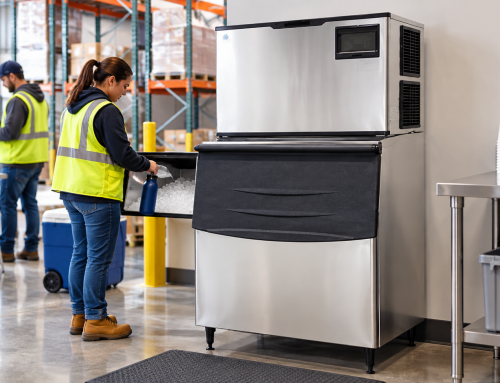
Warehouse or Service Department Area
Some workplaces need water access beyond the main office. Warehouses, manufacturing offices, dealerships, service departments, schools, and large facilities may have employees working far from the breakroom.
A warehouse-adjacent water station can help teams get water without walking across the building. This can be especially useful during warm weather, long shifts, or physically active work.
Placement should consider:
- Distance from the main work area.
- Safety and traffic around equipment.
- Protection from dust, heat, or damage.
- Nearby power and plumbing access.
- Whether ice is also needed.
- Whether employees fill bottles, cups, or large containers.
The station should be convenient, but it should not be placed where it interferes with forklifts, deliveries, production flow, or service work.
Shared Corridor or Central Office Area
Some offices place water stations in a central corridor or shared area between departments. This can work if the hallway is wide enough and the station does not block movement.
This location can be helpful when:
- Multiple departments share one station.
- The breakroom is too small.
- The office has a central gathering area.
- Visitors and employees both need access.
However, corridor placement should be chosen carefully. A water station can create pauses, lines, and small spills. It should never create a safety issue or make movement harder.
Water Cooler Placement for Different Workplace Types
The right location depends on the business. A water station for a dental office should not be planned the same way as a dealership service lounge or a manufacturing office.
Healthcare Offices
Healthcare offices may need water access for both patients and staff. A waiting room station can support patients, guests, and caregivers, while a staff breakroom station can support providers, assistants, front desk employees, and clinical teams.
For healthcare offices, placement should prioritize clean presentation, easy monitoring, and convenient staff access.
Car Dealerships
Dealerships often need water and ice in more than one location. The customer waiting lounge is important, but employees in service, parts, sales, and finance may need separate access.
A good dealership layout may include a polished guest-facing station in the lounge and a practical staff station near the breakroom or service area.
Professional Offices
Professional offices may want a breakroom station for employees and a conference-area station for clients. This works well for law firms, accounting firms, financial firms, insurance offices, and consulting businesses.
Warehouses and Manufacturing Offices
Warehouses and manufacturing environments often need placement close to work areas without interfering with safety or operations. The station should be accessible, protected, and easy to maintain.
Schools and Community Organizations
Schools, churches, nonprofits, and community organizations may need water stations near staff lounges, administrative offices, meeting rooms, or high-traffic gathering areas. Placement should account for both daily staff use and event traffic.
Think About Traffic Flow Before Installation
Water stations create small stopping points. People pause, fill cups, refill bottles, add ice, throw away cups, or grab lids. If the station is placed in the wrong area, it can create congestion.
Before choosing a location, watch how people move through the space. Ask:
- Will people block a doorway while filling water?
- Will the station interfere with reception traffic?
- Will people line up during lunch or shift changes?
- Is there room for someone to stand with a bottle or cup?
- Can two people pass behind someone using the station?
- Will spills create a slip concern?
- Is the floor surface appropriate?
Good water cooler placement should feel natural, not crowded. The best spot may not be the most visible wall. It may be the spot where people can use the station without disrupting the rest of the office.
Do Not Forget Plumbing, Power, and Service Access
Placement is also practical. A bottleless water cooler or beverage station usually needs access to a water line and electrical outlet. Ice machines, sparkling water systems, and some specialty beverage stations may have additional requirements.
Before installation, review:
- Nearby water line access.
- Electrical outlet availability.
- Floor space or counter space.
- Drainage requirements, if applicable.
- Room for filter changes.
- Room for service technicians to access the unit.
- Ventilation needs for certain equipment.
- Whether the unit can be moved later if needed.
Da-Com’s guide to bottleless water coolers explains that point-of-use systems connect to the building water line and remove the need for jug delivery, storage, lifting, and running out of bottled water.
Service access is especially important. A station should not be boxed in so tightly that filter changes or repairs become difficult. If maintenance is hard to perform, the system may become a headache later.
Water Cooler Placement and Filter Changes
Good placement supports good maintenance. A water cooler tucked behind furniture, crowded by storage boxes, or wedged into a tight corner may be harder to service. That matters because filter changes and maintenance are what keep the water experience consistent.
NSF says replacement cartridges should be changed at the recommended interval to support water treatment system performance. You can review NSF’s consumer guidance here: NSF Water Filter Replacement Guidance.
For office water systems, service needs may depend on:
- Filter type.
- System type.
- Usage volume.
- Local water quality.
- Number of users.
- Whether the system also supports ice, coffee, or sparkling water.
- Manufacturer recommendations.
Da-Com’s guide to office water filter changes explains why maintenance schedules, service ownership, and filter replacement should be part of the plan from day one.
Should You Add Ice, Sparkling Water, or Coffee?
Water cooler placement may change if the station includes more than purified water. A simple cold and hot water dispenser may fit in a smaller space. A full beverage station with ice, sparkling water, coffee, cups, mugs, and supplies may need more room.
Consider adding ice if:
- Employees fill large bottles or tumblers.
- Guests use the station often.
- The business hosts meetings or events.
- The workplace includes a service department, warehouse, or waiting room.
- People currently buy bagged ice or use a crowded breakroom freezer.
Consider sparkling water if:
- The office wants to reduce soda or canned drinks.
- Guests expect a more polished beverage option.
- Employees want more drink variety.
- The workplace already uses bottled or canned sparkling water.
Consider coffee or hot water access if:
- Employees rely on coffee throughout the day.
- Guests are often offered coffee or tea.
- The breakroom needs a more complete beverage setup.
The more features you add, the more important layout becomes. A full beverage station needs space for people, cups, supplies, cleaning, and service.
Common Water Cooler Placement Mistakes
Placing the Unit Too Far From Daily Use
If employees have to walk too far, they may not use the station. Water should be convenient enough to become part of daily habits.
Choosing a Hidden Corner
A water station hidden behind a door, in a back hallway, or inside a cluttered storage area may not support employees or guests well.
Blocking Traffic
A dispenser near a narrow doorway, busy counter, or tight hallway can create bottlenecks. People need room to stop and fill cups without blocking movement.
Forgetting About Guests
If customers, patients, clients, or vendors use your space, consider whether they can find the water station without asking.
Ignoring Service Needs
Filters, parts, and service access matter. The system should be easy for a provider to maintain.
Only Planning for Today
If the business is growing, one station may not be enough later. Placement should consider future employees, more visitors, added shifts, or expanded office areas.
Water Cooler Placement Checklist
Use this checklist before choosing a location for a purified water cooler, bottleless dispenser, ice machine, or beverage station.
- Identify who will use the station most often.
- Decide whether the station is for employees, guests, or both.
- Review traffic flow around the proposed location.
- Check water line access.
- Check electrical outlet access.
- Make sure there is room to stand and fill bottles.
- Plan where cups, bottles, lids, or supplies will go.
- Consider whether ice, sparkling water, or coffee will be added.
- Make sure service technicians can access the unit.
- Think about spills, flooring, and cleanup.
- Consider whether the station should be visible to guests.
- Review whether multiple stations are needed.
- Choose a location that supports real daily use, not just appearance.
Workplace Drinking Water Access Still Matters
Placement is not only about convenience. Workplace drinking water access is a basic requirement. OSHA’s workplace sanitation standard defines potable water as water that meets drinking water standards of the state or local authority with jurisdiction, or EPA National Primary Drinking Water Regulations. You can review OSHA’s standard here: OSHA 1910.141 Sanitation.
For employers, the practical takeaway is that water should be easy for employees to access. A purified water system placed in the wrong location may technically exist, but still fail to support the people who need it.
Water Cooler Placement and Waste Reduction
Good placement can also help reduce bottled water use. If the bottleless water station is convenient, employees and guests are more likely to use it instead of grabbing disposable bottles.
The EPA recommends using a water bottle or thermos instead of disposable bottles and cartons. The EPA also suggests using filtered tap water to refill bottles instead of buying bottled water. You can review the EPA resource here: EPA Reduce Plastic Waste.
This only works if the station is convenient. A water dispenser placed far from employees, hidden from guests, or difficult to access will not reduce much bottled water use. Placement supports behavior.
Da-Com’s guide to office water delivery vs. bottleless water explains how point-of-use water systems can reduce storage, lifting, bottle replacement, and ongoing delivery headaches.
Frequently Asked Questions About Water Cooler Placement
Where is the best place to put an office water cooler?
The best place to put an office water cooler is a visible, convenient, and accessible location near the people who will use it most. Common locations include breakrooms, reception areas, waiting rooms, conference areas, employee lounges, and warehouse-adjacent spaces.
Should a water cooler go in the breakroom or reception area?
It depends on who will use it. Breakrooms work well for employee use. Reception areas work well for guests, patients, customers, and visitors. Some businesses need both.
Can a bottleless water cooler be placed anywhere?
No. A bottleless water cooler usually needs access to a water line and electrical outlet. It also needs enough space for safe use, maintenance, and service access.
How much space does an office water station need?
Space depends on the unit and whether the station includes ice, sparkling water, coffee, cups, or supplies. At minimum, people should have enough room to stand, fill bottles, and move around without blocking traffic.
Should water coolers be placed near conference rooms?
Yes, if your business hosts frequent meetings, client visits, trainings, or vendor appointments. A nearby water station can improve guest hospitality and reduce trips to the breakroom.
Where should warehouses place water stations?
Warehouse water stations should be close enough for employees to use conveniently, but away from forklift paths, high-risk areas, dust exposure, and traffic hazards. Placement should consider safety, access, and service needs.
Does water cooler placement affect usage?
Yes. If a water cooler is visible, convenient, and easy to use, employees and guests are more likely to use it. Poor placement can lead to low usage and continued bottled water dependence.
Can Purity Source help choose the best water cooler location?
Yes. Purity Source can help evaluate usage, layout, water line access, traffic flow, service needs, and beverage station goals for businesses in St. Louis, St. Charles, the Metro East, Belleville, Edwardsville, Collinsville, Bethalto, and Southern Illinois.
Build a Water Station People Actually Use
Water cooler placement is one of the most practical decisions in workplace hydration. The right system matters, but the right location determines whether employees and guests actually use it.
A strong location should be convenient, visible when needed, easy to service, safe for traffic flow, and matched to the way your business operates. A small office may only need one breakroom dispenser. A healthcare office may need a waiting room and staff area. A dealership may need customer lounge and service department access. A warehouse or manufacturing office may need water closer to active work areas.
The goal is not just to install a water cooler. The goal is to create a water station that supports daily use, reduces bottled water clutter, improves guest experience, and takes one more task off your team’s plate.
To learn more about water cooler placement for your St. Louis, St. Charles, the Metro East, Belleville, Edwardsville, Collinsville, Bethalto, or Southern Illinois business, contact Da-Com today. Purity Source can help you evaluate purified water systems, bottleless water coolers, ice machines, beverage station layout, filter changes, service needs, and the best placement for your workplace.


Leave A Comment