
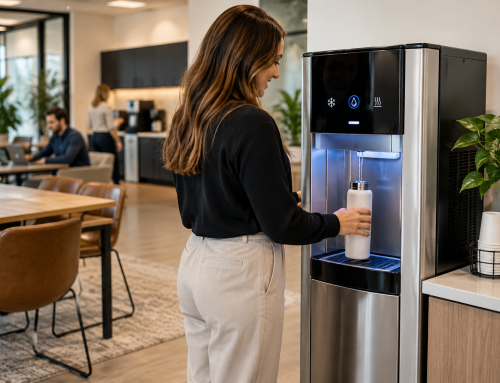
High-Traffic Water Station: Size Water and Ice Right
A high traffic water station can make a busy workplace easier to run, but only if it is sized around the way people actually use water and ice throughout the day. A small cooler in the corner might work for a quiet office with a few employees. It may not work for a warehouse, manufacturing office, dealership, healthcare office, school, call center, service department, large breakroom, or multi-shift team with heavy daily demand.
When a workplace has a lot of employees, visitors, meetings, service traffic, shift changes, or hot work areas, water and ice needs can spike quickly. If the setup is too small, someone ends up restocking bottles, buying ice, moving jugs, answering complaints, or trying to troubleshoot a unit that cannot keep up.
That is why choosing a high traffic water station should not be a guess. The right setup depends on headcount, peak usage, placement, ice demand, service expectations, filter changes, and how often employees, guests, or customers use the station during the busiest parts of the day.
Purity Source, a Da-Com company, provides purified water solutions for businesses that want clean, great-tasting water and ice backed by practical service and support. For workplaces in St. Louis, St. Charles, the Metro East, Belleville, Edwardsville, Collinsville, Bethalto, and Southern Illinois, the goal is simple: build a water and ice setup that can keep up with daily demand.
Quick Answer: What Is a High-Traffic Water Station?
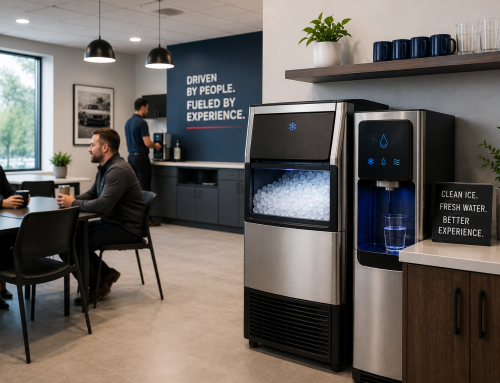
A high traffic water station is a right-sized purified water and ice setup designed for busy workplaces with heavy daily use, peak demand periods, employees, guests, customers, meetings, and events. Instead of relying on a small cooler, bottled water cases, or last-minute bags of ice, a high-traffic setup is planned around how many people use it, when demand is highest, where the station is placed, how much ice is needed, and who handles service and filter changes.
A high-traffic water station may include:
- A purified water dispenser.
- A bottleless water system connected to the building’s water line.
- An ice and water unit.
- A high-capacity water dispenser.
- An ice machine paired with purified water.
- A workplace hydration station with bottle filling access.
- Service support for filters, maintenance, and troubleshooting.
The best system is not always the largest unit. It is the one that matches your workplace’s actual usage pattern.
Why Busy Workplaces Need a Different Hydration Plan
Busy workplaces need more than a basic water cooler because demand is rarely spread evenly across the day. A unit may be quiet at 10:00 a.m. and overwhelmed during a shift change, lunch break, service rush, meeting block, or hot afternoon.
A high-traffic workplace may have:
- Employees filling bottles before a shift.
- Service technicians stopping by between jobs.
- Warehouse teams using water and ice during hot months.
- Customers waiting in a lobby or service area.
- Meetings that require water and ice for guests.
- Staff using the station during breaks.
- Multiple departments sharing one breakroom.
- Events, trainings, or employee appreciation days.
- Multi-shift teams using the same station around the clock.
If the hydration setup is not planned around these peak moments, the station can become a source of frustration instead of convenience.
The CDC notes that water can support healthier beverage choices. For workplaces, the key is making water easy to access during the parts of the day when employees actually need it. CDC water and healthier drinks
How to Size a High-Traffic Water Station
Sizing a high traffic water station starts with a better question than “How many employees do we have?” Headcount matters, but it does not tell the whole story.
The better question is: When, where, and how do people use water and ice?
A workplace with 40 employees may need more capacity than a workplace with 100 employees if those 40 employees work in a hot warehouse, fill large bottles, and all use the station during the same shift change. A corporate office with 120 employees may need multiple smaller stations instead of one large unit if departments are spread across different areas.
Daily Headcount and Peak Use
Daily headcount is a starting point, but peak use is usually more important. Average usage can hide the busiest moments.
For example:
- A manufacturing team may have heavy use before and after shifts.
- A dealership may see steady use from service staff and customers throughout the day.
- A healthcare office may need water access for staff, waiting areas, and administrative spaces.
- A school or training center may see spikes around meetings, staff breaks, or events.
- A call center may need convenient access during scheduled break periods.
When evaluating a workplace hydration station, ask:
- How many people use the station every day?
- When is the station busiest?
- Do employees fill bottles, cups, or large containers?
- Do visitors or customers use the same station?
- Are there predictable peak times?
- Does usage change by season?
- Are there multiple shifts?
A high-use station should be sized around the busiest realistic use case, not the quietest part of the day.
Water Demand vs. Ice Demand
Water demand and ice demand are related, but they are not the same. Some workplaces need a lot of drinking water but very little ice. Others need ice for bottles, cups, meetings, customer areas, coolers, or physically active teams.
Water demand may come from:
- Employees filling reusable bottles.
- Guests or customers using cups.
- Staff making coffee or tea.
- Meeting rooms and training sessions.
- Daily breakroom use.
Ice demand may come from:
- Employee water bottles.
- Customer waiting areas.
- Summer heat.
- Meetings and events.
- Service departments.
- Warehouse or production teams.
- Coolers for approved workplace uses.
Da-Com’s nugget ice machine sizing guide explains why ice capacity, cost, cleaning, service, and ongoing support matter when choosing workplace ice equipment. For a high-traffic water station, ice should be considered as part of the broader hydration plan, not as a separate afterthought.
Placement and Traffic Flow
A good station in the wrong location can still underperform. If employees have to walk too far, cross busy work areas, crowd a hallway, or wait in line, the station may not support the workplace the way it should.
Placement affects:
- Convenience.
- Employee usage.
- Traffic flow.
- Breakroom congestion.
- Guest access.
- Service access.
- Cleaning and supply storage.
- Electrical and plumbing requirements.
For high-traffic areas, placement should be planned around how people move through the building. A warehouse team may need a station near the breakroom or time clock. A dealership may need separate access for employees and customers. A large office may need more than one station to avoid bottlenecks.
Water and Ice Needs by Workplace Type
Different workplaces use water and ice differently. That is why a high traffic water station should be matched to the environment.
Warehouses and Distribution Centers
Warehouses and distribution centers often have physically active teams, large work areas, and seasonal heat concerns. Employees may fill large bottles before shifts or during breaks, and demand can spike during hot weather.
CDC and NIOSH heat-stress guidance recommends providing cool drinking water near work areas and encouraging workers to drink often when heat stress is a concern. CDC NIOSH heat stress information
For these environments, consider:
- High-capacity water dispensing.
- Ice access for bottles and break areas.
- Placement near breakrooms or shift-change areas.
- Service plans that account for heavy use.
- Multiple stations if the building is large.
Manufacturing Teams
Manufacturing facilities often have structured breaks, production schedules, and teams that may not be able to leave the floor frequently. A water station for busy offices connected to manufacturing areas should be convenient, durable, and easy to service.
Manufacturing teams may need:
- Water access near employee break areas.
- Ice for bottles during warmer months.
- Reliable service to avoid downtime.
- Placement that does not interrupt workflow.
- A setup that supports multiple shifts.
Car Dealerships and Service Departments
Dealerships often have two different hydration needs: employee use and customer hospitality. Sales teams, service writers, technicians, waiting-room guests, and administrative staff may all need access throughout the day.
A commercial water station can support:
- Customer waiting areas.
- Service departments.
- Sales offices.
- Employee breakrooms.
- Saturday service hours.
- Event days and promotions.
Da-Com’s Purity Source content on water and ice for car dealerships explains how purified water and ice can support both customer areas and employee spaces in a busy dealership environment.
Healthcare Offices
Healthcare offices often have staff, patients, vendors, and administrative teams moving through the building. Water access may be needed in waiting areas, staff spaces, conference rooms, and administrative offices.
Healthcare offices should think about:
- Staff hydration during long shifts.
- Guest and waiting-room experience.
- Service and filter-change ownership.
- Clean, organized placement.
- Reliable support when problems occur.
Schools and Training Centers
Schools, private training centers, daycare offices, and educational spaces often have staff lounges, front offices, meeting rooms, event areas, and summer programs. Demand may change throughout the school year.
These environments should consider:
- Staff lounge use.
- Front office guest access.
- Event and meeting demand.
- Summer program schedules.
- Peak periods before and after classes.
Da-Com’s guide to water and ice for schools offers a closer look at staff lounges, front offices, events, school offices, and education-focused hydration planning.
Call Centers and Large Offices
Call centers and large offices may have many employees taking breaks at the same time. If one small cooler serves an entire floor, employees may wait in line or avoid using it altogether.
Large offices should consider:
- Number of employees per floor.
- Break schedules.
- Meeting room access.
- Guest and client areas.
- Multiple stations to reduce bottlenecks.
Bottleless Water vs. Bottled Water for High-Traffic Areas
In high-traffic workplaces, bottled water can become a hidden workload. Someone has to order it, receive it, store it, move it, restock it, and clean up after it. If demand spikes, bottled water can run out quickly.
A bottleless water system can help reduce storage, lifting, delivery scheduling, and restocking problems by connecting to the building’s water line and filtering or purifying water through the system.
Da-Com’s guide to office water delivery vs. bottleless water compares the storage, lifting, service, and convenience differences between traditional delivery and a managed point-of-use approach.
| Category | Undersized or Bottled Setup | Right-Sized Managed Station |
|---|---|---|
| Peak use | Runs out during shift changes, meetings, or hot days. | Sized around peak demand and actual use patterns. |
| Storage | Cases or jugs take up closets, counters, and fridge space. | Reduces bottled water storage and clutter. |
| Ice | Bagged ice or freezer ice may not keep up. | Ice capacity can be matched to workplace demand. |
| Staff workload | Someone must reorder, lift, refill, and troubleshoot. | Provider-managed service reduces internal tasks. |
| Placement | Station may be too far away or create bottlenecks. | Placement is planned around traffic flow and access. |
| Service | Problems get noticed only after complaints. | Filter changes and maintenance are planned in advance. |
The EPA provides practical guidance on reducing plastic waste, including ways people and organizations can reduce reliance on disposable plastic products. For a busy workplace, reducing bottled water can also reduce packaging clutter and restocking tasks. EPA plastic waste reduction guidance
When a High-Traffic Workplace Needs Ice
Not every workplace needs a commercial ice machine, but many high-traffic workplaces underestimate ice demand.
A workplace may need ice when:
- Employees regularly fill reusable bottles with ice.
- Staff work in warm or physically active environments.
- Customers use a waiting area.
- Meetings or trainings require beverages.
- The business hosts employee events.
- Teams buy bagged ice more often than expected.
- Freezer ice cannot keep up.
- The breakroom runs out during peak periods.
Ice demand is often seasonal. Warehouses, service departments, manufacturing offices, and outdoor crews may use more ice in summer. Offices and customer-facing spaces may use more ice during meetings, events, or high-visitor periods.
Da-Com’s workplace ice quality guide explains how taste, odor, filtration, cleaning, and service can affect whether employees and guests actually trust workplace ice. For high-use environments, ice quality and service planning are just as important as ice quantity.
Service, Filters, and Maintenance for Busy Stations
High use means service matters more. A low-traffic water station may be more forgiving, but a high traffic water station can quickly become a problem if filters are overdue, ice production slows down, water flow decreases, or cleaning is unclear.
Busy workplace hydration stations should have a clear service plan that answers:
- Who changes the filters?
- How often are filters changed?
- Who handles service requests?
- How quickly can support respond?
- Who cleans or services the ice machine?
- How are issues reported?
- What happens if usage increases?
- What signs show the system is undersized?
Da-Com’s office water filter changes guide explains why filter schedules, service ownership, and maintenance planning matter for workplace water systems, especially when water also supports ice, coffee, or high-traffic use.
For facility managers, HR leaders, office managers, and operations teams, managed service can be the difference between a hydration station that runs smoothly and one that becomes another recurring task.
Workplace Drinking Water Access and Practical Planning
Workplace water planning should also consider employee access. OSHA’s sanitation standard includes requirements related to potable water in workplaces. Businesses should review applicable requirements and internal policies for their environment, especially if employees work in physically active, hot, or industrial settings. OSHA 1910.141 sanitation standard
For most office and workplace hydration planning, the practical questions are:
- Is water easy for employees to access?
- Is the station close enough to where people work or take breaks?
- Can the station keep up during peak use?
- Is ice available when the workplace needs it?
- Is service clearly owned by the provider?
- Do employees trust the taste and quality?
These questions help move the conversation away from “Do we have a cooler?” and toward “Does our hydration setup actually support the way our workplace operates?”
What to Ask Before Choosing a High-Traffic Water Station
Before choosing a workplace water and ice station, use a practical checklist. The right provider should help you think through usage, placement, service, and capacity.
- How many employees use the station daily?
- When is usage highest?
- Do employees fill cups, bottles, or large containers?
- Do customers, guests, or vendors use the same station?
- Does the workplace have multiple shifts?
- Are there hot work areas or physically active teams?
- Does the business host meetings, trainings, or events?
- How much ice is needed on a normal day?
- How much ice is needed during peak season?
- Are employees currently buying bagged ice?
- Is bottled water taking up storage space?
- Who currently restocks water or ice?
- Where should the station be placed?
- Will one station be enough, or are multiple locations needed?
- Who handles filter changes?
- Who handles service and maintenance?
- What happens if the workplace outgrows the system?
The best solution should make hydration easier, not create a new operational headache.
Signs Your Current Water and Ice Setup Is Undersized
Many workplaces do not realize their current setup is undersized until employees start complaining or managers notice hidden tasks piling up.
Your water and ice setup may be too small if:
- The station runs out during breaks or shift changes.
- Employees avoid using it because the line is too long.
- Staff are constantly restocking bottled water.
- Bagged ice purchases are becoming routine.
- Water flow feels slow during busy periods.
- Ice cannot keep up with daily use.
- Bottles, cups, or cases are cluttering storage areas.
- Multiple departments are competing for one station.
- Employees complain about taste, temperature, or availability.
- Service issues are only discovered after complaints.
If these problems sound familiar, it may be time to evaluate a right-sized commercial water station with managed service.
Build a Water and Ice Setup That Can Keep Up
A high traffic water station should be planned around real workplace behavior. That means looking at peak demand, headcount, ice usage, shift schedules, guest access, placement, service support, and seasonal changes.
A busy workplace does not need another thing for the office manager, facility manager, HR team, or operations leader to chase. It needs a hydration setup that works, stays stocked, supports employees, and fits the way the building runs.
Purity Source can help businesses think through:
- Purified water options.
- Ice machine needs.
- High-capacity water dispensing.
- Station placement.
- Peak usage planning.
- Filter changes.
- Service and maintenance.
- Bottleless water alternatives.
- Water and ice setups for busy teams.
To learn more about choosing a high-traffic water station for your St. Louis, St. Charles, Metro East, Belleville, Edwardsville, Collinsville, Bethalto, or Southern Illinois workplace, contact Da-Com today. Purity Source can help your team evaluate purified water, ice machines, placement, service, filter changes, and a right-sized hydration setup that keeps up with daily demand.
Frequently Asked Questions About High-Traffic Water Stations
What is a high-traffic water station?
A high-traffic water station is a purified water and ice setup designed for busy workplaces with heavy daily use, peak demand periods, employees, guests, meetings, events, and high-use break areas. It is sized around real usage, not just general headcount.
How do you size a water station for a busy workplace?
To size a water station for a busy workplace, evaluate daily headcount, peak use times, bottle filling habits, ice demand, shift schedules, visitor traffic, meeting needs, seasonal demand, placement, and service requirements.
How many water stations does a large office need?
A large office may need more than one water station if employees are spread across multiple floors, departments, or break areas. Placement should reduce bottlenecks and make water easy to access during peak use.
When does a workplace need an ice machine?
A workplace may need an ice machine when employees regularly fill bottles with ice, customers use a waiting area, staff work in hot or physically active environments, meetings require beverages, or bagged ice purchases are becoming frequent.
Is bottleless water better for high-traffic areas?
Bottleless water can be better for high-traffic areas because it reduces bottled water storage, lifting, restocking, delivery scheduling, and the risk of running out during busy periods. The right fit depends on usage, placement, plumbing access, and service needs.
Where should a high-traffic water station be placed?
A high-traffic water station should be placed where employees and guests naturally need it, such as breakrooms, staff lounges, service areas, warehouse offices, customer waiting areas, or near shift-change traffic. Placement should support access without creating congestion.
Who handles filter changes and maintenance?
Filter changes and maintenance depend on the provider and service agreement. Purity Source can help businesses evaluate managed service options so filter schedules, water system support, and maintenance planning are not left entirely to internal staff.
Does Purity Source serve high-traffic workplaces in Southern Illinois?
Yes. Purity Source can help high-traffic workplaces in St. Louis, St. Charles, the Metro East, Belleville, Edwardsville, Collinsville, Bethalto, and Southern Illinois evaluate purified water, ice machines, placement, service, filters, and workplace hydration needs.

Leave A Comment